Town Hall Square Frontage
Riga, Latvia
Discover the stunning Town Hall Square Frontage of the House of the Black Heads in Riga, Latvia, a reconstructed symbol of history and resilience.
Overview
The Town Hall Square Frontage of the House of the Black Heads stands as a captivating architectural jewel in the heart of Riga, Latvia's Old Town, specifically on Rātslaukums, or Town Hall Square. This iconic building, with its distinctive Dutch Renaissance facade, is an undeniable symbol of Riga's rich mercantile history and remarkable resilience. Originally constructed in 1334, the building served as a vibrant hub for meetings and celebrations among Riga's diverse merchant community. Over centuries, it became the distinguished headquarters for the Brotherhood of Blackheads, an influential guild of unmarried foreign merchants and shipowners who significantly shaped the city's economic and cultural landscape. Though tragically destroyed during World War II, the House of the Black Heads was meticulously reconstructed between 1995 and 1999, rising from its ashes to once again grace Riga's skyline. Today, this grand edifice functions as a museum, a prestigious concert venue, and a ceremonial hall, inviting visitors to step back in time and explore its storied past.
History & Cultural Background
The origins of the House of the Black Heads trace back to 1334, when it was initially known as the 'New House' and formed an integral part of the Riga Town Hall Square ensemble. During the medieval period, Riga flourished as a prominent member of the Hanseatic League, and German merchants played a pivotal role in its burgeoning trade network. The Brotherhood of Blackheads, a fraternity of unmarried merchants and shipowners predominantly of German heritage, was established in the 14th century and began leasing the building from 1477. By 1713, the building became their exclusive property. The guild adopted Saint Maurice, often depicted as a Black African knight or a Moor's head, as their patron saint, which gave the brotherhood its distinctive name and symbol.
Architecturally, the building underwent several transformations, evolving into the striking Dutch Renaissance style with Gothic elements that we admire today. Its facade was particularly embellished in the 16th and 19th centuries, featuring intricate Mannerist ornamentation and sculptures by artists such as August Volz. However, this architectural masterpiece faced devastation on June 29, 1941, when it was bombed during World War II, and its ruins were subsequently demolished by the Soviet authorities in 1948. Following Latvia's regaining of independence, a widespread desire to restore this cultural landmark led to its meticulous reconstruction between 1995 and 1999, based on historical documents and photographs. Latvian citizens actively participated in this endeavor, contributing funds to bring the beloved building back to life.
What Makes It Special
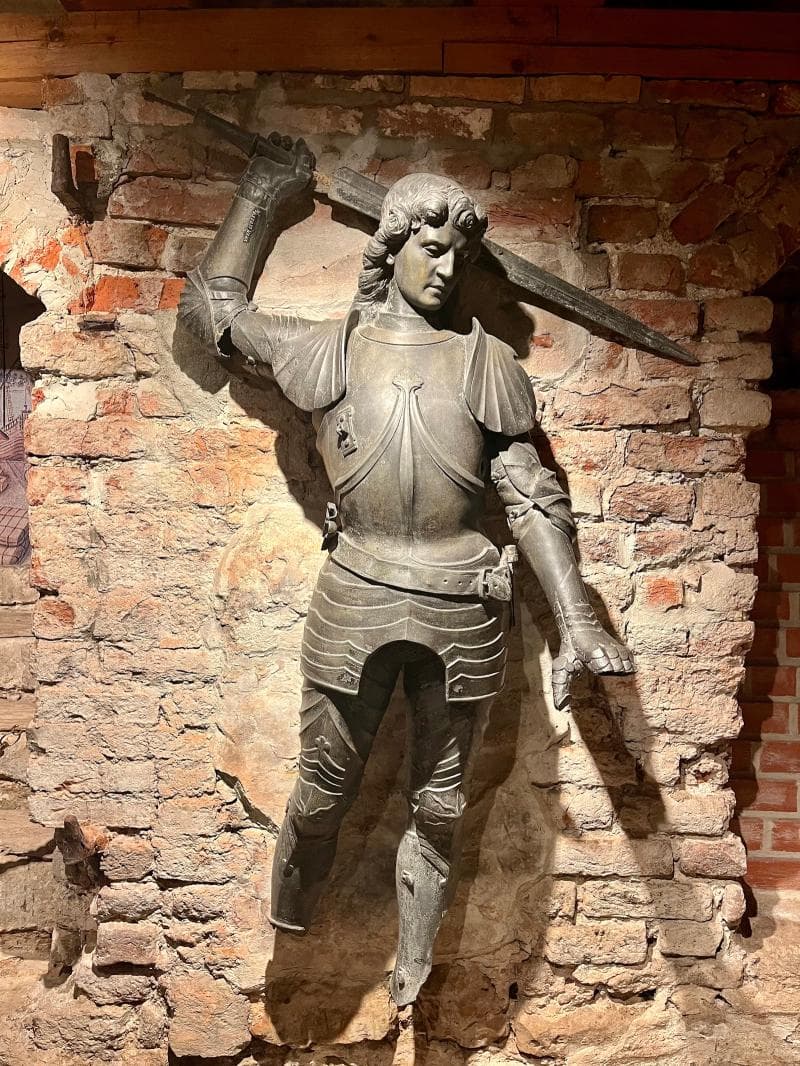
The Town Hall Square Frontage of the House of the Black Heads is truly special for its breathtaking and intricately detailed facade, which immediately captures the eye. Adorned with mythological figures, colorful coats of arms, a functioning astronomical clock, and statues representing Neptune, Mercury, and Saint Maurice, the exterior is a testament to the city's prosperous past and artistic heritage. It is widely regarded as one of the most photographed landmarks in Latvia, a magnet for visitors drawn to its ornate beauty.
Beyond its aesthetic appeal, the building is a powerful symbol of Riga's resilience and enduring cultural identity. Its faithful reconstruction after the destruction of World War II and subsequent Soviet demolition represents a profound act of national pride and cultural preservation. The only surviving original part of the building, a medieval cellar discovered during reconstruction, offers a tangible link to Riga's earliest days, allowing visitors to glimpse the Gothic foundations of its past.
Stories, Fun Facts & Local Details
The Brotherhood of Blackheads was famed for its boisterous celebrations, lavish banquets, and lively cultural events, making their headquarters a vibrant social center in medieval Riga. A charming local legend credits the brotherhood with displaying the world's first public decorated Christmas tree in Town Hall Square in 1510, a tradition now commemorated by a memorial plaque and an annual festive tree. A poignant inscription once adorned the building's gates, proclaiming, 'If I were to ever collapse, raise me up once again!' This prophetic wish was remarkably fulfilled by its reconstruction. For a period between 2012 and 2016, the House of the Black Heads even served as the temporary presidential residence of Latvia, adding another layer to its modern significance.
The Town Hall Square itself has always been a bustling focal point, initially serving as a market square and later hosting civic ceremonies, carnivals, and public events. Standing proudly in the center of the square is the Statue of Roland, a replica of the original. Roland statues were common in Hanseatic cities, symbolizing market rights, city independence, and justice. The original Riga Roland statue is now preserved in St. Peter's Church.
Visitor Perspective
Today, the House of the Black Heads welcomes visitors to explore its rich history and magnificent interiors. As a museum, it showcases a fascinating collection of artifacts, including items that once belonged to the Brotherhood, 19th-century furniture, and displays of Latvian state honors. Guided tours, often enhanced with audio guides in multiple languages, provide deep insights into the building's past and the lives of its former occupants. The grand halls continue to host prestigious events, from concerts and exhibitions to gala dinners, allowing visitors to experience the grandeur that characterized the brotherhood's gatherings. Strategically located at Rātslaukums 7, the House of the Black Heads is easily accessible on foot from anywhere in Riga's charming Old Town, making it a convenient and essential stop on any traveler's itinerary. Even if time is limited, simply admiring the elaborately detailed facade from Town Hall Square offers a profound appreciation for Riga's architectural and historical splendor.
Coordinates: 24.1068, 56.9472
View on Google Maps💬 How Travelers Describe This Place
Based on community votes
Beautiful
791Photogenic
613Unique
514Must See
457Interesting
207
Traveler Stories
Discover memorable experiences shared by travelers who have visited this place.
No traveler stories yet.
Be the first traveler to share what made this place memorable.

Tour
By
Spot
Discover amazing places around the world. Your journey starts here.
Explore
© 2026 TourBySpot. All rights reserved.