Torre del Filarete
Milan, Italy
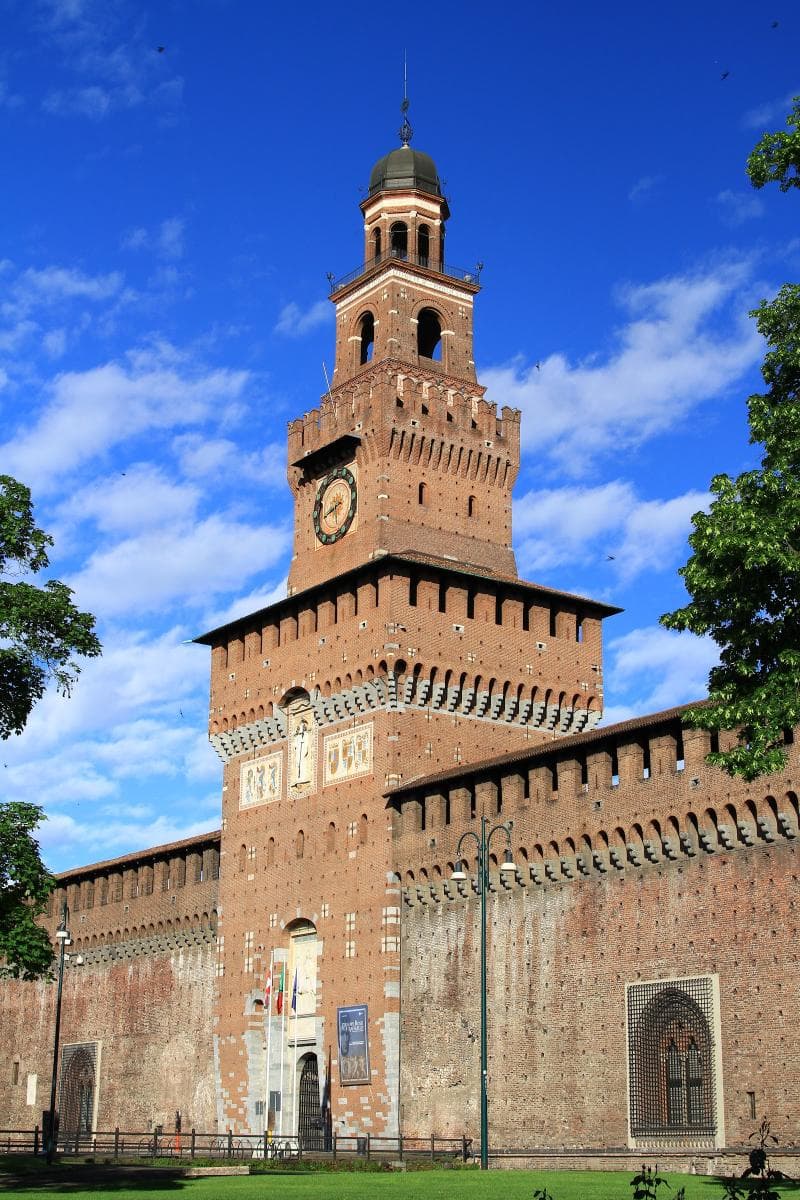
Discover Torre del Filarete, the iconic entrance tower of Castello Sforzesco in Milan, Italy. Explore its rich history, dramatic past, and stunning Renaissance-Gothic architecture.
Overview
As you approach Milan's majestic Castello Sforzesco, your gaze is inevitably drawn to its most iconic feature: the Torre del Filarete. This grand central tower serves as the main entrance to the sprawling fortress, a powerful symbol of Milan's rich and often turbulent past. More than just an architectural marvel, the Torre del Filarete is a gateway to centuries of history, a silent witness to dukes, artists, and dramatic events that shaped one of Italy's most vibrant cities.
Standing proudly at the castle's facade, the Torre del Filarete greets visitors with its imposing structure and intricate details. It's a focal point that instantly conveys the castle's significance, inviting exploration into the museums and courtyards within. While its current form is a testament to meticulous reconstruction, the tower encapsulates the spirit of the Renaissance and the enduring legacy of the Sforza family. Its presence today is a tribute to historical preservation and a deep respect for Milanese heritage.
History & Cultural Background
The story of the Torre del Filarete is intertwined with the history of the Castello Sforzesco itself. The original fortification was first ordered by Galeazzo II Visconti between 1358 and 1370, known then as the Castello di Porta Giova. However, it was Francesco Sforza, Duke of Milan, who began its transformation into a princely residence in 1450, after reclaiming the city from the Golden Ambrosian Republic. He commissioned the esteemed Florentine architect, sculptor, and theorist Antonio Averlino, better known as Filarete, to design and adorn the central tower in 1452.
Filarete was a significant figure in the early Renaissance, famous for his bronze doors for St. Peter's Basilica in the Vatican and his influential 'Treatise on Architecture'. His original design for the tower was a masterpiece, but its fate took a dramatic turn. In 1521, while serving as a gunpowder magazine, the Torre del Filarete tragically exploded.
For centuries, the castle and its entrance lay altered, but a grand reconstruction effort led by architect Luca Beltrami took place between 1891 and 1905. Beltrami meticulously recreated the Torre del Filarete, basing his work on 16th-century drawings, ensuring historical accuracy. The reconstructed tower was inaugurated in 1905 and dedicated to King Umberto I, who had been assassinated five years earlier.
What Makes It Special
The Torre del Filarete is special not only for its historical significance but also for its architectural resilience and symbolic role. It stands as the main entrance, instantly recognizable and deeply embedded in Milan's identity. Its blend of Gothic and Renaissance styles, particularly evident in its reconstructed form, offers a visual narrative of the eras it has spanned. The tower's commanding presence anchors the Castello Sforzesco, making it an unmissable landmark for anyone visiting the city.
Beltrami's reconstruction imbued the tower with new details while honoring its past. It features a clock adorned with a radiant sun motif inspired by the Sforza coat of arms, a statue of Saint Ambrose, Milan's patron saint, and a bas-relief depicting King Umberto I on horseback. These elements tie the tower to different periods of Milanese history, from the powerful Sforza duchy to modern Italy, making it a rich tapestry of cultural memory.
Stories, Fun Facts & Local Details
The architect Antonio Averlino adopted the name 'Filarete', which comes from the Greek 'Philáretos', meaning 'lover of excellence' or 'lover of virtue'. This name perfectly encapsulates his Renaissance ideals and his dedication to his craft, reflected in his various architectural and sculptural works, including the Ospedale Maggiore in Milan and his theoretical writings about the ideal city of Sforzinda.
Perhaps the most dramatic story associated with the tower is its catastrophic destruction. The explosion in 1521 was a violent punctuation mark in the castle's history, reducing Filarete's original work to rubble. This event highlights the castle's dual role as both a ducal residence and a military fortress, susceptible to the dangers of war and its stored armaments.
During the reign of Ludovico Sforza, Milan became a center of Renaissance art and culture, and even Leonardo da Vinci contributed to the decoration of the Castello Sforzesco, further enriching its artistic legacy. The reconstruction of the Torre del Filarete by Luca Beltrami was not just an architectural project, but an act of historical homage, ensuring that this vital piece of Milanese heritage would once again stand tall.
Visitor Perspective
For the curious traveler, the Torre del Filarete is much more than an entrance; it's the beginning of an immersive journey into Milanese history and art. Stepping through its archways means entering the vast complex of the Castello Sforzesco, which today houses numerous civic museums and art collections, including works by Michelangelo and Leonardo da Vinci. The tower's grandeur prepares you for the treasures that lie within, from ancient art to historical artifacts.
Its prominent location also positions it as a perfect starting point for exploring the surrounding areas. Just beyond the castle lies Parco Sempione, a sprawling English-style garden offering a tranquil escape and picturesque views. The Torre del Filarete is a must-see landmark, offering a tangible connection to Milan's past and an inspiring example of architectural revival. Visitors often praise its beauty and historical significance, making it a key highlight of any trip to Milan.
Coordinates: 9.17861, 45.47
View on Google Maps💬 How Travelers Describe This Place
Based on community votes
Interesting
836Unique
620Must See
594Photogenic
522Beautiful
83
Traveler Stories
Discover memorable experiences shared by travelers who have visited this place.
No traveler stories yet.
Be the first traveler to share what made this place memorable.

Tour
By
Spot
Discover amazing places around the world. Your journey starts here.
Explore
© 2026 TourBySpot. All rights reserved.