Torii Gates
Tokyo, Japan
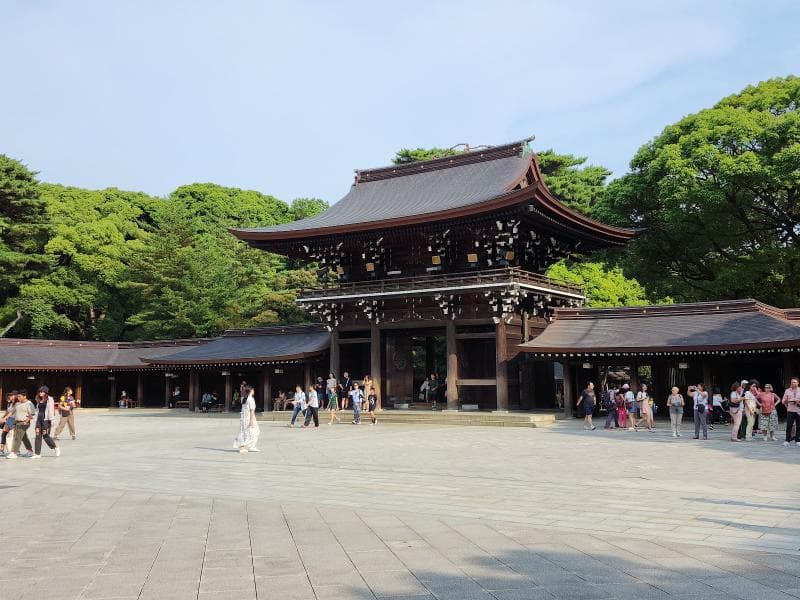
Discover the majestic Torii Gates of Meiji Shrine in Tokyo, Japan. Explore their cultural significance, history, and spiritual role.
Overview
Stepping into the grounds of Meiji Shrine in Tokyo, Japan, visitors are immediately greeted by the towering presence of its iconic Torii Gates. These magnificent wooden structures serve not merely as architectural marvels but as profound symbols, marking the transition from the bustling, everyday world of Shibuya to the serene and sacred realm of the shrine itself. Meiji Jingu boasts eight such gates, each playing a vital role in defining the spiritual journey through its expansive, man-made forest. The largest and most famous of these, often referred to as the Otorii or Great Torii, stands as a testament to traditional Japanese craftsmanship and spiritual significance.
This particular Torii, a central landmark on the path to the main shrine, commands attention with its impressive dimensions, inviting millions of visitors annually to partake in a moment of reflection and respect. The tranquility that descends upon entering these gates offers a stark, yet welcome, contrast to the vibrant urban landscape just beyond, embodying a unique blend of nature, history, and profound spiritual meaning at the heart of Tokyo.
History & Cultural Background
The Meiji Shrine, and by extension its Torii Gates, are deeply rooted in Japan's modern history. Established in 1920, the shrine is dedicated to the deified spirits of Emperor Meiji and his consort, Empress Shoken. Emperor Meiji's reign (1868-1912) was a pivotal period known as the Meiji Restoration, during which Japan transitioned from a feudal society into a modern, industrialized nation. The shrine was built to honor their contributions to this transformative era and to provide a lasting place of reverence.
The Torii Gates themselves represent a core element of Shinto, Japan's indigenous religion. A torii traditionally symbolizes a gateway to a sacred space, separating the physical world from the spiritual world where deities reside. The act of passing through one is a symbolic purification and an entry into hallowed ground. While the original shrine buildings and some torii were tragically destroyed during the firebombings of World War II, the dedication of the Japanese people led to their meticulous reconstruction, ensuring the preservation of this sacred site. The current largest wooden torii, for instance, was rebuilt in 1975, replacing one struck by lightning in 1966.
What Makes It Special
What truly sets the Torii Gates of Meiji Shrine apart is their immense scale and the profound story behind their construction. The second, and arguably most iconic, Torii is celebrated as the largest wooden torii gate in Japan. It stands at an imposing 12 meters tall, spans 17.1 meters wide, and features massive pillars, each 1.2 meters in diameter and weighing 13 tons. Remarkably, the wood for these colossal pillars was sourced from a 1,500-year-old Japanese cypress tree from Taiwan's Alishan Mountain Range, reflecting not only the grandeur of the project but also the historical connections of the time.
The meticulous craftsmanship and the sheer dedication required to transport and erect such ancient timber highlight a deep reverence for nature and tradition. Furthermore, the newer First Torii gate, rebuilt in 2022, utilized Yoshino Cedar, marking a continuation of this tradition with domestically sourced materials after extensive searching for suitable timber. These gates are more than just entrances; they are enduring monuments to a nation's history, its spiritual beliefs, and the natural world.
Stories, Fun Facts & Local Details
Beyond their structural significance, the Torii Gates hold several fascinating details. It's a common spiritual practice for visitors to bow briefly before passing through a torii and to walk along the sides of the path, as the very center is traditionally reserved for the kami, or deities. This simple act of reverence connects visitors directly to Shinto etiquette and the spiritual customs of Japan.
Another engaging detail found within the shrine grounds, often visible after passing the initial torii, are the vibrant displays of sake barrels (kazaridaru) and wine barrels. These are offerings to the enshrined deities and represent a blend of traditional Japanese spirit and a nod to Emperor Meiji's progressive appreciation for Western culture, aligning with the concept of 'Wakon Yosai' (Japanese Spirit and Western Knowledge) that defined his era. The wine barrels, in particular, have been donated by producers from Burgundy, France, since 2006, symbolizing enduring cultural connections.
Visitor Perspective
For many travelers, approaching the Torii Gates of Meiji Shrine marks the true beginning of their experience. The vast, gravel-lined pathways leading to the main shrine buildings, shaded by a dense forest of approximately 100,000 trees donated from across Japan, create an immediate sense of calm. The sound of the city, so pervasive just moments before, fades away, replaced by the rustling of leaves and the distant chirping of birds.
This immersive journey through the forest, punctuated by the impressive torii gates, fosters a feeling of peaceful contemplation. It's an opportunity to connect with Japan's rich cultural heritage and spiritual traditions, offering a refreshing escape and a moment of tranquility in the heart of one of the world's busiest metropolises. Observing locals perform traditional purification rituals at the temizuya (water basin) or leaving wishes on ema (wooden tablets) further enriches the cultural immersion.
Coordinates: 139.6928, 35.6723
View on Google Maps💬 How Travelers Describe This Place
Based on community votes
Interesting
948Photogenic
913Beautiful
595Must See
358Unique
196
Traveler Stories
Discover memorable experiences shared by travelers who have visited this place.
No traveler stories yet.
Be the first traveler to share what made this place memorable.

Tour
By
Spot
Discover amazing places around the world. Your journey starts here.
Explore
© 2026 TourBySpot. All rights reserved.