Toompea Hill Paths
Tallinn, Estonia
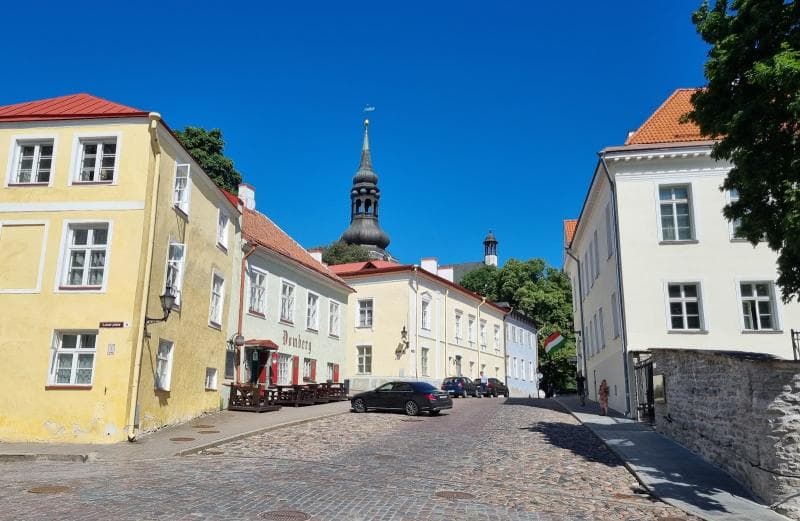
Explore Toompea Hill Paths in Tallinn, Estonia, home to Toompea Castle and Parliament, offering rich history, folklore, and panoramic city views.
Overview
Perched majestically atop a limestone hill, Toompea Hill Paths in Tallinn, Estonia, offer a journey through centuries of history and breathtaking panoramic views. This elevated district forms the upper part of Tallinn's UNESCO World Heritage-listed Old Town, serving as the historical and political heart of the nation. The area encompasses the iconic Toompea Castle, which houses the Estonian Parliament (Riigikogu), along with grand cathedrals and numerous viewpoints that present a captivating tableau of the city's red-tiled roofs, medieval spires, and the distant Baltic Sea. Exploring Toompea means immersing oneself in a living museum where every cobbled path and ancient wall tells a story of rulers, conquests, and national resilience.
History & Cultural Background
The history of Toompea Hill is inextricably linked with the destiny of Tallinn and Estonia itself, having served as a center of power for over 800 years. The first recorded stronghold on the hill dates back to at least the 9th century AD. In 1219, Danish crusaders, led by King Valdemar II, took over the castle. The subsequent centuries saw a succession of foreign rulers—German Knights of the Sword, the Teutonic Order, Swedes, and Russians—each leaving their indelible architectural and cultural mark. Toompea Castle, as it stands today, is a fascinating amalgamation of these eras, featuring medieval fortifications alongside a late Baroque facade added in the 18th century during Catherine the Great's reign. After Estonia gained independence, a distinctive Expressionist-style Parliament building was constructed within the castle complex in the early 20th century, cementing Toompea's role as the seat of the Estonian government.
What Makes It Special
What truly sets Toompea Hill Paths apart is the harmonious blend of its political significance, historical depth, and natural beauty. The hill's varied architecture, from the rugged medieval walls on its western and northern edges to the pastel-pink Baroque palace facade facing Lossi plats, creates a unique visual narrative of Estonia's past. The Tall Hermann tower, a prominent feature of Toompea Castle, is not merely an ancient defense structure; it is a powerful symbol of Estonian independence, with the national flag proudly hoisted and lowered daily to the sound of the anthem. Moreover, the hill is home to several exceptional viewing platforms, such as Kohtuotsa and Patkuli. From these vantage points, visitors are treated to stunning panoramic vistas that sweep across Tallinn's Old Town, the modern cityscape, the port, and the Gulf of Finland, offering a truly iconic perspective of this Hanseatic city.
Stories, Fun Facts & Local Details
Toompea Hill is steeped in local folklore and compelling narratives. One of the most cherished legends tells of Linda, the grieving wife of the mythical hero Kalev. Distraught by her husband's death, she is said to have painstakingly built Toompea Hill boulder by boulder as his burial mound, her tears forming the nearby Lake Ülemiste. This tale imbues the very ground of Toompea with a sense of enduring love and national origin. Another significant landmark, the opulent Alexander Nevsky Cathedral, presents a more complex story. Built by the Russian Empire in the late 19th and early 20th centuries, its prominent placement on Toompea was intended to symbolize Russian dominance, a fact that led to serious proposals for its demolition after Estonia gained independence. Despite this contentious history, its onion domes and intricate mosaics remain a striking architectural feature. Furthermore, the name 'Tallinn' itself is thought by some to be derived from 'taani linna' or 'Danish town,' referencing the early Danish conquest of Toompea.
Visitor Perspective
For the curious traveler, exploring Toompea Hill Paths is largely a free and accessible experience. The exterior grounds of Toompea Castle, including Lossi plats and the surrounding public park areas, can be wandered freely, offering close-up views of its diverse architecture and the Tall Hermann tower. Guided tours of the Estonian Parliament interior are available without charge, providing insights into the country's legislative process, though these require advance booking and a valid photo ID. Pathways like Pikk jalg ('Long Leg') and Lühike jalg ('Short Leg') connect Toompea with the Lower Town, offering scenic, albeit sometimes steep and cobbled, ascents. It's advisable to wear comfortable shoes with good grip, especially on wet or icy days, as the cobblestones can be slippery. To truly enjoy the panoramic views from Kohtuotsa and Patkuli viewing platforms without large crowds, consider visiting early in the morning or later in the afternoon. For those planning to enter the Alexander Nevsky Cathedral, modest dress that covers shoulders and knees is recommended.
Coordinates: 24.737029108310807, 59.435731992086914
View on Google Maps💬 How Travelers Describe This Place
Based on community votes
Beautiful
872Must See
846Unique
684Interesting
363Photogenic
250
Traveler Stories
Discover memorable experiences shared by travelers who have visited this place.
No traveler stories yet.
Be the first traveler to share what made this place memorable.

Tour
By
Spot
Discover amazing places around the world. Your journey starts here.
Explore
© 2026 TourBySpot. All rights reserved.