Tokyo Tower
Tokyo, Japan
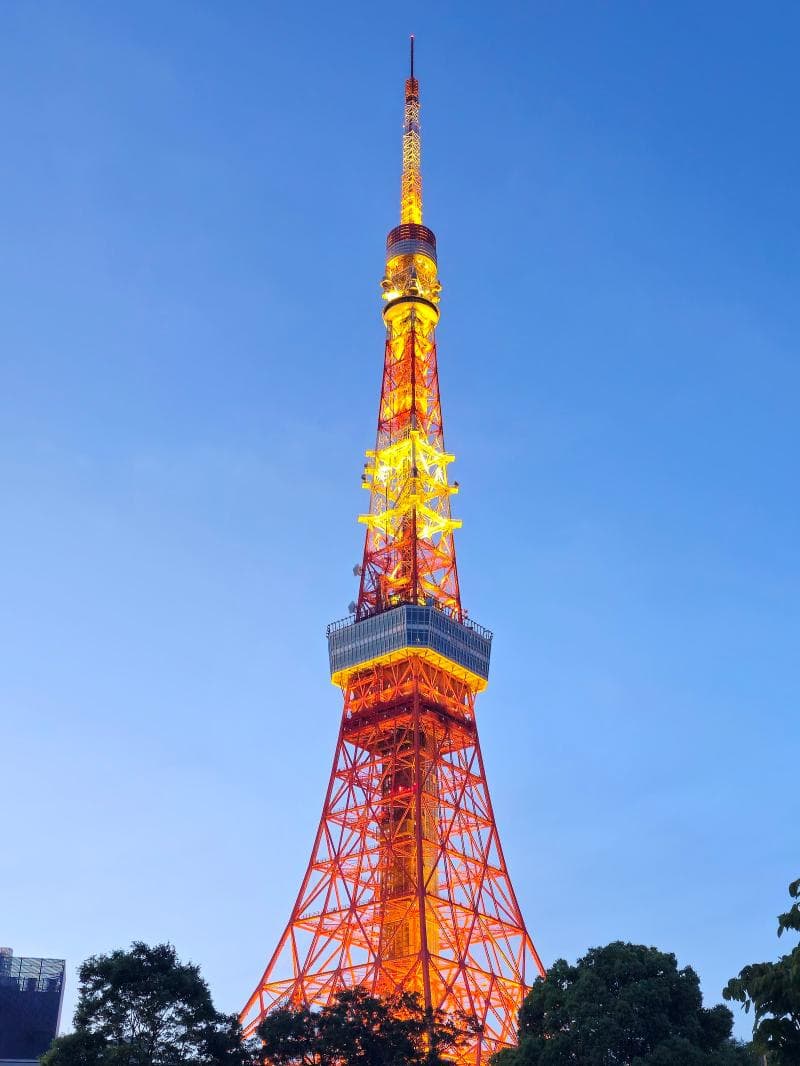
Discover Tokyo Tower in Tokyo, Japan! Explore its rich history, iconic orange-and-white design, stunning city views, and cultural significance.
Overview
Soaring into the Tokyo skyline, Tokyo Tower is a captivating landmark that blends historic significance with modern charm. This iconic communications and observation tower, located in the Shiba-koen district of Minato, Tokyo, Japan, stands at an impressive 333 meters (1,093 feet) tall. Its distinctive lattice structure, inspired by Paris's Eiffel Tower, is famously painted in international orange and white, a striking color scheme chosen for aviation safety regulations. Since its completion in 1958, Tokyo Tower has served as a vital broadcast antenna for television and radio, while also drawing millions of visitors eager to experience its panoramic city views and delve into its rich history.
The tower features two main observation decks: the Main Deck at 150 meters and the Top Deck at 250 meters, each offering unique perspectives of the sprawling metropolis. At its base lies FootTown, a vibrant complex filled with shops, cafes, and entertainment, making Tokyo Tower a complete destination for both locals and international travelers.
History & Cultural Background
Tokyo Tower was more than just an architectural feat; it was a powerful symbol of Japan's remarkable post-war recovery and its rapid economic growth. Built between 1957 and 1958, its construction marked the nation's transformation from the devastation of World War II to a technologically advanced society.
Designed by the esteemed architect Tachū Naitō, known for his expertise in earthquake-resistant structures, the tower's concept aimed to provide a comprehensive broadcasting antenna for the Kanto region, as individual broadcasters previously operated their own towers. Its inauguration on December 23, 1958, coincided with what many refer to as Japan's post-war economic 'miracle.' This structure not only facilitated modern communication but also became an enduring emblem of hope and progress for a nation looking forward.
What Makes It Special
What truly sets Tokyo Tower apart is its innovative engineering. Despite being taller than the Eiffel Tower by 9 meters (333m vs. 324m), it was constructed using approximately 60% less steel, a testament to Japanese engineering prowess. Its design was specifically crafted to withstand significant seismic activity, capable of enduring magnitude 8.0 earthquakes through a lattice structure that allows for controlled swaying.
The tower's distinctive international orange and white painting is not merely aesthetic but a requirement under aviation law to ensure visibility for aircraft. While Tokyo Skytree later surpassed it in height in 2012, Tokyo Tower remains a beloved icon, with many television and FM radio stations continuing to utilize its broadcasting capabilities.
Stories, Fun Facts & Local Details
One fascinating detail about Tokyo Tower's construction involves the materials used. A portion of the steel came from recycled American military tanks that were left in Japan after the Korean War. This transformation of instruments of war into a beacon of peace and prosperity perfectly encapsulates Japan's post-war philosophy of renewal.
The tower has firmly cemented its place in Japanese popular culture, appearing in countless films, anime, manga, and television shows, often serving as an instantly recognizable symbol of Tokyo itself. For instance, in many kaiju (monster) films, its destruction often symbolizes urban chaos and the vulnerability of modern civilization. At the tower's base, FootTown offers a diverse array of shops, cafes, and restaurants, as well as an e-sports entertainment complex. Visitors can also experience the seasonal lighting displays, with different colors illuminating the tower throughout the year. A local legend suggests that if you are with a loved one when the lights turn off at midnight, it will bring happiness.
Visitor Perspective
A visit to Tokyo Tower offers more than just breathtaking views; it's an immersive experience. From the Main Deck at 150 meters, you can enjoy memorable city vistas, and for the adventurous, a 'look-down' window provides a thrilling perspective of the ground below. The Top Deck, at 250 meters, offers an even more expansive bird's-eye view, and on clear days, you might even catch a glimpse of the majestic Mount Fuji in the distance.
For those seeking a more active ascent, a 600-step outdoor staircase is open on specific days, leading up to the Main Deck and offering unique internal views of the tower's structure. Beyond the tower itself, its prime location in Minato means it's surrounded by other cultural gems. Shiba Park, one of Japan's oldest parks, and the historic Zojoji Temple, with its impressive main gate, are just a short walk away, providing serene retreats and additional photographic opportunities with the tower as a stunning backdrop.
Coordinates: 139.74556, 35.65861
View on Google Maps💬 How Travelers Describe This Place
Based on community votes
Unique
670Beautiful
655Photogenic
594Must See
266Interesting
166
Traveler Stories
Discover memorable experiences shared by travelers who have visited this place.
No traveler stories yet.
Be the first traveler to share what made this place memorable.
Things to see at Tokyo Tower



Tour
By
Spot
Discover amazing places around the world. Your journey starts here.
Explore
© 2026 TourBySpot. All rights reserved.