Tinguely Museum
Basel, Switzerland
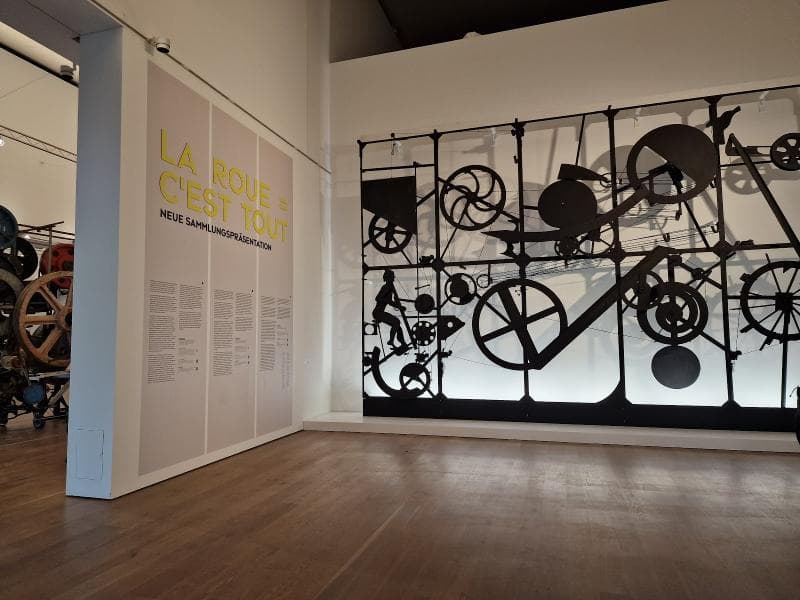
Explore the captivating Tinguely Museum in Basel, Switzerland, home to Jean Tinguely's groundbreaking kinetic art. Discover moving sculptures and a unique artistic experience.
Overview
Nestled gracefully on the banks of the Rhine River in Basel, Switzerland, the Tinguely Museum stands as a vibrant testament to the groundbreaking work of Swiss artist Jean Tinguely (1925–1991). Opened in 1996, this unique institution is dedicated entirely to Tinguely's kinetic art, housing the world's largest collection of his dynamic, moving sculptures. Designed by the acclaimed Ticino architect Mario Botta, the museum itself is an architectural marvel, harmoniously blending with the surrounding Solitude Park while offering an ideal stage for Tinguely's often whimsical and thought-provoking creations. It's a place where art breaks free from static observation, inviting visitors into an interactive world of motion, sound, and playful mechanics. [3, 4, 12, 14]
The museum provides a comprehensive overview of Tinguely's four-decade career, showcasing everything from his delicate early reliefs to his monumental machine sculptures of the 1980s. More than just a display space, the Tinguely Museum is an experience, reflecting the artist's inventive spirit and his revolutionary approach to art. It engages the senses and encourages a fresh perspective on the intersection of art, technology, and society. [3, 10, 11]
History & Cultural Background
Jean Tinguely, though born in Fribourg, Switzerland, in 1925, spent his formative years in Basel, a city that profoundly influenced his early artistic development. He began his artistic journey with an apprenticeship in window display design, later formalizing his studies at the Basel Arts and Crafts School. It was here that he was introduced to Dadaism, a radical art movement whose playful and rebellious philosophy resonated deeply with his own emerging vision. [23, 26]
Tinguely moved to Paris in 1952, where he became a prominent figure in the post-war avant-garde, aligning himself with the Nouveau Réalisme movement. His art satirized the increasing automation and consumerism of modern society, transforming discarded materials and industrial parts into 'metamechanical' sculptures that moved, clattered, and often self-destructed. [9, 18, 20]
The Tinguely Museum itself was established in 1996, a century after the founding of the multinational pharmaceutical company Roche, which financed its creation as a gesture of gratitude to the people of Basel. A pivotal moment in the museum's formation was the generous donation of over fifty machine sculptures, drawings, and archival materials by Niki de Saint Phalle, Tinguely's widow. This contribution laid the essential groundwork for what would become the world's foremost center for Tinguely's work. [3, 13]
What Makes It Special
What truly sets the Tinguely Museum apart is the interactive nature of its exhibits. Many of Jean Tinguely's kinetic sculptures can be activated by visitors with the push of a button, transforming static displays into lively, whirring, and clattering performances. This direct engagement challenges traditional notions of passive art appreciation, making each visit a dynamic and personal experience. Tinguely's machines, crafted from an eclectic mix of scrap metal, motors, and found objects, are not just visually engaging; they often produce rhythmic sounds, creating a multi-sensory immersion into his artistic universe. [9, 14, 17, 18]
The museum houses the world's largest collection of Tinguely's works, offering an unparalleled insight into his creative evolution. Beyond the art, the building's architecture by Mario Botta is notable. Its four facades are uniquely designed, with one spectacular feature being 'La Barca,' a long, sloping glass gallery facing the Rhine, which provides visitors with contemplative views of the river. [5, 12, 14]
Another distinctive feature is the museum's open workshop, located on the second floor. Here, visitors can observe the dedicated restoration team at work, meticulously maintaining and preserving Tinguely's intricate kinetic creations. This transparency provides a unique glimpse into the specialized care required for these moving artworks and underscores the museum's role as a global center of competence for Tinguely's oeuvre. [3]
Stories, Fun Facts & Local Details
Jean Tinguely's art is rich with storytelling, often reflecting his playful and rebellious spirit. He believed in art that was alive, unpredictable, and accessible to everyone, famously satirizing the dehumanizing aspects of technology and industrial production. His 'Méta-Matic' drawing machines are perhaps the most interactive examples of this philosophy. Visitors can select a pen and paper, then initiate the machine to create their own unique, abstract drawing, a tangible souvenir of their artistic interaction. This concept catapulted Tinguely onto the international stage, challenging the very definition of artistic creation. [11, 17, 20]
One of Tinguely's significant late works, the 'Mengele Dance of Death,' located on the museum's second floor, presents a darker, more somber reflection. Composed of burnt machine parts, these sculptures move with squeaking and groaning sounds, casting dancing shadows on the walls, creating a powerful and immersive experience. [14, 17]
Beyond the museum walls, Tinguely's legacy can be felt elsewhere in Basel. The iconic Tinguely Fountain (also known as the Carnival Fountain) in the city center is another playful kinetic sculpture, offering a joyful, public display of his mechanical artistry. The museum's serene location within Solitude Park, directly on the Rhine, provides an attractive place for recreation, inviting visitors to stroll along the riverbanks or relax amidst centenary trees after exploring the exhibits. [3, 9, 15]
Visitor Perspective
A visit to the Tinguely Museum is an unforgettable journey for any curious traveler. The atmosphere is often described as lively and engaging, a place where laughter and amazement are common as visitors watch the machines come to life. The museum successfully caters to a broad audience, from art aficionados to families with children, ensuring an interactive and stimulating experience for all. The continuous movement and sounds of the sculptures create an immersive environment that is both educational and entertaining. [3, 10, 11]
The museum is well-equipped to ensure a comfortable visit, offering facilities such as a museum shop, a cloakroom, and the delightful 'Chez Jeannot' bistro. The bistro, with its artistic setting, provides seasonal, home-style cuisine and offers pleasant views of Solitude Park and the Rhine, making it an ideal spot for a break. The museum is also fully accessible for visitors with disabilities, with wheelchair access to all exhibition spaces and wheelchairs available on site. Public transport connections are excellent, linking the museum easily to Basel's city center and main train station. [10, 16, 28]
Coordinates: 7.612222, 47.559167
View on Google Maps💬 How Travelers Describe This Place
Based on community votes
Photogenic
683Beautiful
536Must See
489Unique
251Interesting
88
Traveler Stories
Discover memorable experiences shared by travelers who have visited this place.
No traveler stories yet.
Be the first traveler to share what made this place memorable.
Things to see at Tinguely Museum



Tour
By
Spot
Discover amazing places around the world. Your journey starts here.
Explore
© 2026 TourBySpot. All rights reserved.