Tin How Temple
San Francisco, United States
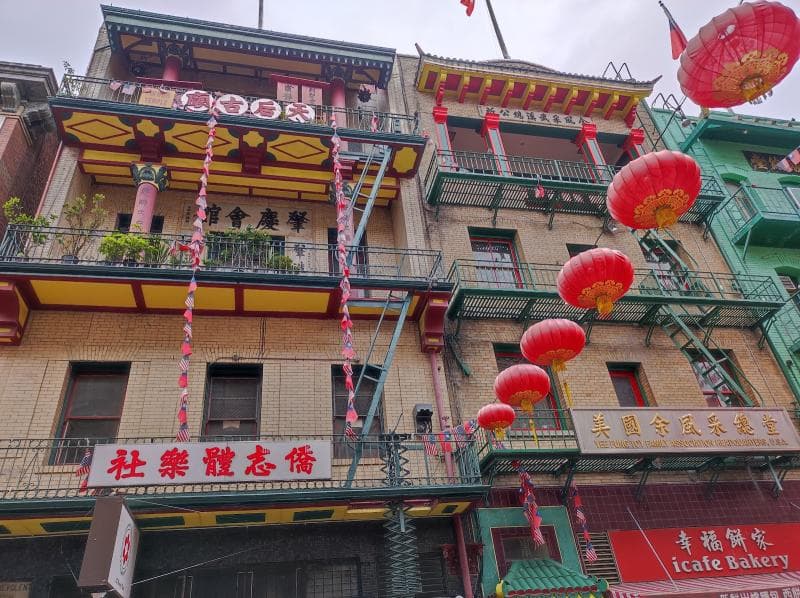
Explore Tin How Temple, San Francisco's oldest Taoist temple in Chinatown, dedicated to the sea goddess Mazu. Discover its rich history and cultural significance.
Overview
Nestled on Waverly Place, a vibrant alley often called 'Tin How Temple Street' in Chinese, the Tin How Temple stands as a spiritual beacon within San Francisco's bustling Chinatown. This enduring sanctuary, dedicated to the revered Chinese sea goddess Mazu, offers a profound glimpse into the rich history and cultural resilience of early Chinese immigrants in the United States. As you ascend the three flights of stairs to its entrance, you leave the lively streetscape behind, entering a realm of tranquility, fragrant incense, and deep devotion.
The temple is widely recognized as the oldest extant Taoist temple in San Francisco's Chinatown and one of the oldest continuously operating Chinese temples in the entire country. Its interior, a symphony of gold and deep reds, is adorned with hundreds of hanging lanterns and intricate altars, creating an atmosphere that is both visually captivating and spiritually resonant. Visitors are welcomed to observe the rituals and quiet contemplation of worshippers, making it a unique cultural experience in the heart of one of America's most iconic neighborhoods.
History & Cultural Background
The Tin How Temple's story is deeply intertwined with the saga of Chinese immigration to California during the Gold Rush era of the mid-19th century. Founded purportedly around 1852 or 1853 by Cantonese immigrants, the temple served as a crucial spiritual anchor for those who braved perilous journeys across the Pacific. These early settlers sought the protection of Mazu, known in Cantonese as Tin How or the 'Empress of Heavens' and 'Goddess of the Seven Seas', who was believed to safeguard sailors and travelers.
Its establishment reflects the strong spiritual needs and cultural practices brought from their homeland. While the exact founding date on Waverly Place is debated, with some historical evidence pointing to the mid-1870s, its significance to the community has remained unwavering for generations. A testament to its resilience, the temple’s original altar, goddess statue, and temple bell miraculously survived the devastating 1906 earthquake and fire, even as much of San Francisco lay in ruins. The temple subsequently reopened at its current 125 Waverly Place location around 1910, continuing its vital role in Chinatown's spiritual landscape.
What Makes It Special
Beyond its historical seniority, the Tin How Temple holds a special place due to its profound sense of authenticity and enduring spiritual activity. Unlike some historical sites that become mere relics, Tin How Temple remains a vibrant center of worship, where the traditions of generations are actively practiced.
The temple’s intimate setting on the upper floor of a historic building on Waverly Place contributes to its unique charm. This placement, high above the street, was a common practice in 19th-century Chinatown due to restrictive laws limiting where Chinese San Franciscans could live and work. The ascent to the temple feels like a ritual in itself, a separation from the mundane below. Inside, the rich sensory experience—the sweet aroma of incense, the soft glow of countless lanterns, and the quiet reverence of devotees—transports visitors to another time and place.
Stories, Fun Facts & Local Details
One of the most compelling aspects of Tin How Temple is its connection to the personal stories of resilience and faith. For early Chinese immigrants, Mazu was more than just a deity; she was a tangible source of hope and comfort during their arduous sea voyages and in their new, often challenging, lives in America. The practice of offering pyramids of oranges, symbolizing prosperity due to the similar Cantonese pronunciation of 'orange' and 'wealth,' offers a charming insight into traditional beliefs.
The very name of the alley, Waverly Place, is known in Chinese as 'Tin How Temple Street,' highlighting the temple's central importance to the community. Visitors might witness older women preparing offerings, or individuals seeking guidance by shaking divinity sticks until one falls, then exchanging its number for a slip of paper containing advice or a poetic message. While photography is generally discouraged inside to maintain the sanctity of the space, a quiet moment spent on the temple's small balcony can offer a unique bird's-eye view of Chinatown, a reminder of the temple's perch above the vibrant district.
Visitor Perspective
Visiting the Tin How Temple is less about conventional sightseeing and more about immersive cultural engagement. Prepare for a modest climb up three steep wooden flights of stairs, an experience that adds to the temple's secluded and sacred feel. Once inside, an atmosphere of respectful quietude prevails. While visitors are welcome to observe, it is essential to be mindful of those actively worshipping.
The temple is a place for quiet reflection rather than loud exploration. The air is thick with the scent of burning incense, creating a meditative ambiance. A small donation is often appreciated for the upkeep of this historic and continuously active place of worship. Stepping into Tin How Temple offers a powerful, personal encounter with the spiritual heart of San Francisco's Chinatown, providing a deep appreciation for the community's enduring heritage and faith.
Coordinates: -122.4071, 37.79457
View on Google Maps💬 How Travelers Describe This Place
Based on community votes
Unique
791Interesting
514Beautiful
457Must See
252Photogenic
207
Traveler Stories
Discover memorable experiences shared by travelers who have visited this place.
No traveler stories yet.
Be the first traveler to share what made this place memorable.

Tour
By
Spot
Discover amazing places around the world. Your journey starts here.
Explore
© 2026 TourBySpot. All rights reserved.