Ticket Booth
Zagreb, Croatia
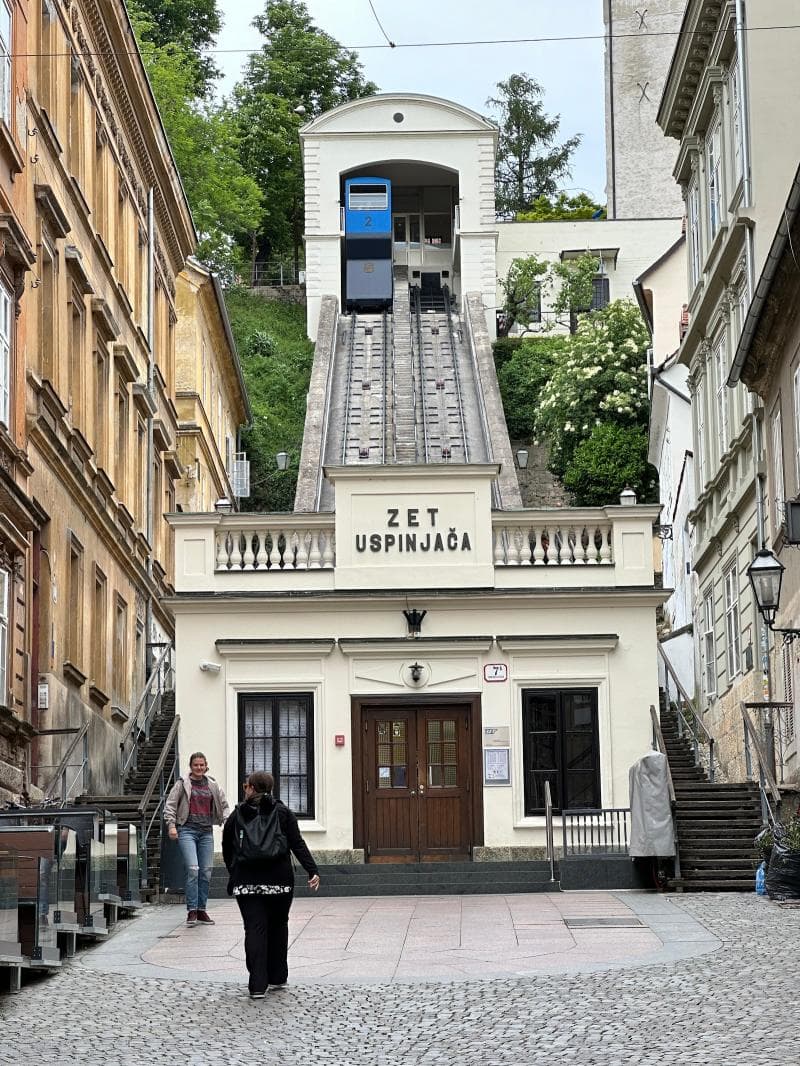
Discover the Zagreb Funicular's Ticket Booth, your gateway to a historic ride between Zagreb's Upper and Lower Towns in Croatia. Explore its rich history and unique charm.
Overview
Nestled within the vibrant heart of Zagreb, Croatia, the Zagreb Funicular offers more than just a ride between the city's Lower and Upper Towns; it provides a direct portal to history. While its journey is brief, covering a mere 66 meters, the experience of stepping aboard is a quintessential Zagreb moment. The act of acquiring a ticket, often from a simple booth or the attendant, marks the beginning of a charming ascent aboard the world's shortest public transport funicular. This iconic blue carriage, maintained by Zagreb Electric Tram (ZET), is not merely a mode of transport but a cherished symbol and a protected cultural monument, connecting modern city life with the ancient allure of Gornji Grad.
History & Cultural Background
The story of the Zagreb Funicular began in 1888 when Osijek entrepreneur D.W. Klein observed the bustling pedestrian traffic along Bregovita Street, now Tomićeva Street, leading to the Upper Town. Recognizing the potential, Klein envisioned a funicular to ease the arduous climb, drawing inspiration from similar systems across Europe. His request for a building permit was swiftly granted, contingent on the funicular's ownership being transferred to the City after 40 years.
Construction commenced in May 1889, with the funicular officially opened on October 8, 1890, though regular operations started on April 23, 1893. Initially propelled by a steam engine, it faced frequent breakdowns, earning it the affectionate, albeit slightly critical, nickname 'Zapinjača' or 'The Stutterer' from locals. In 1929, the funicular became municipal property, and in 1934, its steam power was replaced by a more reliable electric motor. Despite extensive renovations in the early 1970s, which saw the dismantling and meticulous reproduction of original components, the funicular has remarkably preserved its original exterior appearance and structural design. This dedication to its heritage has earned it legal protection as a cultural monument, ensuring its place in Zagreb's historical narrative.
What Makes It Special
The Zagreb Funicular stands out for several compelling reasons. At just 66 meters long, it holds the distinction of being the shortest public transport funicular in the world, a quirky fact that often delights visitors. Its journey, lasting approximately 64 seconds, offers a quick yet memorable ascent or descent with a 52% inclination, making it one of the steepest. Beyond its technical superlatives, its unique charm lies in its untouched historical facade. Having maintained its original appearance and most of its technical features for over a century, it serves as a living piece of history. This blend of historical authenticity and unique physical characteristics makes it a beloved landmark, recognized by European Best Destinations as one of the most beautiful funiculars in Europe.
Stories, Fun Facts & Local Details
Over its long life, the Zagreb Funicular has woven itself into the fabric of the city, becoming more than just a practical link between its two main districts. Its early days, marked by mechanical issues, gave rise to its endearing nickname, 'Zapinjača' (The Stutterer), a testament to its occasional need for a human 'push' from passengers. Interestingly, in its nascent years, the funicular cars were divided into first and second classes, with different pricing and views, a detail that speaks to the social customs of a bygone era. The front sections offered better views and were considered first class, while the middle section, with a poorer view, was second class.
Despite its early temperamental nature, the funicular boasts an impeccable safety record, with no reported accidents or fatalities in its more than 130 years of operation, earning it the title of the safest public transport in Zagreb. It is now famously recognizable by its bright blue color, adopted since 1947, consistent with other Zagreb public transport vehicles. Today, the original engine components from its steam-powered era are preserved in the Zagreb Technical Museum, offering a glimpse into its mechanical past.
Visitor Perspective
For many travelers, the Zagreb Funicular ticket booth, though not a grand architectural marvel itself, serves as the initial point of engagement with this historic conveyance. Located at the lower station on Tomićeva Street, just off the bustling Ilica Street, or at the upper station near the Lotrščak Tower on Strossmayer Promenade, purchasing a ticket is a straightforward affair. Tickets can be bought from the attendant or at local newsstands, and monthly, yearly, and single ZET tickets are valid.
The brief journey, lasting just over a minute, offers a charming and nostalgic way to ascend to the Upper Town, saving visitors a steep climb. It is a moment of quiet transition, as the sounds of the Lower Town fade and the historic architecture of Gornji Grad comes into view. The funicular operates frequently, with departures every ten minutes from early morning until late evening, making it a convenient and integral part of exploring Zagreb's dual personality. For a small fare, visitors can partake in a piece of Zagreb's living history, connecting with the city's past while enjoying the efficiency of its present.
Coordinates: 15.973333, 45.814167
View on Google Maps💬 How Travelers Describe This Place
Based on community votes
Must See
910Unique
658Interesting
589Beautiful
374Photogenic
90
Traveler Stories
Discover memorable experiences shared by travelers who have visited this place.
No traveler stories yet.
Be the first traveler to share what made this place memorable.

Tour
By
Spot
Discover amazing places around the world. Your journey starts here.
Explore
© 2026 TourBySpot. All rights reserved.