Throne Room
Ulaanbaatar, Mongolia
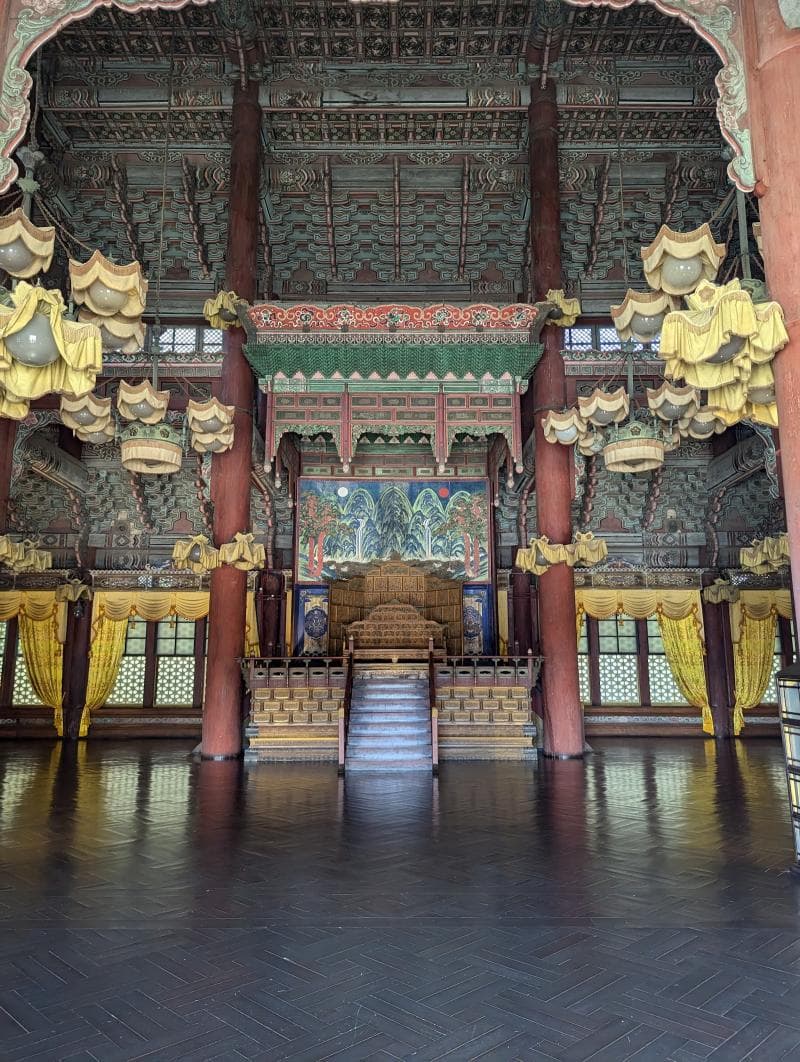
Explore the majestic thrones of the Bogd Khan in Ulaanbaatar, Mongolia. Discover the history and cultural significance of this unique royal collection.
Overview
Stepping into what is often referred to as the 'Throne Room' within the Bogd Khan Palace Museum in Ulaanbaatar, Mongolia, offers a profound glimpse into the opulent world of Mongolia's last theocratic ruler, the Bogd Khan. While not a standalone room officially designated by that name, this area within the Winter Palace is where the magnificent thrones of the Eighth Bogd Javzandamba Khutughtu and his esteemed consort, Queen Dondogdulam, are prominently displayed. It stands as a powerful symbol of a pivotal era in Mongolian history, inviting visitors to reflect on the nation's past and its transition from a theocratic monarchy.
The Bogd Khan Palace Museum itself, also known as the Green Palace, is a well-preserved complex that uniquely survived the political purges of the 20th century, unlike many other historical and religious sites in Ulaanbaatar. The Winter Palace, where the thrones reside, is a two-story European-style building, a striking architectural contrast to the traditional Buddhist temples that also dot the palace grounds.
History & Cultural Background
The Bogd Khan Palace complex served as the winter residence of the Eighth Bogd Javzandamba Khutughtu, who was the spiritual leader and later the monarch of the first independent Mongolian state after its declaration of independence from the Qing Dynasty in 1911. Constructed between 1893 and 1903, and completed in 1905, the palace complex was a testament to the Bogd Khan's influence and status.
He lived in this palace for twenty winters with his wife, Queen Dondogdulam Khatan, making it a central stage for both political and religious life during a tumultuous period. After his death in 1924, the Winter Palace was transformed into a museum, preserving a rich collection of artifacts that tell the story of the Bogd Khanate and the era it represented.
What Makes It Special
The thrones themselves are the undeniable focal point of this special area. The Bogd Khan's throne, slightly larger than the Queen's, features a sable cushion seat, while the Queen's boasts a yellow and red silk cushion adorned with floral patterns. Their backrests are lavishly embellished with wooden relief engravings of dragons, flowers, fruit, and depictions of mythological figures like the White Old Man and the Four Maharajas, all painted in vibrant colors and finished with gold bronze. The yellow silk cushion seats and backrests are further enhanced with intricate embroideries of nine five-clawed dragons, Mount Sumeru, and Boundless Oceans, crafted with golden threads, symbolizing the earthly world.
Beyond the thrones, the Winter Palace showcases a wide array of the Bogd Khan's personal possessions, including ceremonial robes, crowns, and a fascinating collection of art. One particularly famous exhibit is the jeweled regalia worn by the Bogd Khan's pet elephant, which he had specially imported. These artifacts collectively paint a vivid picture of royal life and the intersection of religious and political power in early 20th-century Mongolia.
Stories, Fun Facts & Local Details
A remarkable story associated with the thrones is their survival from a devastating fire in 1924 that destroyed the historic Yellow Palace of Statehood. Miraculously, these two thrones were rescued from the flames and eventually found their new home in the Winter Palace, adding another layer to their historical significance. The meticulous detail in their craftsmanship, including the 108 different types of interlocking joints used in the Gate of Peace nearby (constructed without a single nail), highlights the extraordinary skill of Mongolian artisans of the time.
Visitors often note the stark contrast between the opulence displayed within the palace and the poverty experienced by many Mongolian citizens during the Bogd Khan's reign. This contrast offers a deeper understanding of the societal dynamics of the period. The Bogd Khan himself was known for his eclectic interests, including a private zoo and a collection of unique items, many of which are now part of the museum's extensive collection of over 8,000 exhibits.
Visitor Perspective
Exploring the Throne Room within the Bogd Khan Palace Museum is an immersive journey into Mongolia's monarchical past. The visual splendor of the thrones and the surrounding exhibits transports visitors back to an era when the Bogd Khan held immense spiritual and temporal power. The intricate details of the craftsmanship, from the embroidered dragons to the carved deities, reveal the rich artistic heritage and cultural symbolism embedded in every object.
It is a chance to connect with the personal history of a remarkable leader and to understand the unique blend of Buddhist traditions and statecraft that characterized his rule. The atmosphere of preservation within the Winter Palace allows for a contemplative experience, offering insights into the daily life, interests, and influence of the last Khaan of Mongolia.
Coordinates: 106.90667, 47.8975
View on Google Maps💬 How Travelers Describe This Place
Based on community votes
Beautiful
1.0kPhotogenic
563Must See
309Unique
100Interesting
63
Traveler Stories
Discover memorable experiences shared by travelers who have visited this place.
No traveler stories yet.
Be the first traveler to share what made this place memorable.

Tour
By
Spot
Discover amazing places around the world. Your journey starts here.
Explore
© 2026 TourBySpot. All rights reserved.