Tholos
Athens, Greece
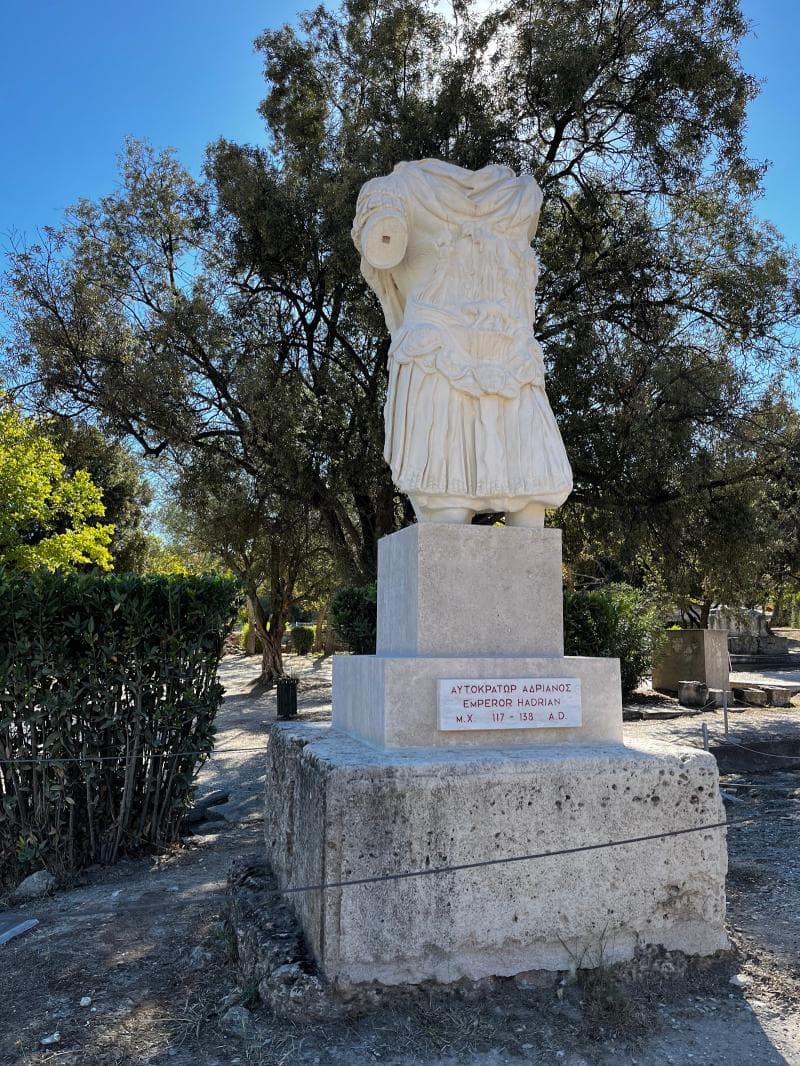
Explore the Tholos in Athens' Ancient Agora, the executive heart of ancient Athenian democracy, a 24/7 hub for state administration.
Overview
Nestled within the sprawling archaeological site of the Ancient Agora of Athens, the Tholos stands as a subtle yet profoundly significant remnant of classical Athenian public life. It is a circular building, or 'tholos' in Greek, that served as the headquarters for the Prytaneis – the executive committee of the Boule (council) – who oversaw the daily administration of the city-state. While only its foundations and a few architectural elements remain today, these ruins offer a fascinating glimpse into the operational heart of ancient Athenian democracy. Its modest presence belies its immense historical importance, inviting visitors to imagine the bustling political activities that once transpired within its walls.
Located in the western part of the Agora, near the Bouleuterion (Council House) and the Metroon (archive building), the Tholos was strategically positioned at the core of Athens' administrative district. Its distinctive circular shape made it easily identifiable among the predominantly rectangular structures of the Agora. Constructed around 470 BCE, likely after the Persian Wars, it was continuously used and maintained throughout the Classical and Hellenistic periods, remaining operational until about AD 400.
History & Cultural Background
The Tholos's origins are deeply intertwined with the development of Athenian democracy. Following the reforms of Cleisthenes in the late 6th century BCE, the Athenian government was structured around a council of 500 citizens, the Boule, chosen annually by lot from each of the ten tribes. From this larger council, a smaller executive committee of 50, known as the Prytaneis, was selected to serve for a tenth of the year, usually 35 or 36 days. The Tholos was their dedicated workspace, dining hall, and even temporary residence.
The Prytaneis were responsible for presiding over the Boule and the assembly meetings (Ecclesia), managing public finances, and receiving foreign ambassadors. To ensure constant governmental oversight, a third of the Prytaneis – typically 17 members – were required to remain in the Tholos at all times, day and night. This continuous presence was crucial for responding to emergencies and ensuring the smooth functioning of the state. The building also housed the sacred fire of the city and the official weights and measures of the Athenian state, symbolizing the continuity and integrity of Athens.
What Makes It Special
What truly sets the Tholos apart is its function as the literal and symbolic heart of Athenian governance. It was not a grand temple or a monumental public edifice, but a highly practical and essential working building that supported the daily operations of one of the world's first democracies. Its circular form, while appearing simple, was distinctive in the context of administrative buildings within the Agora, perhaps symbolizing unity or equality among its occupants.
Furthermore, the Tholos is special because it hosted the Prytaneis as they dined together at public expense – an honor and a significant perk for those actively serving the state. This communal aspect fostered collegiality and efficiency among the executive committee. The very stones of the Tholos, though now weathered and incomplete, witnessed critical decisions, urgent debates, and the everyday efforts that kept the Athenian democratic machine running, offering a profound site for understanding ancient political life beyond grand speeches and philosophical texts.
Stories, Fun Facts & Local Details
Imagine the scene: inside the Tholos, 17 men, chosen by lot, ate and slept, ready to respond to any crisis, from a sudden attack to an unexpected diplomatic envoy. This was a 24/7 commitment to the state, highlighting the seriousness with which Athenians approached their democratic responsibilities. They even had their own cook to prepare their meals!
A notable detail is that the privilege of dining in the Tholos at public expense was a significant benefit of their service, a small but important recognition for their demanding duties. The building also contained modest living quarters and a kitchen, making it a fully functional administrative hub and residential space. The visible remnants today include circular foundation walls and some column drums, offering a tangible connection to this bustling ancient seat of power. The original structure likely featured a distinctive conical roof, earning it the nickname 'Skias' (parasol) in ancient times.
Visitor Perspective
Visiting the Tholos today within the Ancient Agora of Athens offers a unique opportunity to connect with the practical workings of ancient Athenian democracy. While much of the original building is gone, standing among its circular foundations allows for a powerful imaginative journey. You can envision the Prytaneis going about their duties, the sacred fire burning, and the continuous hum of political activity that once defined this vital space.
It may not be as visually imposing as the majestic Temple of Hephaestus nearby, but its intellectual and historical weight is immense. As you walk through the Agora, take a moment at the Tholos to appreciate its role as the nerve center of a groundbreaking political system that profoundly shaped Western thought. It serves as a potent reminder that democracy, even in its earliest forms, required constant vigilance and dedicated service from its citizens. The comprehensive Agora Museum, housed in the reconstructed Stoa of Attalos, provides further context and artifacts found from the site.
Coordinates: 23.721934, 37.974874
View on Google Maps💬 How Travelers Describe This Place
Based on community votes
Beautiful
673Photogenic
219Interesting
186Must See
143Unique
80
Traveler Stories
Discover memorable experiences shared by travelers who have visited this place.
No traveler stories yet.
Be the first traveler to share what made this place memorable.

Tour
By
Spot
Discover amazing places around the world. Your journey starts here.
Explore
© 2026 TourBySpot. All rights reserved.