The Shard
London, United Kingdom
Discover The Shard, London's iconic skyscraper in the United Kingdom. Explore its history, unique design, and unparalleled 360-degree views.
Overview
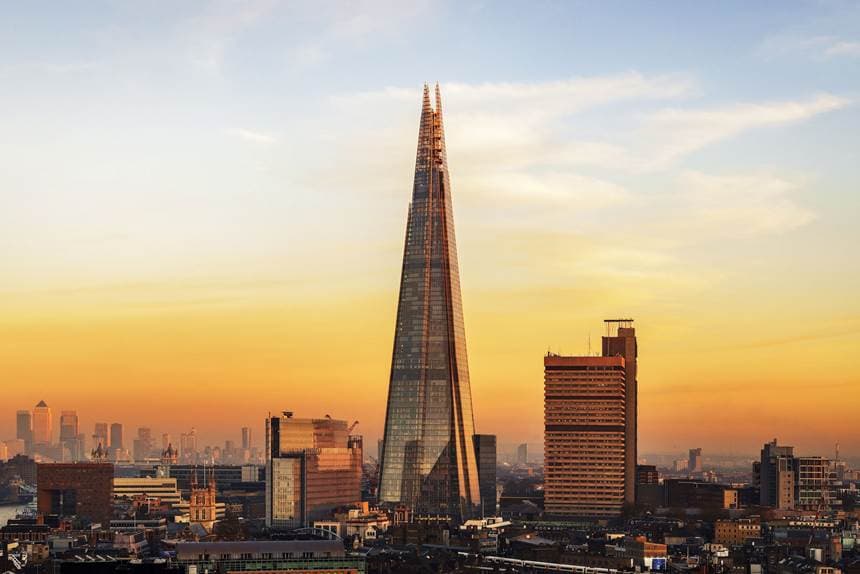
The Shard stands as an iconic symbol in the ever-evolving skyline of London, United Kingdom, piercing the clouds near London Bridge. This distinctive skyscraper, often described as a 'vertical city', redefines urban living and tourism in the capital. It integrates a diverse range of uses, from world-class offices and exclusive residences to award-winning restaurants and a luxurious hotel, all capped by the UK's highest public viewing gallery. Its striking glass facade reflects the dynamic London weather, presenting a constantly changing appearance to the city below.
As the tallest building in the United Kingdom and Western Europe, The Shard reaches an impressive height of 309.6 metres (1,016 feet). Its presence has significantly reshaped the Southwark area, transforming it into a vibrant hub for both residents and visitors alike. The building's strategic location adjacent to London Bridge Station, one of London's busiest transport hubs, underscores its design as a place of vital interchange.
History & Cultural Background
The vision for The Shard originated with London-based entrepreneur Irvine Sellar, who aimed to redevelop the Southwark Towers site next to London Bridge Station. In 2000, Sellar met with the renowned Italian architect Renzo Piano, sparking a collaboration that would lead to this architectural marvel. Piano, known for projects like the Pompidou Centre, initially expressed disdain for tall buildings, viewing them as 'arrogant, aggressive, like fortresses'. However, inspired by the energy of the railway lines and the River Thames, Piano famously sketched his initial design for a spire-like structure on a restaurant napkin. This sketch, dated 'May 2000 Berlin', laid the foundation for The Shard's unique form.
The building's evocative name itself arose from an unexpected source. During the planning stages in 2002, English Heritage, a governmental body, critiqued the proposed design, suggesting it would be 'a shard of glass through the heart of historic London'. Ironically, this dismissive phrase was embraced by the development team and became the building's official name, solidifying its identity. Construction commenced in March 2009, with the building officially inaugurated in July 2012, and its public observation deck opening in February 2013.
What Makes It Special
The Shard's distinct pyramidal shape, composed of 11,000 glass panels, gives it an ethereal quality, appearing almost like a 'shard of crystal' against the sky. The glass facade covers an area equivalent to eight football pitches. Designed by Renzo Piano, the structure integrates a mixed-use 'vertical city' concept, a pioneering approach in Europe. It features 25 floors dedicated to office space, three floors of restaurants, a 17-storey Shangri-La Hotel, 13 floors of private apartments, and the triple-height public viewing gallery.
Beyond its impressive height, The Shard is lauded for its innovative structural engineering and environmental considerations. The building was designed with a double-skin glazed facade featuring automatic solar blinds, allowing natural light to penetrate deep into the interior while managing thermal performance. Its thoughtful integration with public transport, boasting only 48 parking spaces, emphasizes its urban, public-oriented design rather than catering to private vehicles. WSP Global, the structural engineers, ensured the building's stability and economical design while adhering to Piano's architectural vision.
Stories, Fun Facts & Local Details
One of the most captivating tales associated with The Shard is the aforementioned napkin sketch by Renzo Piano. This spontaneous act of creativity became the foundational blueprint for what would become London's tallest building, a testament to instantaneous inspiration.
The naming of 'The Shard' is another fascinating tidbit, showcasing how initial criticism can inadvertently lead to a powerful and enduring identity. What was intended as a pejorative term by English Heritage became the defining characteristic, embracing the building's striking, almost fragmented appearance.
From a technical standpoint, The Shard is a marvel. Its lifts travel at six metres per second, whisking visitors from the ground to Level 68 in approximately 60 seconds. The total length of wiring within the building, an astonishing 320 kilometres (200 miles), is enough to stretch from London to Paris. During its busiest construction period, 1,450 workers from 60 countries contributed to its creation, highlighting its international collaborative effort.
Visitor Perspective
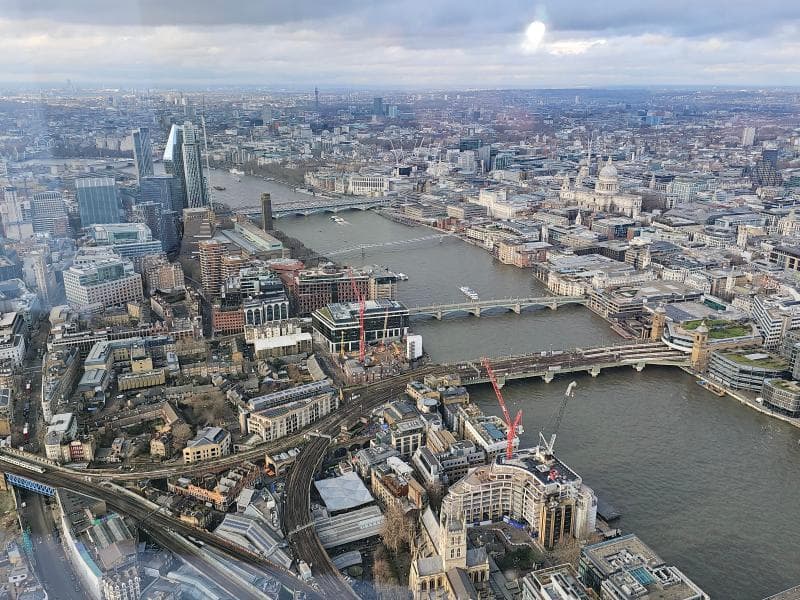
For visitors, the primary draw is 'The View from The Shard', London's highest public viewing experience. Located on Levels 68, 69, and 72, it offers unparalleled 360-degree panoramic views across the city and beyond, stretching up to 40 miles (64 km) on a clear day. Level 69 provides an enclosed viewing gallery, while Level 72, the open-air Skydeck, allows visitors to experience the elements and sounds of the city from an extraordinary height. This unique perspective allows for spotting iconic landmarks such as the Tower of London, St Paul's Cathedral, the River Thames, and Canary Wharf.
The viewing platforms are designed for an unhurried experience, with no time restrictions once inside, allowing guests to fully soak in the evolving cityscape from daylight to sunset and the glittering lights of night. Digital telescopes enhance the experience, offering information on various landmarks. The Shard truly offers a captivating and immersive way to appreciate the vastness and historical tapestry of London from an extraordinary vantage point.
Coordinates: -0.0865, 51.5045
View on Google Maps💬 How Travelers Describe This Place
Based on community votes
Interesting
692Must See
674Photogenic
491Unique
261Beautiful
49
Traveler Stories
Discover memorable experiences shared by travelers who have visited this place.
No traveler stories yet.
Be the first traveler to share what made this place memorable.
Things to see at The Shard



Tour
By
Spot
Discover amazing places around the world. Your journey starts here.
Explore
© 2026 TourBySpot. All rights reserved.