The Scream Gallery
Oslo, Norway
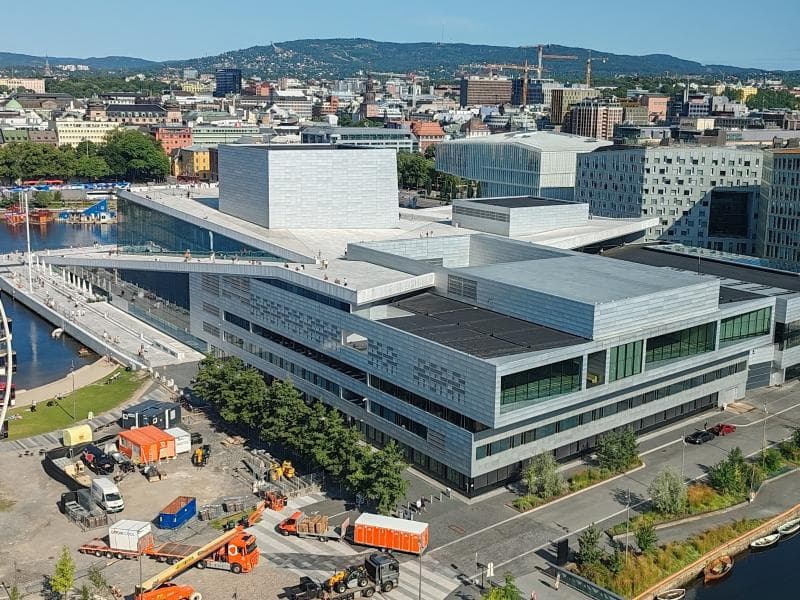
Explore 'The Scream Gallery' at MUNCH in Oslo, Norway, home to Edvard Munch's iconic artwork. Discover its history, multiple versions, and cultural impact.
Overview
Deep within the striking architecture of MUNCH in Oslo, Norway, lies a dedicated space often referred to as 'The Scream Gallery'. While not a formally separate gallery with its own name, this is where visitors can consistently encounter Edvard Munch's globally recognized masterpiece, 'The Scream'. It serves as the spiritual heart of the museum, drawing countless art enthusiasts to witness the raw emotional power of this iconic artwork. The MUNCH museum, situated in the vibrant Bjørvika district, is not merely a custodian of this single work but houses the world's most extensive collection of Edvard Munch's art, offering profound insights into his prolific career.
History & Cultural Background
Edvard Munch created 'The Scream' in the late 19th century, with the earliest version dating back to 1893. The artwork is far more than just a painting; it is a profound visual representation of a personal and universal human experience. Munch himself described the inspiration during an evening stroll in 1891 near the Oslofjord, where he perceived 'an infinite scream passing through nature'. This deeply unsettling sensation, coupled with a blood-red sky, compelled him to express this overwhelming angst. 'The Scream' became a pivotal piece within Munch's larger series, 'The Frieze of Life', which explored fundamental themes of human existence such as love, illness, anxiety, and death. It profoundly influenced the Symbolist movement and is considered a precursor to 20th-century Expressionism, an art movement characterized by its focus on emotional experience rather than objective reality.
What Makes It Special
What truly sets 'The Scream' experience at MUNCH apart is the museum's unique approach to exhibiting this fragile masterpiece. Edvard Munch created several versions of 'The Scream', including two paintings, two pastel drawings, and multiple lithographic prints. MUNCH proudly holds eight of these finished versions in its collection. Due to the delicate nature of the materials Munch used—primarily cardboard and paper—the artworks are highly susceptible to light, temperature, and humidity. To ensure their preservation for future generations, the museum employs a rotational display system. This means that while one version of 'The Scream' is always on view for the public, the others are carefully rested in darkness, protected from environmental degradation. Visitors can therefore experience a different iteration of the famous motif depending on their visit, each offering subtle variations in color, texture, and emotional intensity.
Stories, Fun Facts & Local Details
The genesis of 'The Scream' is steeped in a compelling personal account from Munch's diary. He recounted walking with friends when the setting sun turned the clouds 'a blood red', and he felt a 'great, infinite scream through nature'. Scholars have even pinpointed the likely spot of this profound experience to Ekeberg Hill, overlooking the Oslofjord. One fascinating theory suggests that the unnaturally vibrant, orange-red sky depicted in the artwork could have been influenced by the atmospheric effects of the 1883 Krakatoa volcanic eruption, which produced spectacular sunsets globally. Another intriguing detail is found on one of the painted versions from 1893, now at the National Museum, where a faint pencil inscription reads: 'Can only be painted by a madman!' This enigmatic note, believed to have been added by Munch himself, adds another layer of mystique to an already complex work.
Visitor Perspective
Visiting the space dedicated to 'The Scream' at MUNCH is an encounter with a work of art that transcends mere aesthetic appreciation. It's an opportunity to connect with a powerful expression of human vulnerability and existential angst that remains strikingly relevant. Situated on the fourth floor within the 'Edvard Munch Infinite' exhibition, the rotating display ensures that each visit might offer a slightly different perspective on the masterwork. The museum itself is a modern, thirteen-floor edifice designed to showcase the full breadth of Munch's artistic journey, from his early experimental pieces to his monumental later works. Beyond 'The Scream', MUNCH offers a comprehensive exploration of his output, along with contemporary art exhibitions, allowing visitors to contextualize Munch's genius within a broader artistic narrative. The carefully curated environment and the knowledge that you are viewing one of the most significant works in art history make the experience at MUNCH truly unforgettable.
Coordinates: 10.75531, 59.90575
View on Google Maps💬 How Travelers Describe This Place
Based on community votes
Unique
953Must See
695Interesting
658Photogenic
69Beautiful
22
Traveler Stories
Discover memorable experiences shared by travelers who have visited this place.
No traveler stories yet.
Be the first traveler to share what made this place memorable.

Tour
By
Spot
Discover amazing places around the world. Your journey starts here.
Explore
© 2026 TourBySpot. All rights reserved.