The Rosetta Stone
London, United Kingdom
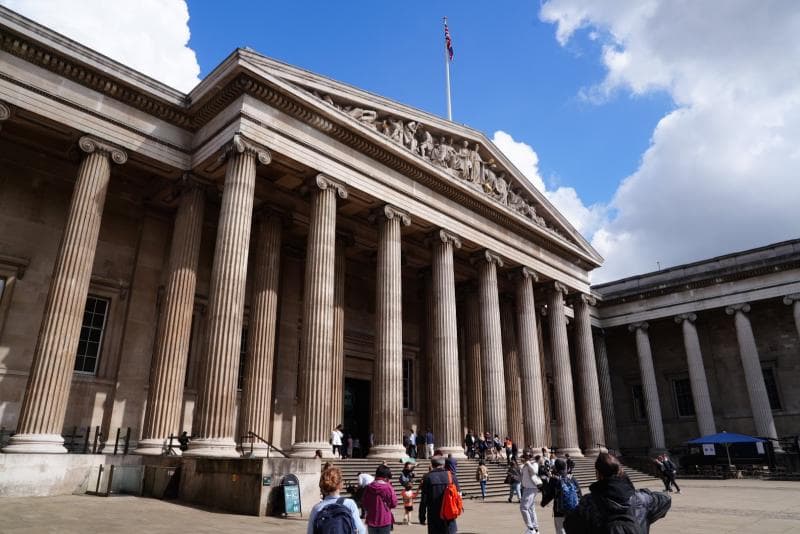

Discover the Rosetta Stone at the British Museum, London. This ancient artifact unlocked Egyptian hieroglyphs, revealing millennia of history. Explore its story.
Overview
The Rosetta Stone, a dark-colored granodiorite slab, is one of the most celebrated and significant artifacts housed within the British Museum in London, United Kingdom. Far from being merely an ancient rock, this fragmented stela holds the monumental distinction of being the key that unlocked the mysteries of ancient Egyptian hieroglyphs, effectively allowing us to read the language of a civilization that had been silent for over a millennium. Situated prominently in Room 4, the Egyptian Sculpture Gallery, it is consistently among the museum's most visited and popular exhibits, drawing crowds eager to witness a piece of history that revolutionized our understanding of the past.
History & Cultural Background
The story of the Rosetta Stone begins in July 1799, during Napoleon Bonaparte's military campaign in Egypt. French soldiers, while reinforcing a fort near the town of Rashid (known to the French as Rosetta) in the Nile Delta, stumbled upon this remarkable stone. Officer Pierre-François Bouchard immediately recognized its potential importance. The stone was inscribed with the same decree in three different scripts: hieroglyphic (the formal pictographic script of ancient Egypt), Demotic (a cursive Egyptian script used for everyday purposes), and Ancient Greek. Since Ancient Greek was still understood, scholars quickly surmised that if the texts were indeed identical, the Greek could serve as a 'crib' to decipher the other two.
Following the defeat of Napoleon's forces, the Rosetta Stone, along with other antiquities, became British property under the terms of the Treaty of Alexandria in 1801. It was then transported to England, arriving in Portsmouth in February 1802, and was presented to the British Museum by George III later that year, where it has remained on public display almost continuously ever since. The decree itself, carved in 196 BC, is a proclamation by a council of priests affirming the divine cult of the then 13-year-old King Ptolemy V Epiphanes on the first anniversary of his coronation.
What Makes It Special
The true significance of the Rosetta Stone lies in its trilingual inscription. Before its discovery, the ability to read hieroglyphs had been lost for over 1,400 years, rendering a vast trove of ancient Egyptian records indecipherable. This stone provided the crucial breakthrough. Scholars like Thomas Young, an English physicist, made initial progress, recognizing that some hieroglyphs represented phonetic sounds. However, it was the French scholar Jean-François Champollion who, in 1822, made the definitive breakthrough, realizing that hieroglyphs recorded the sounds of the Egyptian language and systematically correlating the scripts to fully decipher the text. This monumental achievement didn't just translate one text; it unlocked the entire language and, by extension, thousands of years of Egyptian history, culture, and beliefs, giving birth to the field of Egyptology.
Stories, Fun Facts & Local Details
Imagine this world-changing artifact spent centuries as a mere building block. Before its discovery, the Rosetta Stone was repurposed and embedded in a wall of an Ottoman fortress, its immense historical value completely unknown. This granodiorite slab is surprisingly heavy, weighing approximately 1,676 pounds (760 kilograms). During the First World War, in 1917, concern over bombing raids in London led the British Museum to move the Rosetta Stone, along with other valuable objects, to a station on the Postal Tube Railway 50 feet below ground at Holborn for safekeeping, where it remained for two years. For those who wish to get a more tactile experience, a replica of the Rosetta Stone is on display in the Enlightenment Gallery (Room 1) of the British Museum, where visitors are welcome to touch it. Historically, after its arrival in London, the inscriptions were made more legible by coloring them with white chalk and covering the surface with carnauba wax, which contributed to its dark appearance and led to its initial mistaken identification as black basalt.
Visitor Perspective
A visit to the Rosetta Stone in the British Museum is a powerful experience, not necessarily for its aesthetic beauty – it's a cracked, inscribed rock – but for its profound historical significance. You'll find it in Room 4, the Egyptian Sculpture Gallery, typically surrounded by a throng of curious onlookers, all vying for a closer look. While the sheer number of visitors can make getting an unobstructed view challenging, simply being in its presence and contemplating its impact on our understanding of ancient civilizations is awe-inspiring. Take time to observe the three distinct scripts and reflect on the journey of decipherment that transformed a silent past into a readable narrative. Don't forget to seek out the touchable replica in Room 1 for a more interactive experience, offering a tangible connection to this monumental artifact.
Coordinates: -0.1269, 51.5194
View on Google Maps💬 How Travelers Describe This Place
Based on community votes
Interesting
872Unique
846Photogenic
684Must See
121Beautiful
87
Traveler Stories
Discover memorable experiences shared by travelers who have visited this place.
No traveler stories yet.
Be the first traveler to share what made this place memorable.

Tour
By
Spot
Discover amazing places around the world. Your journey starts here.
Explore
© 2026 TourBySpot. All rights reserved.