The Parekklesion
Istanbul, Turkey
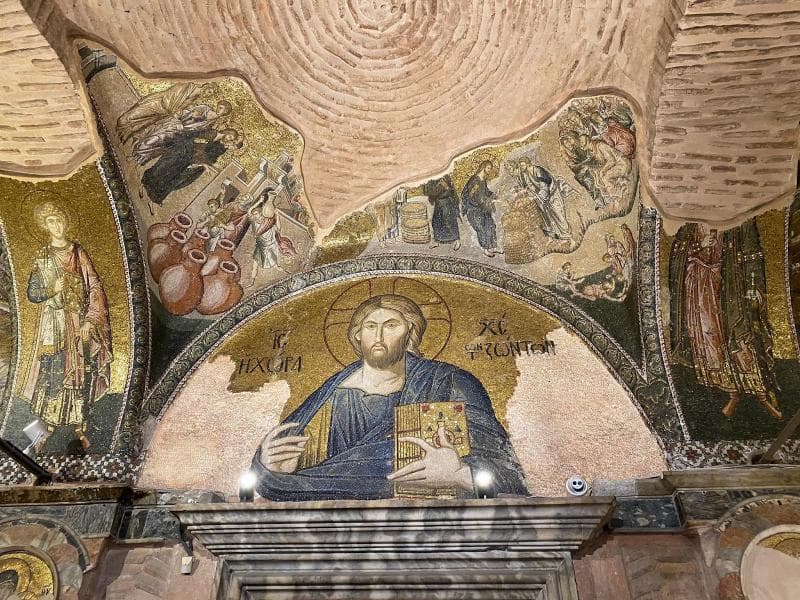
Explore The Parekklesion, a Byzantine funerary chapel within Istanbul's Chora Church (Kariye Mosque), famed for its stunning 14th-century frescoes, especially the Anastasis.
Overview
Deep within the historic Chora Church, now known as Kariye Mosque, in Istanbul, Turkey, lies a breathtaking and profoundly significant part of the structure: The Parekklesion. This remarkable side chapel, a masterpiece of late Byzantine art and architecture, served primarily as a funerary chapel, providing a solemn and sacred space for burial rituals and remembrance. Conceived in the early 14th century, it is famed for its exquisitely preserved frescoes, which represent some of the finest examples of Byzantine mural painting and offer a powerful visual narrative of redemption and the afterlife. A visit to The Parekklesion transports travelers to an era where art and spirituality intertwined to offer solace and hope.
History & Cultural Background
The Parekklesion was constructed between 1316 and 1321, during the extensive renovation of the Chora Church, under the patronage of Theodore Metochites, a prominent statesman and scholar of the Byzantine Empire. Metochites, serving as the Grand Logothete under Emperor Andronikos II Palaiologos, oversaw the church's restoration and added this side chapel, intending it as his personal burial place and a chapel for other noble individuals. Culturally, The Parekklesion embodies the Byzantine theological perspective on death, resurrection, and salvation. Its very existence is tied to the performance of rituals surrounding death and burial, designed to guide the community through the passage of the departed. The Chora Church, originally built as a monastery complex outside the walls of Constantinople in the 4th century, has a long history of transformations. It became a mosque in the 16th century during the Ottoman era, then a museum in 1945, and was reconverted to a mosque in 2020, reopening in 2024. Remarkably, the mosaics and frescoes in the Chora Church, including those in the Parekklesion, were preserved for centuries by being covered with plaster during its time as a mosque, protecting them from destruction.
What Makes It Special
The Parekklesion is particularly renowned for its sophisticated program of fresco paintings, which are considered a pinnacle of Late Byzantine art from the Palaiologan Renaissance. Its walls and dome are adorned with vivid narratives focusing on themes of salvation, resurrection, and the afterlife. The undeniable masterpiece here is the 'Anastasis' fresco, located in the semi-dome of the apse. This powerful depiction shows Christ triumphantly descending into Hades, grasping the wrists of Adam and Eve to pull them from their sarcophagi, symbolizing his victory over death and the resurrection of humankind. Another significant artwork is 'The Last Judgment,' which portrays Christ seated in a multi-layered mandorla, surrounded by Mary, John the Baptist, apostles, martyrs, and prophets, illustrating the Christian belief in the final judgment and the redemption of the righteous. The Parekklesion also features a fresco of the Virgin and Child surrounded by angels in its dome, emphasizing their role in the salvation process. These artworks are characterized by their emotional realism, complex features, delicate grace, and vibrant colors, setting them apart as outstanding examples of medieval art that even foreshadow the Renaissance.
Stories, Fun Facts & Local Details
One poignant story associated with The Parekklesion involves its patron, Theodore Metochites. After his significant investment in the church's restoration and his prominent political career, Metochites faced a dramatic fall from grace. He was exiled and later confined to the Chora monastery, where he died as a monk in 1332 and was buried in the very funerary chapel he had commissioned. The name 'Chora' itself holds a spiritual depth beyond its literal meaning of 'country' or 'land,' referring to the church's original location outside the city walls. Inscriptions within the church's decoration mystically identify Christ as the 'Land of the Living' and the Virgin Mary as the 'Container of the Uncontainable,' creating a profound theological play on the word. The preservation of the frescoes and mosaics during the Ottoman period is a remarkable 'fun fact'; by covering them with plaster, early Ottoman administrators inadvertently protected these Christian masterpieces from deterioration, allowing them to survive for centuries. Later, the Byzantine Institute of America played a crucial role in uncovering and restoring these artworks, bringing their splendor back to light in the mid-20th century.
Visitor Perspective
Visiting The Parekklesion today offers a deeply moving and visually stunning experience. Travelers can marvel at the emotional intensity and vivid storytelling depicted in the frescoes, providing an immersive journey into Byzantine spirituality and artistry. The intricate details and dynamic compositions invite quiet contemplation on themes of faith, death, and resurrection. As part of the Chora Church (Kariye Mosque), visitors should be aware of its current status as a functioning mosque. This means adhering to a respectful dress code, such as women covering their heads and both men and women avoiding shorts. There is also an entrance fee for foreign visitors. The Parekklesion, with its unparalleled artistic treasures, remains a testament to human creativity and enduring faith, offering a unique window into the rich cultural tapestry of Istanbul and the Byzantine Empire.
Coordinates: 28.93903, 41.03122
View on Google Maps💬 How Travelers Describe This Place
Based on community votes
Beautiful
951Unique
491Must See
427Interesting
414Photogenic
277
Traveler Stories
Discover memorable experiences shared by travelers who have visited this place.
No traveler stories yet.
Be the first traveler to share what made this place memorable.

Tour
By
Spot
Discover amazing places around the world. Your journey starts here.
Explore
© 2026 TourBySpot. All rights reserved.