The Outer Narthex Mosaics
Istanbul, Turkey
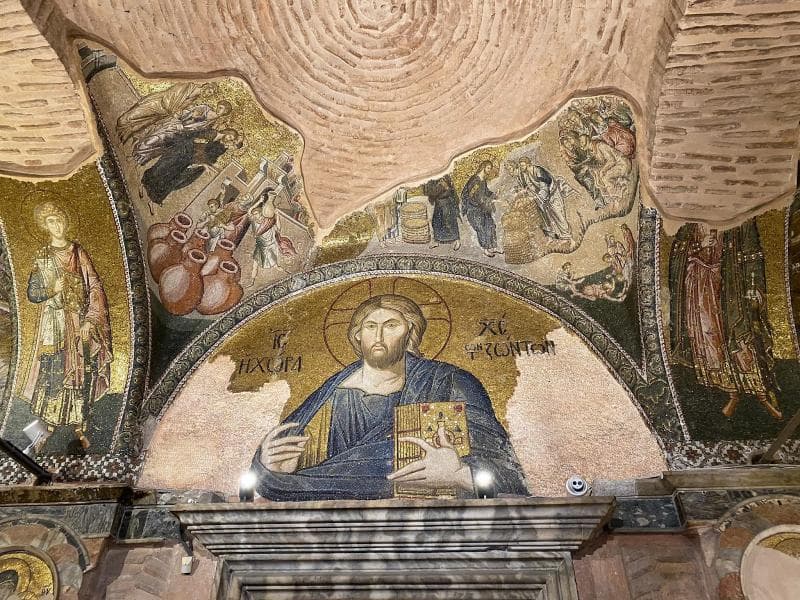
Explore The Outer Narthex Mosaics of Chora Church (Kariye Mosque) in Istanbul, Turkey, featuring stunning 14th-century Byzantine art.
Overview
Stepping into the Chora Church, now known as Kariye Mosque (Kariye Camii), in Istanbul, Turkey, is like opening a gilded book of Byzantine art. Among its most captivating chapters are 'The Outer Narthex Mosaics'. This section serves as the initial grand entrance, a long, narrow corridor leading into the main body of the church. Here, a dazzling array of 14th-century mosaics unfolds, depicting a comprehensive narrative of the life of Christ. These vibrant, gold-flecked artworks are celebrated as some of the finest examples of Late Byzantine artistry, offering an unparalleled glimpse into the theological and artistic sophistication of the era. The Chora Church, with its intricate decoration, stands as a testament to Istanbul's rich, layered history, transitioning from a Byzantine church to an Ottoman mosque, a secular museum, and most recently, reconverted into a mosque in 2020, reopening to visitors in 2024.
History & Cultural Background
The name 'Chora' originates from the Greek phrase 'in the country' or 'in the fields', signifying its original location outside the 4th-century city walls of Constantinople. The church we admire today has undergone several transformations, with its artistic zenith occurring in the early 14th century. Between 1315 and 1321, Theodore Metochites, a prominent Byzantine scholar, statesman, and chief minister to Emperor Andronikos II Palaiologos, orchestrated an extensive renovation. He poured his considerable wealth and intellect into commissioning the breathtaking mosaics and frescoes that adorn the interior. After the Ottoman conquest of Constantinople in 1453, the church continued to function for approximately 50 years. Around 1511, it was converted into a mosque, the Kariye Camii. To conform to Islamic customs, the Christian mosaics and frescoes were covered with a layer of plaster. This act of covering, ironically, played a crucial role in preserving these masterpieces in near-perfect condition for centuries. In 1945, the site was secularized and became the Kariye Museum. Extensive restoration work by the Byzantine Institute of America in the mid-20th century meticulously uncovered and restored the original Byzantine artwork. In 2020, a presidential decree reconverted the building into a mosque, and it reopened to visitors in May 2024.
What Makes It Special
The Outer Narthex Mosaics are particularly special due to their detailed narrative cycle dedicated to the life of Jesus Christ. Unlike many other Byzantine churches, the Chora's interior decoration, especially in the narthexes, remains almost completely extant and remarkably well-preserved. These mosaics stand out for their vibrant colors, intricate details, and the profound emotional depth conveyed through each scene. The artistic style, characteristic of the Palaiologan Renaissance, showcases a departure from earlier, more rigid Byzantine art, featuring more naturalistic figures and dynamic compositions that hint at the coming Italian Renaissance. The cycles here are arranged to be 'read' like a book, providing a vivid visual theology for worshippers and visitors alike. Theodore Metochites' patronage ensured that the artwork was not only lavish but also intellectually sophisticated, reflecting his deep understanding of theology and classical texts.
Stories, Fun Facts & Local Details
The Outer Narthex, also known as the exonarthex, stretches 23 meters long and 4 meters wide, acting as a transitional gateway. Its walls are alive with narrative images from the Cycle of the Infancy of Christ and numerous scenes depicting Christ's miracles. Key scenes include:
- Joseph's Dream and the Journey to Bethlehem: Depicting the angel assuring Joseph of the Virgin's miraculous conception and the subsequent journey.
- The Enrollment for Taxation: A unique and detailed scene showing Mary and Joseph's journey to be registered, perhaps included due to Metochites' role as minister of the treasury.
- The Nativity: A beautifully rendered mosaic portraying the birth of Christ.
- The Flight of Elizabeth and John: Highlighting the miraculous escape of John the Baptist and his mother.
- Miracles of Christ: Including the Transformation of Water into Wine at Cana, the Multiplication of Loaves, and the Healing of the Paralytic at Capernaum.
Above the doorway leading to the inner narthex, a striking mosaic of Christ Pantocrator ('Ruler of All') blesses visitors. The inscription refers to Christ as 'The Land of the Living', a symbolic play on the church's name, 'Chora'. On the opposite wall, the Virgin Mary is depicted as 'Mother of God, container (chora) of the uncontainable (achoritou)', again referencing the church's name and the paradox of Mary carrying the Son of God.
Visitor Perspective
For a curious traveler, the Outer Narthex Mosaics offer an immersive journey into Byzantine storytelling. The experience is intimate, allowing close inspection of the artistry and the emotional impact of each panel. Despite its reconversion to a mosque, the extensive and arguably most famous narrative mosaics in the outer and inner narthexes remain fully visible and accessible to the public throughout opening hours. Visitors are encouraged to take their time, absorbing the intricate details and vibrant colors that have survived centuries. The meticulous preservation work means that one can truly appreciate the expressive faces and dynamic compositions that were revolutionary for their time. While the main prayer hall (naos) mosaics may be covered during prayer times, the narthexes provide an undiminished view of Chora's artistic treasures.
Coordinates: 28.93917, 41.03111
View on Google Maps💬 How Travelers Describe This Place
Based on community votes
Must See
951Beautiful
491Unique
414Photogenic
310Interesting
277
Traveler Stories
Discover memorable experiences shared by travelers who have visited this place.
No traveler stories yet.
Be the first traveler to share what made this place memorable.

Tour
By
Spot
Discover amazing places around the world. Your journey starts here.
Explore
© 2026 TourBySpot. All rights reserved.