The Nave and Grave of the Unknown Warrior
London, United Kingdom
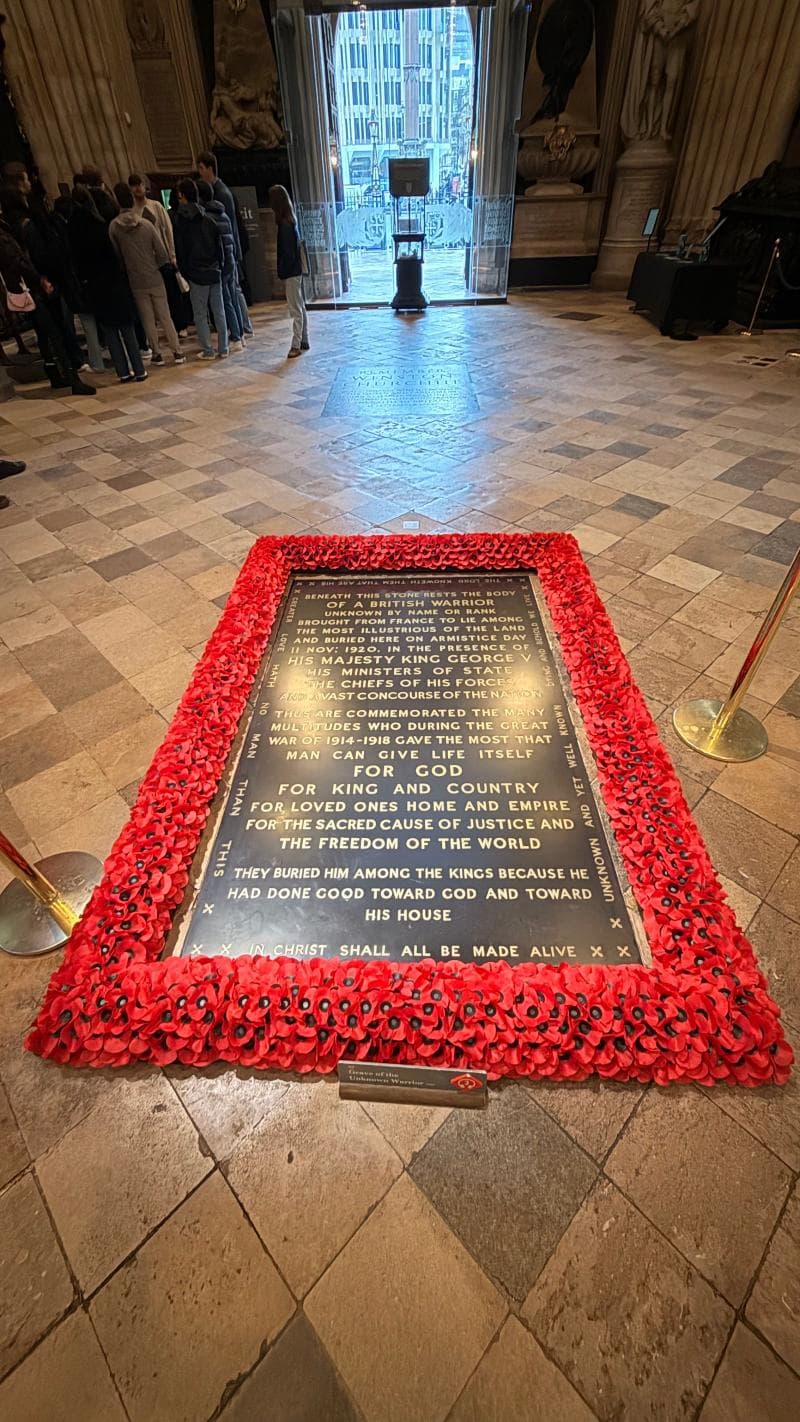

Discover The Nave and Grave of the Unknown Warrior in Westminster Abbey, London, United Kingdom – a profound memorial to WWI's unidentified fallen.
Overview
Within the historic grandeur of Westminster Abbey in London, United Kingdom, lies a profoundly moving and significant memorial: The Nave and Grave of the Unknown Warrior. Situated at the western end of the Nave, this sacred site honours an unidentified British serviceman who fell during the First World War. It serves as a poignant symbol for the countless military personnel who died in conflict and whose final resting places remain unknown. The grave is not merely a memorial; it is a powerful embodiment of national mourning and collective remembrance, drawing visitors into a moment of solemn reflection on the immense cost of war.
History & Cultural Background
The idea for such a memorial originated in 1916 with the Reverend David Railton, a chaplain serving on the Western Front. Deeply affected by seeing a solitary grave marked 'An Unknown British Soldier' near Armentières, he proposed to the Dean of Westminster, Herbert Ryle, in 1920, the idea of burying an unknown comrade in Westminster Abbey. The concept was embraced by the Dean, Prime Minister David Lloyd George, and eventually King George V, leading to the decision to bring an unidentified soldier from the battlefields of France to be interred with full honours. To ensure absolute anonymity, four unidentified British soldiers were exhumed from battle areas including the Somme, Aisne, Arras, and Ypres. These bodies were taken to a chapel at St Pol-sur-Ternoise, where Brigadier General Louis Wyatt, without knowing their specific origins, randomly selected one. The chosen warrior's body was then placed in an English oak coffin, transported to Boulogne, and carried across the Channel by HMS Verdun. On November 11, 1920, Armistice Day, the Unknown Warrior was laid to rest in Westminster Abbey with a state funeral, an unprecedented honour for an anonymous individual.
What Makes It Special
The Grave of the Unknown Warrior holds a unique place within Westminster Abbey. It is the only gravestone in the Abbey that visitors cannot walk upon, a mark of profound respect for the sacrifice it represents. The grave is covered by a slab of black Belgian marble from a quarry near Namur, bearing a moving inscription composed by Dean Herbert Ryle, which includes the lines: 'BENEATH THIS STONE RESTS THE BODY OF A BRITISH WARRIOR UNKNOWN BY NAME OR RANK BROUGHT FROM FRANCE TO LIE AMONG THE MOST ILLUSTRIOUS OF THE LAND AND BURIED HERE ON ARMISTICE DAY 11 NOV: 1920'. This anonymous soldier symbolises not just one individual, but all those who perished in the Great War and whose bodies were never identified, offering a focal point for the grief of families who had no other memorial.
Stories, Fun Facts & Local Details
The burial of the Unknown Warrior was a moment of immense national significance. The procession to Westminster Abbey included a gun carriage, and the nave of the Abbey was lined by 100 holders of the Victoria Cross as the coffin was carried through. The congregation primarily comprised 100 war widows and women who had lost all their sons, serving as the guests of honour, underscoring the deeply personal nature of the collective mourning. A particularly touching tradition began in 1923, when Lady Elizabeth Bowes-Lyon (later Queen Elizabeth The Queen Mother) paused on her wedding day to lay her bouquet on the grave, in memory of her brother Fergus, killed at the Battle of Loos. This tradition has been followed by subsequent royal brides, making the grave a site of both remembrance and ongoing personal tributes. The grave itself contains soil from the battlefields of France, further connecting it to the lands where so many sacrifices were made.
Visitor Perspective
For those visiting Westminster Abbey, approaching the Grave of the Unknown Warrior is often a deeply emotional experience. The quiet solemnity of the Nave, combined with the powerful narrative of the Unknown Warrior, invites visitors to pause and reflect. It is a place where history feels intensely present, allowing one to connect with the personal and collective loss of a nation. The simplicity of the black marble slab, the words carved upon it, and the knowledge of the countless lives it represents, create an atmosphere of profound respect and enduring remembrance, making it one of Britain's most sacred war memorials.
Coordinates: -0.1277, 51.4993
View on Google Maps💬 How Travelers Describe This Place
Based on community votes
Unique
931Must See
692Photogenic
655Beautiful
491Interesting
266
Traveler Stories
Discover memorable experiences shared by travelers who have visited this place.
No traveler stories yet.
Be the first traveler to share what made this place memorable.

Tour
By
Spot
Discover amazing places around the world. Your journey starts here.
Explore
© 2026 TourBySpot. All rights reserved.