Westminster Abbey
London, United Kingdom
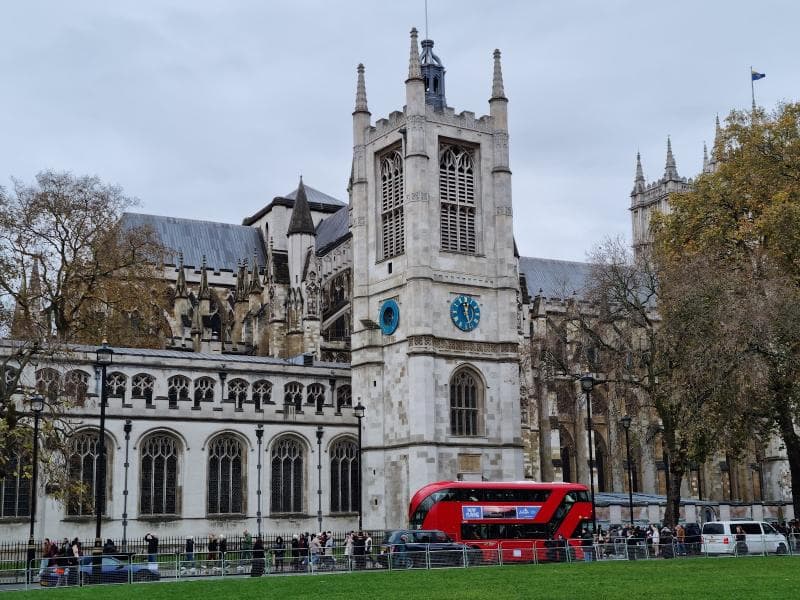

Explore Westminster Abbey in London, UK. Discover centuries of royal history, coronations, weddings, and the resting place of monarchs and literary giants.
Overview
Westminster Abbey, formally known as the Collegiate Church of Saint Peter at Westminster, stands as a magnificent emblem of British history and architecture in the heart of London, United Kingdom. This iconic landmark is not merely a church but a living monument, a Royal Peculiar directly accountable to the sovereign, rather than a bishop or archbishop. Recognized as a UNESCO World Heritage Site since 1987, it shares this prestigious designation with the adjacent Palace of Westminster and St. Margaret's Church, highlighting its immense historic and symbolic significance. For centuries, the Abbey has been central to the nation's most pivotal events, from royal coronations and weddings to the final resting place of monarchs and celebrated figures from every sphere of British life.
History & Cultural Background
The story of Westminster Abbey begins around 960 AD with the establishment of a Benedictine monastery on Thorney Island. Its profound connection to the monarchy was cemented in the 11th century when King Edward the Confessor chose the site for his royal palace and church, which was consecrated in 1065. However, the grand Gothic structure we see today largely stems from the vision of King Henry III, who initiated a major rebuilding project in 1245, inspired by the magnificent cathedrals of France. This ambitious undertaking transformed the Abbey into an architectural masterpiece that would become the traditional site for every English and British coronation since William the Conqueror in 1066.
What Makes It Special
Westminster Abbey's unparalleled significance lies in its role as the stage for nearly a millennium of British royal history. It has hosted the coronations of 40 English and British monarchs and served as the venue for at least 16 royal weddings, including that of Prince William and Catherine Middleton in 2011. Beyond its ceremonial functions, the Abbey is a vast necropolis, a solemn burial site for 18 monarchs and over 3,300 individuals who have shaped British history. From the regal tombs of kings and queens near the shrine of St. Edward the Confessor to the Henry VII Lady Chapel, a stunning example of Perpendicular Gothic architecture with its delicate fan-vaulted ceiling, the Abbey is a treasure trove of art and history. Its outstanding universal value led to its designation as a UNESCO World Heritage Site, recognizing its profound impact on global culture and its intricate Gothic design featuring pointed arches, ribbed vaulting, and flying buttresses.
Stories, Fun Facts & Local Details
Stepping inside Westminster Abbey is like walking through a living history book, where every corner holds a story. Perhaps most famously, the South Transept is home to 'Poet's Corner', a hallowed space where literary giants are buried or commemorated. Geoffrey Chaucer, the author of 'The Canterbury Tales', was the first poet interred here in 1400, though initially due to his position as Clerk of Works rather than his poetic fame. Over centuries, this tradition expanded to include memorials for William Shakespeare (though he is not buried here), Charles Dickens, Jane Austen, and many other celebrated writers, poets, and even scientists like Isaac Newton and Charles Darwin. Another deeply moving spot is the Tomb of the Unknown Warrior, located in the Nave, which commemorates an unidentified British soldier from World War I. This grave serves as a powerful symbol for all service personnel who died in war and have no known resting place, and it is the only gravestone in the Abbey that visitors do not walk upon, out of respect.
Visitor Perspective
For the curious traveler, Westminster Abbey offers an immersive journey through time. It is important to remember that this is still a functioning church, hosting daily services, which visitors are welcome to attend free of charge. Exploring the Abbey requires a minimum of two hours to truly appreciate its vastness and wealth of detail. While there isn't a strict dress code, respectful attire is requested, and visitors should wear comfortable shoes, as there is much to explore. Large bags or luggage are not permitted inside, so planning ahead is advisable. To fully grasp the historical depth and intricate narratives contained within its walls, many find audio guides or verger-led tours invaluable. Visiting Westminster Abbey is not just sightseeing; it's an encounter with the enduring legacy of a nation, a place where history resonates with every step.
Coordinates: -0.1275, 51.49944
View on Google Maps💬 How Travelers Describe This Place
Based on community votes
Photogenic
826Unique
800Must See
589Interesting
387Beautiful
90
Traveler Stories
Discover memorable experiences shared by travelers who have visited this place.
No traveler stories yet.
Be the first traveler to share what made this place memorable.
Things to see at Westminster Abbey



Tour
By
Spot
Discover amazing places around the world. Your journey starts here.
Explore
© 2026 TourBySpot. All rights reserved.