The Mosaic of the Virgin and Child
Istanbul, Turkey
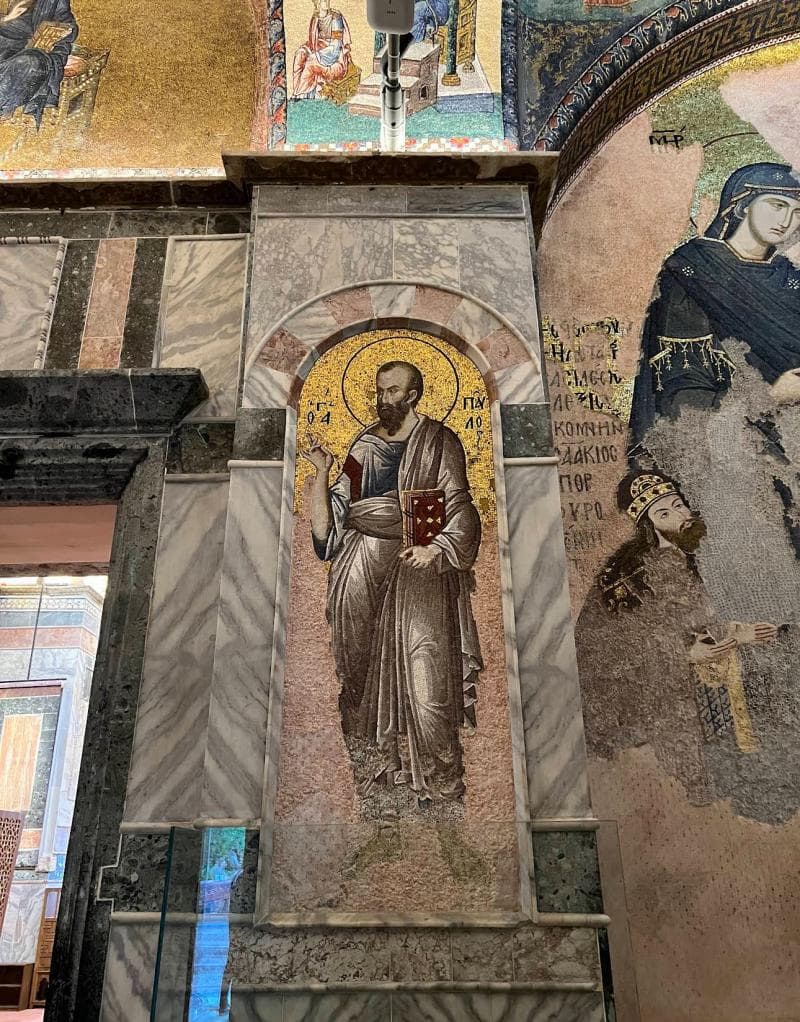
Discover The Mosaic of the Virgin and Child inside Istanbul's Chora Church (Kariye Mosque), a masterpiece of Byzantine art and history.
Overview
Nestled in the historic Edirnekapı district of Istanbul, Turkey, the Chora Church, also known as Kariye Mosque, stands as a profound testament to Byzantine artistry and religious devotion. Renowned globally for its breathtaking mosaics and frescoes, this architectural marvel offers visitors an intimate glimpse into the rich spiritual and cultural tapestry of a bygone era. Among its many artistic treasures, 'The Mosaic of the Virgin and Child' holds a special place, embodying deep theological significance and artistic mastery. Originally constructed as a Byzantine church, the building has undergone transformations, serving as a mosque during the Ottoman period, then a museum, and most recently reconverted to a mosque, yet its exquisite interior decorations remain a highlight for any traveler.
The Chora Church's interior is adorned with some of the finest surviving examples of Late Byzantine art, characterized by their vibrant colors, expressive figures, and remarkable emotional depth. These intricate artworks narrate stories from the Bible and the life of Christ, but particularly emphasize the life of the Virgin Mary, a central figure within the church's extensive iconographic program. Exploring these luminous narrative cycles is like stepping into a living Byzantine manuscript, where every arch and wall tells a story of faith and artistic brilliance.
History & Cultural Background
The origins of the Chora Church trace back to the early 4th century, when it was initially built as part of a monastery complex situated 'in the countryside' outside the walls of Constantinople, giving rise to its Greek name 'Chora' (Χώρα), meaning 'land' or 'country'. Although the city walls later expanded to encompass it, the name endured, acquiring mystical connotations. The structure underwent significant reconstruction and embellishment in the early 14th century, between approximately 1310 and 1321, under the patronage of Theodore Metochites. A prominent Byzantine statesman and scholar, Metochites spearheaded what is considered the pinnacle of the Palaiologan Renaissance, adorning the church with the magnificent mosaics and frescoes visible today.
Following the Ottoman conquest of Constantinople in 1453, the church was eventually converted into a mosque, known as Kariye Camii, in the 16th century. During this period, the Christian mosaics and frescoes were typically covered with plaster due to Islamic aniconism, a practice that paradoxically helped preserve them for centuries. In the mid-20th century, specifically in 1945 and reopening in 1958, the building was secularized and reopened as the Kariye Museum following extensive restoration work by American scholars from the Byzantine Institute of America and the Dumbarton Oaks Center for Byzantine Studies. This restoration revealed the art to the world, profoundly changing perceptions of Byzantine art. In a more recent development, the site was reconverted into a mosque in 2020.
What Makes It Special
The Chora Church's mosaics and frescoes are widely regarded as the finest examples of 14th-century Byzantine art, particularly for their innovative style and emotional resonance. Unlike earlier, more rigid Byzantine depictions, these artworks display a newfound emotional realism, refined color palettes, and delicate grace that foreshadow the Italian Renaissance. The artists, whose names remain largely unknown, created complex narrative cycles from both biblical accounts and apocryphal texts, bringing the sacred stories to life with remarkable expressiveness.
The particular mosaic of 'The Virgin and Child' found within the inner narthex is especially significant. In one depiction, Mary is portrayed holding Christ within a dome dedicated to the genealogy of the Virgin. Another powerful representation, often referred to as the 'Mother of God, Container of the Uncontainable' (Η Χώρα του Ἀχωρήτου), illustrates the profound theological paradox of a human woman bearing the divine Son of God. This phrase cleverly plays on the church's own name, 'Chora', extending its meaning from a physical location to a mystical concept, portraying Mary as the 'vessel' of the divine. The Virgin Hodegetria mosaic further emphasizes Mary's role as 'one who shows the way', holding the Child Christ. These mosaics are not merely decorative but serve as theological statements, inviting contemplation on the mysteries of the Christian faith.
Stories, Fun Facts & Local Details
The name 'Chora' itself is steeped in a fascinating blend of history and theology. While it initially denoted the church's location 'in the country' outside Constantinople's original walls, Byzantine artists and theologians later imbued it with deeper, symbolic meaning. Through the mosaics, Christ is hailed as 'The Land of the Living' (Η Χώρα των ζώντων), and the Virgin Mary as 'The Container of the Uncontainable' (Η Χώρα του Ἀχωρήτου). This intricate play on words underscores the profound spiritual significance woven into the very fabric of the church's identity and its artistic program.
A notable historical detail is the prominent mosaic of Theodore Metochites, the patron of the 14th-century reconstruction, presenting a model of the church to an enthroned Christ. This self-portrait speaks volumes about his piety and the imperial patronage that fueled the artistic flourishing of the Palaiologan period. The preservation of these delicate artworks, despite centuries of covering under plaster during the building's time as a mosque, is a testament to both serendipitous historical circumstances and meticulous modern restoration efforts. The mosaics' vivid narratives, including those depicting the infancy and life of the Virgin Mary from apocryphal sources, offer a uniquely human and emotional perspective on sacred history, making them exceptionally compelling.
Visitor Perspective
A visit to the Chora Church offers an unparalleled encounter with the artistic grandeur of the Byzantine Empire. Though it has transitioned back to a mosque, the profound beauty and historical narrative embedded in its mosaics and frescoes continue to be accessible and awe-inspiring. For a curious traveler, observing 'The Mosaic of the Virgin and Child' allows for a moment of quiet reflection, connecting with centuries of faith and artistic tradition. The meticulous detail, the expressive faces, and the vibrant colors bring the sacred stories to life, transcending time and cultural shifts. Standing before these masterpieces, one can appreciate not only the technical skill of the artists but also the deep emotional and theological convictions they convey. It's a journey into Istanbul's layered past, revealing the city's continuous embrace of diverse cultural and religious legacies.
Coordinates: 28.93903, 41.03122
View on Google Maps💬 How Travelers Describe This Place
Based on community votes
Photogenic
886Unique
443Beautiful
310Must See
277Interesting
233
Traveler Stories
Discover memorable experiences shared by travelers who have visited this place.
No traveler stories yet.
Be the first traveler to share what made this place memorable.

Tour
By
Spot
Discover amazing places around the world. Your journey starts here.
Explore
© 2026 TourBySpot. All rights reserved.