The Esplanade & Pillars
Paris, France
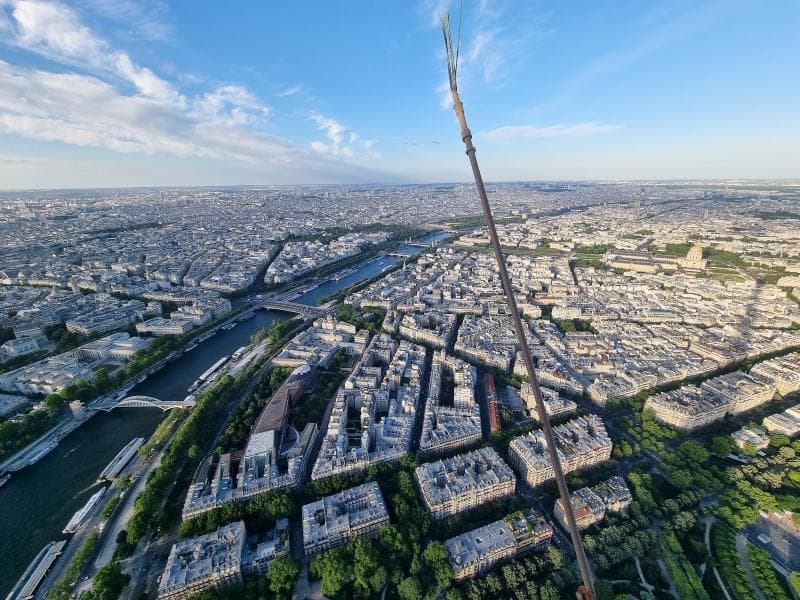
Explore The Esplanade & Pillars at the Eiffel Tower in Paris, France. Discover its history, engineering marvels, and visitor experience.
Overview
The Esplanade and the mighty Pillars form the bustling foundation of Paris's iconic Eiffel Tower, serving as the essential starting point for millions of visitors each year. This expansive open area, directly beneath the tower's colossal structure, provides the first breathtaking close-up view of Gustave Eiffel's engineering marvel. It is here that the true scale of the 'Iron Lady' first becomes apparent, as the four immense, wrought-iron legs rise dramatically towards the sky. The Esplanade is a lively hub, where travelers pass through initial security, often collect their tickets, and gather to admire the tower's base before ascending.
Each of the four main supports, known as the Pillars, anchors the tower to the ground, giving it an undeniable sense of stability and grandeur. These pillars are not merely structural; they are integral to the visitor experience, housing ticket offices and providing access points for the elevators and stairs that lead to the tower's upper levels. Standing within the Esplanade allows one to truly appreciate the intricate lattice work and the sheer audacity of a structure that once dominated the global skyline.
History & Cultural Background
The story of the Esplanade and the Eiffel Tower's Pillars is intertwined with a pivotal moment in French history: the 1889 Universal Exposition. This grand event was held to celebrate the 100th anniversary of the French Revolution, and a competition was launched to design a monumental structure that would showcase France's industrial prowess. Gustave Eiffel's bold design for a 300-meter iron tower, initially conceived by his engineers Maurice Koechlin and Émile Nouguier, was chosen.
Construction began in January 1887 on the Champ de Mars, the historic public greenspace that forms the Esplanade today. This location, nestled between the École Militaire and the Seine River, had long been a site for military drills and public gatherings. The tower's construction, completed in just over two years, was a monumental undertaking, involving some 300 workers who assembled over 18,000 individual iron pieces with 2.5 million rivets. Despite initial criticism from some artists and intellectuals who found its design unsightly, the Eiffel Tower, along with its robust Pillars and welcoming Esplanade, opened to the public on May 15, 1889, becoming an immediate symbol of innovation and French ingenuity.
What Makes It Special
What truly distinguishes 'The Esplanade & Pillars' is the fusion of historical significance with a contemporary, accessible experience. The four massive Pillars are a testament to late 19th-century engineering, forming the square base, each side measuring 125 meters. These wrought-iron structures curve inward gracefully, providing an illusion of lightness despite their immense strength, before joining at the second floor to form a single, tapered pylon. From the Esplanade, visitors can fully grasp the intricate details of their construction, observing the complex lattice work and the countless rivets that hold the 'Iron Lady' together.
The Esplanade itself offers a unique perspective, allowing guests to stand directly beneath the towering arches and gaze straight up into the heart of the structure. This ground-level vantage point provides an unparalleled sense of the tower's grandeur and engineering brilliance. The area has also evolved to include modern security measures, such as a glass security wall, ensuring a safe yet inviting environment for all. It's a place where the past and present of this iconic monument converge, offering both a historical glimpse and a vibrant, immediate connection to one of the world's most beloved landmarks.
Stories, Fun Facts & Local Details
Gustave Eiffel's engineers originally numbered the four Pillars from 1 to 4, aligning them with the cardinal points: North, West, South, and East. While this specific numbering may have faded from common use, the distinct orientation of each leg remains a fundamental aspect of the tower's design. A fascinating detail about the tower is its dynamic nature; due to thermal expansion and contraction, the Eiffel Tower can actually change its height by several centimeters between the hottest and coldest days of the year. It also sways slightly in strong winds, a testament to its flexible engineering.
The tower's enduring presence is also a result of its adaptability. Initially intended to be temporary, it was saved from demolition thanks to its utility as a radio telegraphy station in the early 20th century. Each repainting, which occurs approximately every seven years and requires around 60 tons of paint, is a painstaking process that preserves its iconic 'Eiffel Brown' hue. The Esplanade and Pillars have witnessed countless historical events, from World's Fairs to modern-day celebrations, cementing their place not just as architectural features, but as active participants in Parisian life.
Visitor Perspective
For any traveler, arriving at the Esplanade of the Eiffel Tower is an experience charged with anticipation. After passing through the initial security checks, visitors emerge into this grand space, immediately confronted by the sheer magnitude of the tower. The immense iron lattice rises above, creating a sense of wonder and making one feel delightfully small. This is where the journey truly begins; the sound of diverse languages fills the air, and cameras click ceaselessly as people try to capture the imposing view from directly beneath the structure.
The ticket offices are strategically located within the Pillars, guiding visitors towards either a scenic stair climb or a swift elevator ascent to the first and subsequent floors. Even before reaching the upper levels, the Esplanade itself offers a tangible connection to history and a vibrant atmosphere. It's a place for reflection, for awe, and for preparing oneself for the incredible panoramic views of Paris that await higher up. The open space around the Pillars is often filled with people enjoying the ambiance, having picnics on the nearby Champ de Mars, and simply soaking in the presence of one of the world's most recognizable and beloved landmarks.
Coordinates: 2.2945, 48.858222
View on Google Maps💬 How Travelers Describe This Place
Based on community votes
Photogenic
879Must See
723Unique
482Interesting
396Beautiful
274
Traveler Stories
Discover memorable experiences shared by travelers who have visited this place.
No traveler stories yet.
Be the first traveler to share what made this place memorable.

Tour
By
Spot
Discover amazing places around the world. Your journey starts here.
Explore
© 2026 TourBySpot. All rights reserved.