The Anastasis Fresco
Istanbul, Turkey
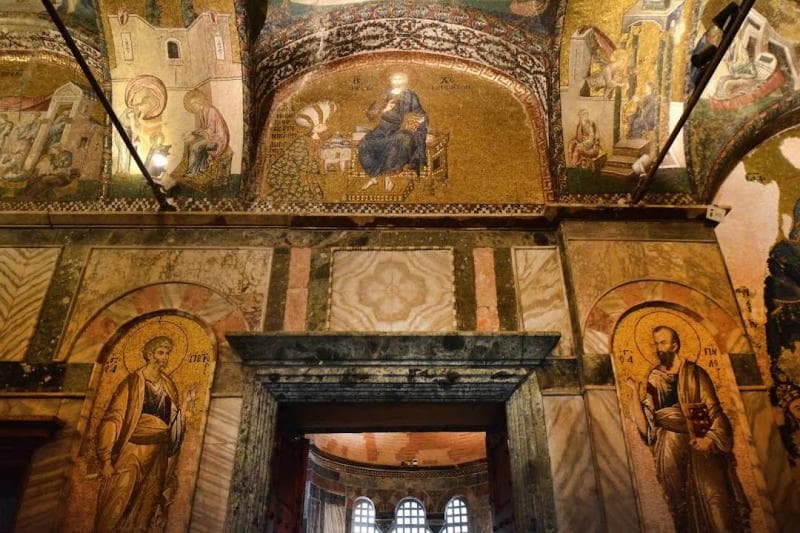
Explore the Anastasis Fresco, a 14th-century Byzantine masterpiece depicting Christ's resurrection in Istanbul's historic Chora Church (Kariye Mosque).
Overview
Deep within the historic Chora Church, now known as Kariye Mosque, in Istanbul, Turkey, lies a masterpiece of Byzantine art: the Anastasis Fresco. This extraordinary mural, located in the apse of the church’s side funerary chapel, the Parekklesion, vividly depicts a pivotal moment in Christian theology. The term 'Anastasis' itself is Greek for 'Resurrection' or 'Rebirth,' and the fresco visually embodies this concept, presenting Christ's triumphant descent into the underworld to liberate souls held captive by death. It stands as a beacon of late Byzantine artistic achievement, drawing visitors into a profound narrative of hope and redemption.
The Chora Church, with its rich history dating back to the 4th century, has undergone numerous transformations, serving as a church, a mosque, a museum, and once again a mosque. Yet, through these changes, the Anastasis Fresco has endured, its vibrant colors and dynamic composition offering a rare glimpse into the spiritual and artistic fervor of 14th-century Constantinople.
History & Cultural Background
The origins of the Chora Church, or the Church of the Holy Savior in Chora, can be traced to the early 4th century, when it stood as part of a monastery complex outside the city walls of Constantinople. Its name, 'Chora' (meaning 'in the country' or 'field'), refers to this initial location. While the church was rebuilt and modified several times over the centuries, the current structure largely dates from the 11th century.
The breathtaking interior decorations, including the renowned Anastasis Fresco, were commissioned between 1315 and 1321 by Theodore Metochites, a powerful Byzantine statesman and chief minister (Grand Logothete) to Emperor Andronikos II Palaiologos. This period, often referred to as the Palaiologan Renaissance, saw a resurgence of artistic and intellectual activity, and Metochites' patronage transformed Chora into one of the most significant monuments of Late Byzantine art. The Parekklesion, where the Anastasis resides, was specifically designed as a funerary chapel, making the fresco's theme of resurrection particularly fitting for its purpose.
Following the Ottoman conquest of Constantinople in 1453, the church was converted into a mosque in the 16th century, and its Christian mosaics and frescoes were covered with plaster in accordance with Islamic tradition. It functioned as Kariye Mosque until 1945 when it was secularized and became the Kariye Museum. During its time as a museum, extensive restoration work, notably by the Byzantine Institute of America, uncovered and conserved these invaluable artworks. In 2020, the building's status was reverted to a mosque, and it reopened for worship, though the artworks remain accessible to visitors.
What Makes It Special
The Anastasis Fresco is considered the pinnacle of Byzantine fresco painting due to its innovative style and profound theological depth. Unlike many earlier, more rigid Byzantine works, this fresco exhibits a remarkable sense of movement, drama, and human emotion, characteristic of the Palaiologan Renaissance. Christ is depicted in a dynamic pose, often described as a 'ballet-like' motion, reaching out to grasp the hands of Adam and Eve, pulling them from their tombs with immense force and compassion.
Central to the composition, Christ stands radiant in brilliant white robes, enveloped by a luminous mandorla – an aureole of light that emphasizes his divinity. Beneath his feet, the shattered gates of Hades and the bound figure of Satan (or Death) symbolize his victory over sin and death. This vivid portrayal, known in the West as the 'Harrowing of Hell,' is a distinctive Eastern Orthodox interpretation of the Resurrection, showcasing Christ's redemptive power and his compassion for all who died before him. The volumetric garments and subtle modeling of the figures also demonstrate a return to classical illusionism, blending it seamlessly with Byzantine spiritual expression.
Stories, Fun Facts & Local Details
The Chora Church's name, 'Chora,' which means 'country' or 'field,' took on a symbolic meaning even after the church was incorporated within the city walls. Inscriptions within the church refer to Christ as the 'Land of the Living' and Mary as the 'Container of the Uncontainable,' adding layers of theological depth to its geographical name.
The artistic program of the Chora Church, including the Anastasis Fresco, was largely funded by Theodore Metochites. His self-portrait mosaic, where he presents a model of the church to Christ, is a rare and significant example of donor representation in Byzantine religious art, highlighting his immense pride and devotion. While the artists behind these masterpieces remain largely anonymous, their profound skill and piety are evident in every detail.
The Anastasis Fresco's depiction of Christ pulling Adam and Eve from their tombs is rooted in non-biblical texts but became a cornerstone of Orthodox iconography. It visually answers the theological question of what happened to the righteous who died before Christ's crucifixion, portraying his descent into Hades to save them. This dramatic scene communicates a message of universal salvation and redemption, a powerful message for a funerary chapel.
Visitor Perspective
Visiting the Chora Church and witnessing the Anastasis Fresco offers a deeply moving experience. The chapel's frescoes, particularly the Anastasis, create an immersive environment that transcends mere observation. While the building has reverted to its function as a mosque, the intricate artworks are thoughtfully preserved and remain a central part of the visitor experience. Guides often highlight how the dynamic imagery and emotional intensity of the fresco provide a unique window into Byzantine spirituality and artistic innovation.
The relatively intimate scale of the Chora Church, compared to larger Byzantine structures, allows for a closer appreciation of the detailed artistry. Stepping into the Parekklesion and gazing upon the Anastasis is like stepping into a narrative frozen in time, inviting contemplation on themes of life, death, and resurrection. It's a reminder of Istanbul's layered history and its role as a crossroads of cultures and faiths, where centuries of artistic and religious expression converge.
Coordinates: 28.9392, 41.0311
View on Google Maps💬 How Travelers Describe This Place
Based on community votes
Interesting
910Unique
755Photogenic
374Must See
183Beautiful
28
Traveler Stories
Discover memorable experiences shared by travelers who have visited this place.
No traveler stories yet.
Be the first traveler to share what made this place memorable.

Tour
By
Spot
Discover amazing places around the world. Your journey starts here.
Explore
© 2026 TourBySpot. All rights reserved.