Textile Stalls
Tashkent, Uzbekistan
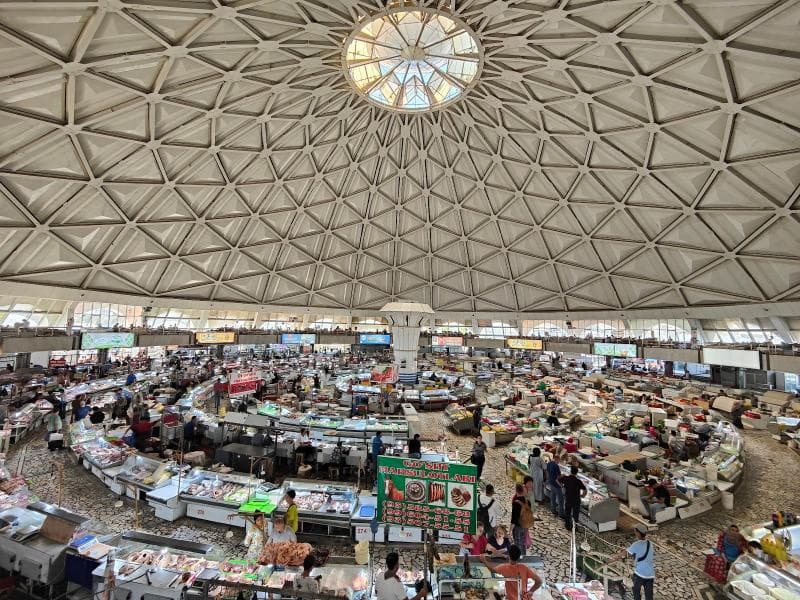
Explore the vibrant Textile Stalls at Chorsu Bazaar in Tashkent, Uzbekistan. Discover traditional silks, suzanis, and national costumes, rich in history and cultural significance.
Overview
Step into the vibrant heart of Tashkent's Old City and discover the Textile Stalls within Chorsu Bazaar, a sensory kaleidoscope nestled beneath its iconic blue domes. More than just a marketplace, this ancient trading hub, with roots stretching back over two millennia, offers a tangible connection to Uzbekistan's rich Silk Road heritage. Here, amidst the lively chatter and the aroma of exotic spices, you'll find a captivating array of traditional textiles, each thread weaving a story of craftsmanship and cultural identity. From intricately embroidered suzanis to the shimmering silks of atlas and adras, the textile section is a living museum where the artistry of Uzbek artisans is on full display, inviting curious travelers to delve into a world of color and tradition.
History & Cultural Background
Chorsu Bazaar, whose name means 'four ways' or 'crossroads' in Persian, has been a pivotal meeting point for merchants, travelers, and cultures for centuries. Its history as a major stop along the ancient Silk Road dates back more than 2,000 years, facilitating the exchange of goods including precious silks and textiles across Asia, the Middle East, and Europe. Even through periods of significant change, such as the Soviet era, the bazaar maintained its vital role as a commercial and social center, adapting while preserving its core essence. The current striking blue-domed main building, an architectural marvel blending Soviet-era modernism with traditional Central Asian influences, was notably reconstructed in the 1980s after a devastating earthquake in 1966. This enduring legacy has cemented Chorsu Bazaar's status not just as a market, but as a living monument to Uzbekistan's continuous trade and cultural exchange.
What Makes It Special
The Textile Stalls at Chorsu Bazaar are a testament to Uzbekistan's profound artistic legacy, offering an authentic glimpse into traditions passed down through generations. What makes this area truly special is the diversity and craftsmanship of the textiles themselves. You'll encounter vibrant fabrics like `atlas` and `adras`, renowned for their rich patterns and lustrous finish, alongside delicate `suzani` embroidery, often used for decorative wall hangings or coverings. Beyond bolts of fabric, the stalls feature an impressive collection of national costumes, including flowing `chapan` robes and elegant `khan-atlas` satin dresses, as well as distinct `tubeteika` skull-caps. These aren't merely garments; they are wearable art, with each design, color, and motif often carrying symbolic meaning related to regional identity or occasion. The presence of handwoven carpets further enriches the textile offerings, showcasing the intricate skill and patience of local artisans. This dedication to preserving traditional textile arts, coupled with the lively atmosphere of the bazaar, makes the Textile Stalls an unparalleled cultural experience.
Stories, Fun Facts & Local Details
Wandering through the Textile Stalls, you might discover that the patterns on an `atlas` silk fabric are not just decorative; they can tell stories of ancient motifs or family traditions. Similarly, the detailed embroidery of a `suzani` often takes months, sometimes even years, to complete, with designs reflecting regional styles and personal narratives. A fun fact is that the colors used in traditional Uzbek textiles often have deep cultural significance; for example, blue can symbolize the sky or water, while red may represent passion or prosperity. When examining a `tubeteika`, the small, often elaborately embroidered skull-caps, pay attention to its specific pattern and shape, as these details can indicate the wearer's region of origin or the event for which it is worn. Engaging with the vendors, many of whom have inherited their trade, can unveil fascinating insights into the creation process and the cultural importance of each textile. Their passion for their craft is palpable, offering a genuine human connection to the rich tapestry of Uzbek culture. Bargaining, especially for handmade goods, is not just tolerated but expected, forming a playful and respectful part of the transaction process.
Visitor Perspective
For the curious traveler, visiting the Textile Stalls at Chorsu Bazaar is an immersive cultural encounter rather than a mere shopping trip. To fully appreciate the experience, it's advisable to dress modestly, covering shoulders and knees, out of respect for local customs. Be prepared for a bustling environment; this is a working market for locals, not a tourist attraction designed for quiet browsing. Politeness goes a long way, especially when asking for permission before photographing vendors or their wares. While admiring the textiles, feel free to politely negotiate prices, particularly for artisanal items, as bargaining is an integral part of the bazaar's tradition. The best times to visit are generally in the morning when the market is buzzing with activity, offering fresh selections and cooler temperatures before the midday heat. Allow yourself ample time to wander, absorb the vibrant atmosphere, and connect with the rich heritage that the Textile Stalls so beautifully embody.
Coordinates: 69.23653, 41.32617
View on Google Maps💬 How Travelers Describe This Place
Based on community votes
Interesting
951Beautiful
748Must See
499Photogenic
491Unique
427
Traveler Stories
Discover memorable experiences shared by travelers who have visited this place.
No traveler stories yet.
Be the first traveler to share what made this place memorable.

Tour
By
Spot
Discover amazing places around the world. Your journey starts here.
Explore
© 2026 TourBySpot. All rights reserved.