Terrace of the Angel
Rome, Italy
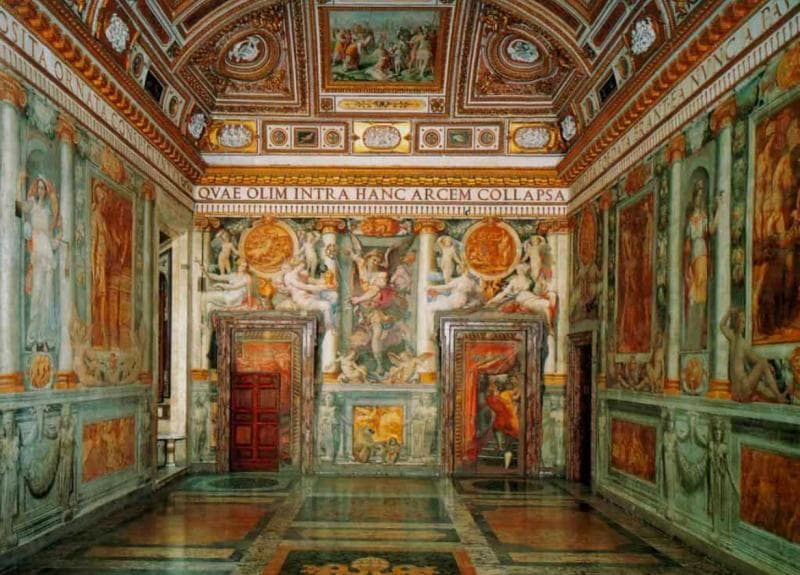
Discover the Terrace of the Angel atop Castel Sant'Angelo in Rome, Italy. Experience stunning panoramic views and rich history, linked to Archangel Michael's legend.
Overview
Perched majestically atop the ancient fortress of Castel Sant'Angelo in Rome, Italy, lies the breathtaking Terrace of the Angel. This elevated open-air space, known in Italian as the Terrazza dell'Angelo, offers visitors an unparalleled 360-degree panoramic vista of the Eternal City. It serves as the culminating point of a journey through centuries of Roman history, from an imperial tomb to a papal stronghold and now a national museum. The terrace derives its name and profound symbolic significance from the towering bronze statue of the Archangel Michael, poised as if watching over Rome, sword sheathed, in commemoration of a legendary event. It's a place where history, artistry, and stunning views converge, providing a unique perspective on Rome's layered past and vibrant present.
History & Cultural Background
The story of the Terrace of the Angel is intrinsically linked to that of Castel Sant'Angelo itself. The structure began its life in 130 AD as the elaborate mausoleum for Emperor Hadrian and his family, a monumental cylindrical tomb on the banks of the Tiber. Its transformation into a military stronghold began around 401 AD, when Emperor Honorius incorporated it into the city's defensive walls.
The castle earned its current name and deep spiritual association in 590 AD during a devastating plague that gripped Rome. Legend has it that Pope Gregory the Great, leading a penitential procession, had a vision of the Archangel Michael atop the mausoleum. In this vision, the Archangel sheathed his sword, a divine sign interpreted as the immediate end of the plague. To commemorate this miraculous event, a statue of the Archangel Michael was placed on the summit, and the structure became known as Castel Sant'Angelo, the 'Castle of the Holy Angel.'
Over subsequent centuries, the castle evolved further, serving as a papal fortress, residence, and even a prison, often connected to the Vatican by the fortified Passetto di Borgo, a secret escape route for popes during times of danger. The terrace, as it appears today, largely took shape during the Renaissance, refined under Pope Gregory XIII. The current bronze statue of Archangel Michael, standing four meters tall, was cast by Flemish sculptor Peter Anton von Verschaffelt in 1752, replacing earlier versions that had succumbed to time or conflict.
What Makes It Special
What truly sets the Terrace of the Angel apart is its extraordinary vantage point. From this lofty perch, visitors are treated to an unparalleled 360-degree panorama that sweeps across Rome. You can trace the winding Tiber River, gaze upon the majestic dome of St. Peter's Basilica, identify the ancient Pantheon, spot the impressive Altare della Patria, and discern the Quirinale Palace.
The presence of the Archangel Michael statue imbues the terrace with profound symbolism. It stands as a perpetual reminder of Rome's divine protection and the pivotal moment that gave the castle its name. The terrace itself represents the culmination of the castle's layered history — a space that has witnessed imperial burials, medieval sieges, papal reflections, and dramatic events. It's a unique blend of architectural achievement, religious legend, and strategic importance, offering not just a view, but a tangible connection to the city's rich narrative.
Stories, Fun Facts & Local Details
The legend of the Archangel Michael sheathing his sword during the plague of 590 AD is perhaps the most enduring story associated with the terrace. This divine intervention saved Rome and forever changed the identity of Hadrian's ancient mausoleum into the Castel Sant'Angelo.
Adjacent to the Archangel Michael statue, a smaller bronze bell, known as the Campana della Misericordia (Bell of Mercy) or Campana dei Condannati (Bell of the Condemned), adds a poignant historical detail. Cast in 1758, this bell would toll to signal executions carried out in the courtyard below, a somber reminder of the castle's past as a papal prison.
For opera lovers, the Terrace of the Angel holds a dramatic resonance: it is famously the setting for the tragic final act of Giacomo Puccini's opera 'Tosca,' where the heroine takes her fateful leap from its heights. Furthermore, historically, the terrace was a site for spectacular firework displays known as 'La Girandola,' a tradition that dates back to at least 1481. The various iterations of the Archangel Michael statue that have graced the summit over centuries, made from different materials like wood and marble before the current bronze, also highlight the castle's continuous adaptation and resilience.
Visitor Perspective
Reaching the Terrace of the Angel is often the grand finale of a visit to Castel Sant'Angelo, a journey that takes you through the castle's various levels, ancient Roman corridors, and papal apartments. The ascent culminates in this open-air space, rewarding visitors with breathtaking views. It's recommended to aim for a visit in the late afternoon, especially an hour before sunset, when the golden light illuminates St. Peter's dome and the Baroque architecture of central Rome, creating a truly magical photographic opportunity. Access to the terrace is included with the standard museum entrance ticket. Standing on this terrace, one can almost feel the weight of history and the myriad stories embedded in the Roman skyline, gaining a profound appreciation for the city's enduring legacy from a truly angelic perspective.
Coordinates: 12.466276, 41.903063
View on Google Maps💬 How Travelers Describe This Place
Based on community votes
Must See
684Beautiful
363Photogenic
302Unique
250Interesting
88
Traveler Stories
Discover memorable experiences shared by travelers who have visited this place.
No traveler stories yet.
Be the first traveler to share what made this place memorable.

Tour
By
Spot
Discover amazing places around the world. Your journey starts here.
Explore
© 2026 TourBySpot. All rights reserved.