Temple Foundations
Yerevan, Armenia
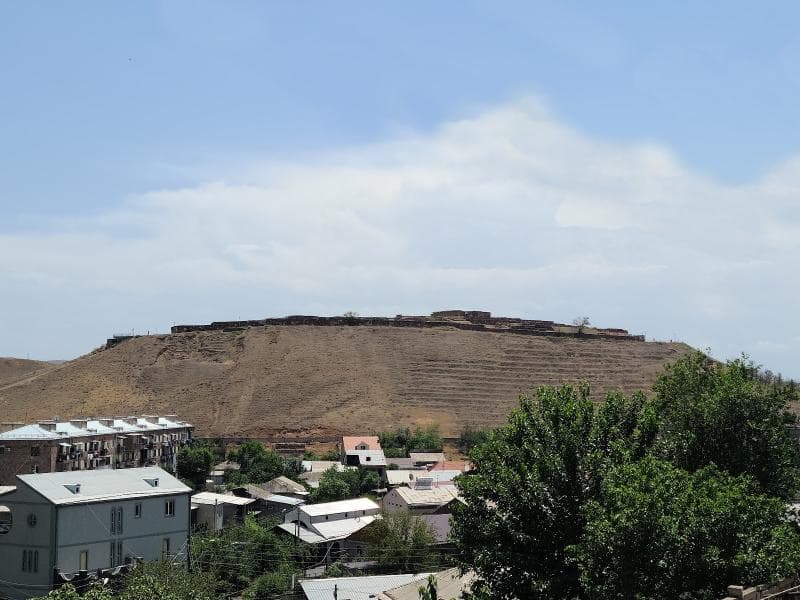
Explore the ancient Temple Foundations at Erebuni Fortress in Yerevan, Armenia, the birthplace of the capital, revealing Urartian history.
Overview
Perched atop the ancient Arin Berd hill in Yerevan, Armenia, lie the venerable Temple Foundations of Erebuni Fortress. This archaeological site represents the birthplace of Armenia's vibrant capital, offering a rare glimpse into the powerful Urartian Kingdom that flourished over 2,800 years ago. While the entire Erebuni Fortress is a testament to ancient ingenuity, the Temple Foundations stand out as crucial structures that once formed the spiritual heart of this significant fortified city. Visitors today can explore the carefully preserved remnants, walking through spaces where ancient rituals and royal ceremonies once took place, connecting directly to the profound history embedded in the Armenian landscape.
History & Cultural Background
Erebuni Fortress was founded in 782 BC by King Argishti I of Urartu, serving as a vital military stronghold, administrative center, and religious hub for the kingdom. The site's strategic location overlooking the Ararat plain was paramount for protecting Urartu's northern borders. Among its most important structures were the temples dedicated to the Urartian pantheon, with the Temple of Khaldi being particularly prominent. Khaldi was the supreme deity of Urartu, a sky god worshipped as the patron god of the Urartian kings and their military campaigns. The presence of such a grand temple underscores the profound role of religion in Urartian society and governance. Following the collapse of the Urartian state, Erebuni continued to be an important settlement, notably under the Achaemenid Empire, which undertook significant reconstructions and expansions, adapting some of the existing structures, including the temples.
What Makes It Special
The Temple Foundations at Erebuni are extraordinary for several reasons. Primarily, they offer tangible evidence of sophisticated Urartian religious architecture. The Temple of Khaldi, for instance, featured a distinct design with a large oblong hall, an auxiliary room, and a staircase leading to a ziggurat-type tower. What truly sets it apart are the remnants of its interior decorations: walls adorned with vibrant frescoes depicting human figures, gods (including Khaldi standing on a lion), geometric patterns, and floral designs. These artistic treasures, often using striking blue and yellow pigments, provide invaluable insights into Urartian art and beliefs, showcasing a level of artistic sophistication remarkable for its age. Additionally, the discovery of unique wooden floors within the Khaldi temple, contrasting with the more common clay-coated adobe floors elsewhere in the fortress, hints at the special sanctity and grandeur accorded to this sacred space.
Stories, Fun Facts & Local Details
One of the most compelling facts about Erebuni is its direct link to the modern-day capital of Armenia. The name 'Yerevan' itself is believed to be derived from 'Erebuni', making the fortress the ancient progenitor of one of the world's continuously inhabited cities. The very existence of Erebuni was rediscovered in the 20th century through a cuneiform inscription detailing its founding by King Argishti I in 782 BC, a monumental find that cemented Yerevan's ancient origins. Recent archaeological expeditions, including joint French-Armenian teams, continue to uncover fascinating details, such as additional temple foundations and 'fantastically beautiful' gravel ground mosaics, revealing the possibility of multiple contemporary shrines and further deepening our understanding of Urartian religious practices and architectural styles. The fortress also housed immense wine cellars with large 'karasses' (clay jars) capable of holding up to 600 liters, suggesting wine played a significant role not only in daily life but also in religious offerings and ceremonies.
Visitor Perspective
Visiting the Temple Foundations within Erebuni Fortress is an immersive journey through time. As you traverse the ancient pathways and stand among the basalt and tufa stone foundations, you're walking on ground laid by a powerful civilization millennia ago. The remnants of the temple walls and the occasional preserved fresco fragments allow for a tangible connection to the Urartian past, sparking the imagination about the priests and worshippers who once gathered here. The commanding hilltop location of Arin Berd also provides breathtaking panoramic views of modern Yerevan and the surrounding Ararat plain, offering a unique perspective on the city's continuous history. Adjacent to the fortress, the Erebuni Museum houses many of the artifacts unearthed from the site, including cuneiform tablets, weapons, pottery, and vibrant mural reproductions, enriching the visitor's understanding of this remarkable cultural heritage. It's a journey that reveals the layers of history that underpin Armenia's identity, making the ancient stones speak volumes about a foundational epoch.
Coordinates: 44.5381, 40.1406
View on Google Maps💬 How Travelers Describe This Place
Based on community votes
Beautiful
539Interesting
517Photogenic
422Unique
251Must See
234
Traveler Stories
Discover memorable experiences shared by travelers who have visited this place.
No traveler stories yet.
Be the first traveler to share what made this place memorable.

Tour
By
Spot
Discover amazing places around the world. Your journey starts here.
Explore
© 2026 TourBySpot. All rights reserved.