Temple Courtyards
Bali, Indonesia
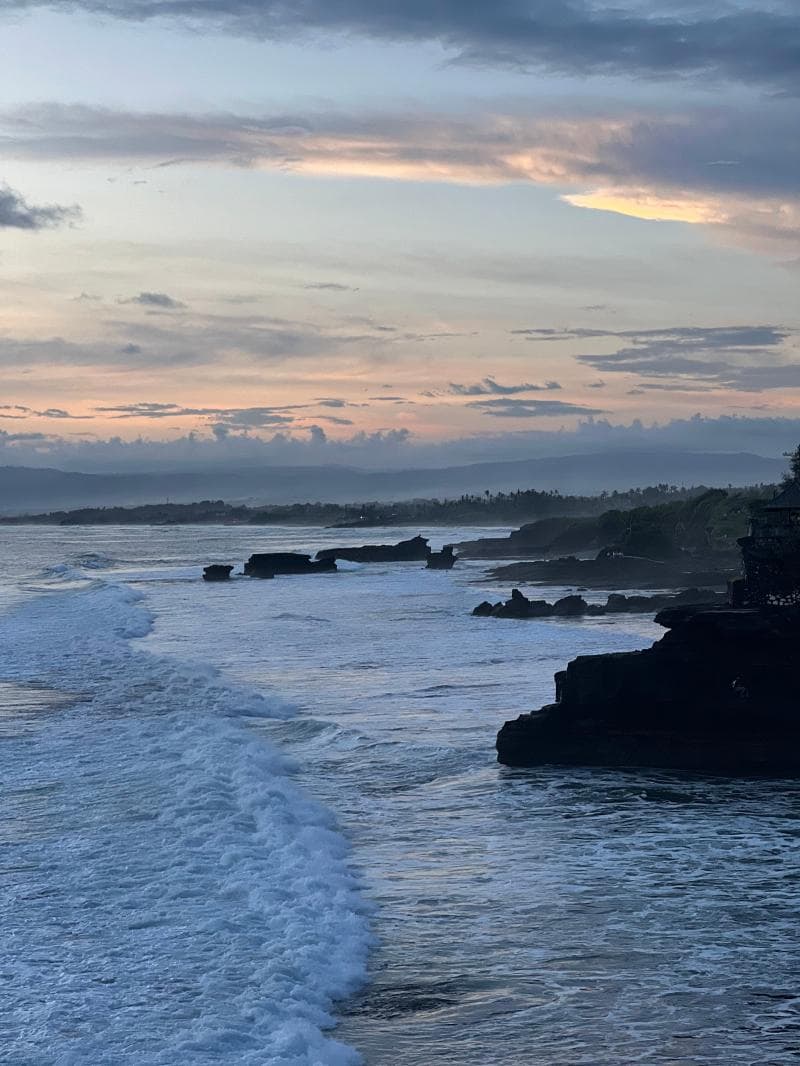
Explore the sacred temple courtyards of Tanah Lot Temple in Bali, Indonesia. Discover its rich history, unique offshore setting, and captivating legends.
Overview
Nestled amidst the crashing waves of the Indian Ocean, the temple courtyards of Tanah Lot Temple in Bali, Indonesia, offer a profound journey into Balinese spiritual and natural beauty. More than just a single structure, Tanah Lot is a complex of shrines set against a dramatic coastal backdrop, most famously the main temple perched atop a rocky outcrop. This iconic landmark, often appearing to float during high tide, captures the essence of Bali's mystical charm. Visitors are drawn not only to its breathtaking sunsets but also to the serene pathways and smaller sacred sites that constitute its expansive and revered grounds.
History & Cultural Background
The origins of Tanah Lot Temple date back to the 16th century, attributed to the revered Javanese Hindu priest, Dang Hyang Nirartha. Legend states that during his spiritual travels along Bali's coast, he discovered this beautiful rock formation and felt its sacred energy, instructing local fishermen to build a shrine there. The temple is dedicated to Dewa Baruna, the sea god, embodying the Balinese reverence for the ocean's power and its vital role in island life. Tanah Lot is one of the seven sea temples strategically positioned along Bali's southwestern coast, each designed to be visible from the next, forming a spiritual chain that protects the island from negative influences. This ancient Hindu shrine remains an active place of worship, with its 'odalan', or temple anniversary, celebrated every 210 days according to the Balinese calendar, bringing vibrant festivities and elaborate rituals to its courtyards.
What Makes It Special
The allure of Tanah Lot's temple courtyards lies in its harmonious blend of natural wonder and spiritual architecture. Its most striking feature is the main temple's precarious position on an offshore rock, creating an illusion of floating when the tide rises and isolating it from the mainland. At low tide, a rocky path emerges, allowing visitors to walk closer to the temple's base and explore the surrounding formations. The traditional Balinese architecture, with its multi-tiered Meru roofs made from black palm fiber, gracefully punctuates the horizon. Within these sacred grounds, a natural freshwater spring miraculously flows amidst the salty ocean, considered holy water by the Balinese, used for blessings and purification. Additionally, the temple is said to be guarded by sacred sea snakes, believed to protect the site from evil spirits and intruders, adding to its mystique.
Stories, Fun Facts & Local Details
Beyond its visual splendor, Tanah Lot is steeped in fascinating stories and local folklore. The tale of Dang Hyang Nirartha's encounter with the local village chief, who resisted his teachings, culminates in Nirartha using his spiritual powers to move the rock into the sea, thus creating Tanah Lot—'Land in the Sea.' This origin story is central to the temple's identity. Another intriguing detail is the presence of the holy sea snakes, often spotted in the rocky crevices at the base of the main temple. These banded sea kraits are revered guardians, believed to be Nirartha's creations, warding off malevolent forces. A popular, though unproven, myth known as the 'Bali Breakup Curse' suggests that unmarried couples visiting Tanah Lot are doomed to separate. However, many locals view this as a tourist superstition rather than a genuine belief, often suggesting that a strong relationship can withstand any myth.
Visitor Perspective
Exploring the temple courtyards of Tanah Lot offers a multi-sensory experience. While non-worshippers cannot enter the main temple on the rock, the surrounding areas provide ample opportunities for contemplation and cultural immersion. Pathways lead to various viewpoints, offering unparalleled vistas, especially during sunset when the sky erupts in vibrant hues, silhouetting the temple. Early morning visits, conversely, offer a more serene atmosphere with fewer crowds, allowing for a peaceful appreciation of the site. Adjacent to the main temple complex is Pura Batu Bolong, another sea temple built on a cliff with a natural arch, providing additional picturesque views. The area leading up to the temple is lined with market stalls selling local handicrafts and snacks, offering a glimpse into local commerce. Visitors are encouraged to dress respectfully, covering shoulders and knees, to honor the sacred nature of this cherished Balinese landmark.
Coordinates: 115.08716, -8.62107
View on Google Maps💬 How Travelers Describe This Place
Based on community votes
Interesting
950Must See
929Unique
858Photogenic
287Beautiful
275
Traveler Stories
Discover memorable experiences shared by travelers who have visited this place.
No traveler stories yet.
Be the first traveler to share what made this place memorable.

Tour
By
Spot
Discover amazing places around the world. Your journey starts here.
Explore
© 2026 TourBySpot. All rights reserved.