Temple Courtyards
Bali, Indonesia
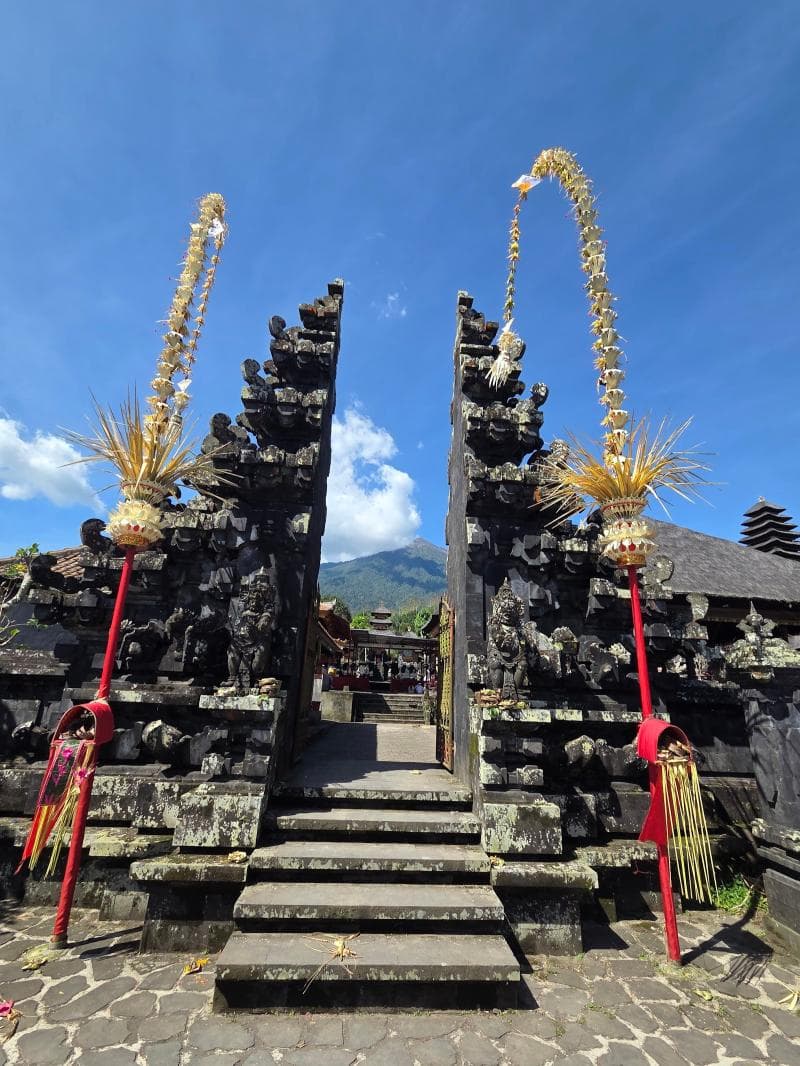
Explore the sacred Temple Courtyards of Besakih Temple in Bali, Indonesia, Bali's 'Mother Temple,' with its rich history, spiritual significance, and unique architecture.
Overview
The Temple Courtyards within Besakih Temple, located in Bali, Indonesia, form the spiritual heart of the island’s 'Mother Temple'. This sprawling complex, nestled on the southwestern slopes of the sacred Mount Agung, is not a single structure but an intricate arrangement of 23 separate yet interconnected temples and 86 individual shrines. Situated approximately 1,000 meters above sea level, the temple’s terraced layout ascends the volcanic slopes, creating a profound sense of spiritual journey. At its core lies Pura Penataran Agung, the grandest and most central sanctuary, from which numerous courtyards branch out, each holding unique significance.
These courtyards are meticulously designed to guide visitors and devotees through a progressive spiritual ascent, symbolically drawing them closer to the revered peak of Mount Agung, considered by the Balinese to be a divine abode. The extensive layout ensures that even with its vastness, a clear path for reverence and contemplation is maintained. It is a living, breathing testament to Balinese Hinduism, where daily rituals and grand ceremonies unfold against a backdrop of breathtaking natural beauty.
History & Cultural Background
The origins of Besakih Temple stretch back over a millennium, with historical records suggesting its establishment around the 8th century AD. Intriguingly, the stone bases of some temples within the complex bear a resemblance to ancient megalithic stepped pyramids, hinting at an even earlier sacred use of this site, possibly dating back 2,000 years. Balinese legend credits the sage Rsi Markandeya with the temple's foundation, guided by divine inspiration to construct a holy sanctuary on Mount Agung's slopes.
Over centuries, the complex grew, notably flourishing under the Majapahit Empire and later becoming the state temple of the powerful Gelgel dynasty in the 15th century. The design of Besakih and its courtyards embodies core Balinese Hindu cosmological principles, aiming to balance the 'three worlds'—the underworld, the earthly realm, and the heavens. This also reflects the profound Tri Hita Karana philosophy, emphasizing harmony among humans, nature, and God. A unique cultural aspect is that Besakih is the sole religious site in Bali where individuals from all castes pray together in the same courtyards, fostering a sense of spiritual unity.
What Makes It Special
What truly sets Besakih Temple's courtyards apart is its unparalleled status as the 'Mother Temple' of Bali. It is the undisputed spiritual epicenter for all Balinese Hindus, drawing pilgrims from across the island. Its location on the active, revered Mount Agung imbues it with a mystical and potent spiritual energy, making every courtyard a charged space for devotion.
The complex is meticulously laid out according to the Tri Mandala concept, dividing the sacred space into three zones: the outer Nista Mandala, the middle Madya Mandala, and the inner, holiest Utama Mandala. This symbolic progression mirrors the spiritual journey from the mundane to the divine. Within these courtyards are three principal temples, each dedicated to a deity of the Hindu trinity: Pura Penataran Agung for Shiva (marked by white banners), Pura Kiduling Kreteg for Brahma (with red banners), and Pura Batu Madeg for Vishnu (identified by black banners).
Perhaps the most extraordinary aspect is the temple's miraculous survival during the catastrophic 1963 eruption of Mount Agung. Lava flows, which claimed many lives, veered just meters away from the temple's walls, leaving it virtually unscathed. This event was widely interpreted by the Balinese as a divine sign—a powerful demonstration of the gods' might, yet a deliberate act of protection for their sacred earthly dwelling.
Stories, Fun Facts & Local Details
The name 'Besakih' itself carries historical weight, believed to derive from 'Basuki,' meaning Salvation in Sanskrit, or linked to the mythical dragon-god 'Naga Besukian' said to inhabit Mount Agung. The tiered shrines, known as 'meru,' which grace many courtyards, are not merely architectural features but represent sacred mountains, often receiving offerings during ceremonies. A highlight of the Balinese calendar is the annual Bhatara Turun Kabeh festival, typically held in March or April. During this month-long event, devotees believe all deities descend from Mount Agung to reside in the shrines, marked by 21 days of continuous, fervent prayers.
Visitors often encounter the majestic Candi Bentar, a towering split gateway of Pura Penataran Agung, with its 52 stone steps. This impressive entrance is said to evoke the sensation of climbing steps to heaven. Keep an eye out for the vibrant red hibiscus flowers, carefully placed daily by priests to adorn statues throughout the courtyards, a small yet profound detail of ongoing devotion.
Visitor Perspective
Exploring Besakih Temple's courtyards offers a deeply enriching cultural experience. Visitors are required to dress modestly, meaning shoulders and knees must be covered. A sarong and sash are mandatory, often included with the entrance ticket or available for rent at the site. Given the extensive and often steep staircases across six terraced levels, comfortable footwear is highly recommended for navigating the complex.
For the most serene experience and optimal photo opportunities, an early morning visit, ideally before 9:00 AM, is best to avoid larger crowds and the midday heat. The average visit typically spans about two hours, allowing sufficient time to explore the accessible outer and middle courtyards. While self-exploration is possible, hiring a local guide, often included in the ticket, can provide invaluable insights into the history, symbolism, and cultural nuances of each courtyard and shrine. It's crucial to be mindful and respectful of any ongoing ceremonies, as some inner sanctums are exclusively reserved for Hindu worshippers. Additionally, traditional customs dictate that women on their menstrual cycle and individuals with open wounds should not enter the sacred grounds due to ritual purity beliefs.
Coordinates: 115.450936, -8.374368
View on Google Maps💬 How Travelers Describe This Place
Based on community votes
Interesting
989Unique
613Photogenic
581Must See
514Beautiful
207
Traveler Stories
Discover memorable experiences shared by travelers who have visited this place.
No traveler stories yet.
Be the first traveler to share what made this place memorable.

Tour
By
Spot
Discover amazing places around the world. Your journey starts here.
Explore
© 2026 TourBySpot. All rights reserved.