Temple Courtyard
Chiang Mai, Thailand
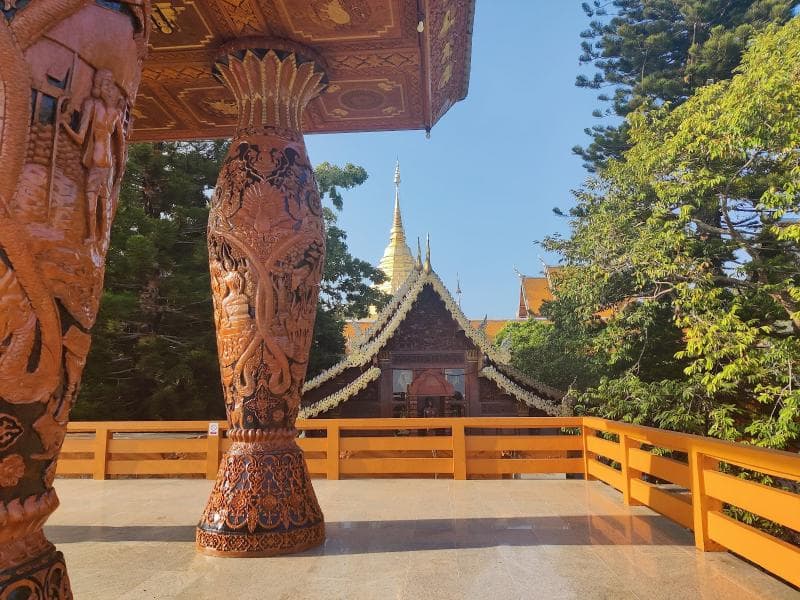
Explore the sacred Temple Courtyard of Wat Phra That Doi Suthep in Chiang Mai, Thailand, home to a gilded chedi and ancient legends.
Overview
Perched majestically atop Doi Suthep mountain, just 15 kilometers from Chiang Mai city in Thailand, lies the revered Wat Phra That Doi Suthep. This sacred Theravada Buddhist temple, often simply called 'Doi Suthep,' offers a profound spiritual journey and breathtaking panoramic views of the city below. Standing at an elevation of approximately 1,073 meters (3,520 feet), the temple's golden chedi gleams under the sun, a beacon of faith visible from afar.
The heart of this spiritual sanctuary is its temple courtyard, a serene space meticulously designed to foster contemplation and devotion. Visitors can reach this sacred precinct by ascending a grand 306- or 309-step Naga staircase, flanked by mythical serpent railings, or opt for a convenient funicular ride. Once inside, the courtyard unfolds as a vibrant tapestry of intricate Lanna architecture, golden statues, and the powerful presence of the central chedi.
History & Cultural Background
The origins of Wat Phra That Doi Suthep are steeped in a captivating legend that dates back to the late 14th century, with the temple's founding generally attributed to 1383 or 1386. The tale revolves around a revered monk, Sumanathera, who discovered a bone fragment believed to be Buddha's shoulder relic, possessing miraculous powers like glowing and replication.
According to legend, King Nu Naone (or King Kue Na) of the Lanna Kingdom sought to enshrine this relic. When the bone miraculously split into two, one piece was placed at Wat Suan Dok. The second, larger piece was entrusted to a white elephant, a sacred animal, which was then set free. The elephant journeyed up Doi Suthep mountain, trumpeted three times, and then knelt down and passed away. King Nu Naone interpreted this as a divine sign and ordered the construction of a temple at this precise spot. Thus, Wat Phra That Doi Suthep was born. The temple has since expanded and been embellished over centuries, with the road to its summit only completed in 1935 through a collaborative community effort.
What Makes It Special
The temple courtyard, often referred to as the main terrace, is a walled rectangular space that serves as the spiritual and architectural focal point of Wat Phra That Doi Suthep. At its very center stands the magnificent gilded chedi, a 24-meter-tall stupa adorned with layers of gold-plated copper and crowned with a five-tiered honorific umbrella. This chedi is the sacred repository for the Buddha's shoulder bone relic, making it the most revered spot within the temple.
Surrounding the chedi are two shrine halls, or viharns, located to its east and west, along with a covered cloister that encircles the courtyard. The inner walls of this cloister are adorned with numerous Buddha images in various poses, and intricate murals depicting the temple's founding story and Buddhist cosmology. Visitors are invited to walk clockwise three times around the chedi, often carrying offerings of lotus buds, candles, and incense sticks, a traditional act of reverence.
Beyond the chedi, the courtyard houses other significant elements, including a statue commemorating the legendary white elephant and a shrine dedicated to Sudeva, the hermit after whom the mountain is named. Over 233 Buddha statues can be found within this inner courtyard, creating an immersive atmosphere for devotion.
Stories, Fun Facts & Local Details
A popular local saying in Chiang Mai declares, 'You haven't come to Chiang Mai yet, if you have not visit Suthep Temple,' highlighting its indispensable status. The temple's grandeur is not just in its main structures; the courtyard boasts a collection of bells and gongs, totaling 119, with one notably large gong near the Naga stairs. Ringing these bells is believed to purify the holy place and symbolizes wisdom and compassion, guiding practitioners towards enlightenment.
The white elephant that carried the relic is particularly significant; in Thai culture, pinkish albino elephants are considered holy, emphasizing the profound sacredness of its journey to this site. For local university students, an unofficial tradition involves hiking the 'Monk's Trail' up to the temple at the beginning of their studies, believing it brings good fortune for their graduation. Additionally, paying respects to the Hermit Suthep statue in the courtyard is thought to bring good luck. The temple is also a focal point for major Buddhist holidays like Songkran and Loy Krathong, drawing large numbers of pilgrims and offering a vibrant cultural experience.
Visitor Perspective
Visiting the Temple Courtyard of Wat Phra That Doi Suthep is an enriching experience that combines cultural immersion with breathtaking natural beauty. The ascent, whether by the iconic Naga staircase or the cable car, builds anticipation for the spiritual journey ahead. Once inside the courtyard, visitors are reminded to dress respectfully, covering shoulders and knees, and to remove their footwear before entering the most sacred areas.
Most visitors find that two to three hours are sufficient to explore the temple grounds thoroughly, though half a day allows for a more leisurely experience, perhaps combined with nearby attractions. The best times to visit are early morning, when the crowds are smaller and you might witness monks chanting, or late afternoon for a stunning sunset over Chiang Mai. The cooler, drier months between November and February offer the clearest views. Beyond the architectural marvels, the courtyard provides numerous vantage points to admire the expansive landscape of Chiang Mai and its surrounding plains, making it a truly memorable destination.
Coordinates: 98.92156, 18.80498
View on Google Maps💬 How Travelers Describe This Place
Based on community votes
Unique
710Must See
448Beautiful
156Photogenic
102Interesting
87
Traveler Stories
Discover memorable experiences shared by travelers who have visited this place.
No traveler stories yet.
Be the first traveler to share what made this place memorable.

Tour
By
Spot
Discover amazing places around the world. Your journey starts here.
Explore
© 2026 TourBySpot. All rights reserved.