Temple Bar
Dublin, Ireland
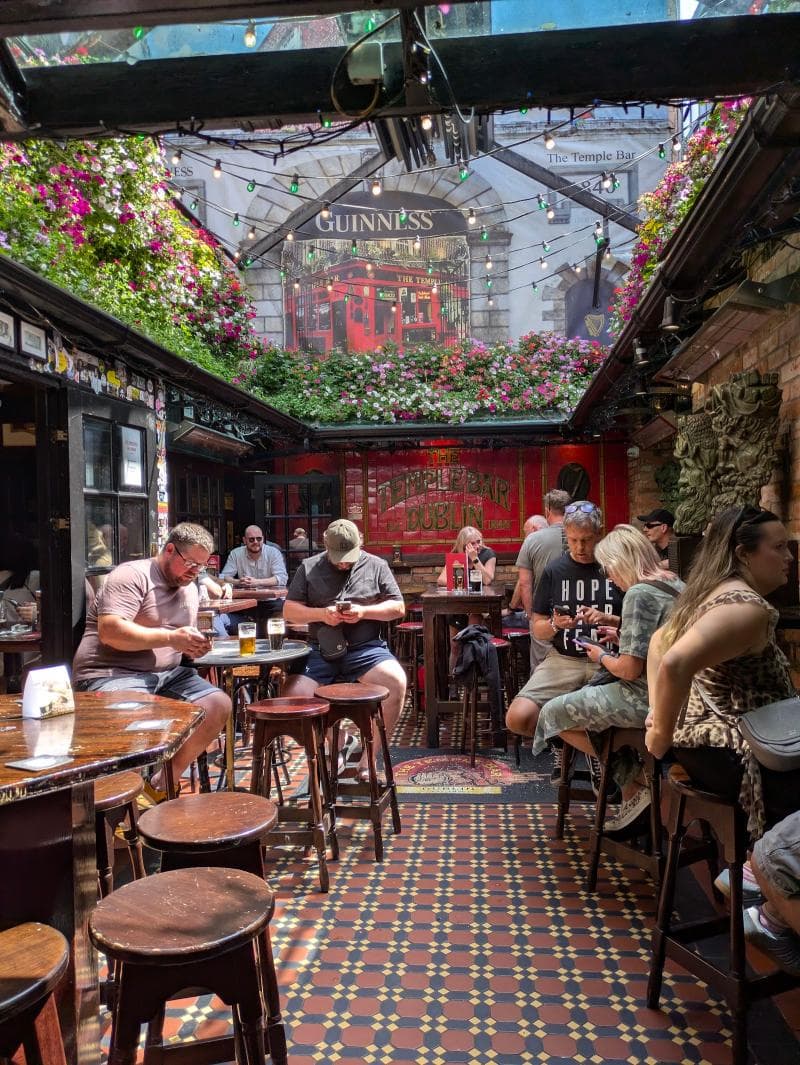
Explore Temple Bar in Dublin, Ireland's cultural quarter, known for its historic pubs, cobblestone streets, vibrant arts scene, and lively nightlife.
Overview
Nestled on the south bank of the River Liffey, Temple Bar is Dublin's renowned cultural quarter, an iconic district that pulses with history, art, and vibrant Irish spirit. Its distinctive cobblestone streets and narrow lanes invite exploration, revealing a captivating blend of traditional pubs, contemporary galleries, quirky shops, and bustling markets. More than just a place, Temple Bar offers an immersive experience into the heart of Dublin's lively character, drawing visitors from across the globe with its unique charm and ceaseless energy.
History & Cultural Background
Temple Bar's story stretches back to medieval times when it existed as part of St. Andrew's Parish, a suburb situated outside Dublin's city walls. However, by the 14th century, the area fell into disuse, vulnerable to attacks. The 17th century marked a significant turning point, with the land being redeveloped to create gardens for affluent English families. It is widely believed that the district acquired its name from Sir William Temple, a British diplomat and Provost of Trinity College, who established his residence and gardens here in the early 1600s. Another theory suggests the name was an imitation of London's historic Temple Bar district, with Dublin adopting similar street names like Essex and Fleet. The first recorded mention of 'Temple Bar' appeared on a Dublin map in 1673.
The area's character shifted over centuries. By the 18th century, it had a reputation as a centre of prostitution in Dublin, and later, in the 19th century, it experienced a period of decline and urban decay, with many buildings becoming derelict. Despite this, Temple Bar holds cultural milestones; it was near here, on Fishamble Street, that George Frideric Handel's 'Messiah' had its world premiere on April 13, 1742. An annual performance still commemorates this event. In a more political vein, the Society of the United Irishmen, a republican revolutionary group, was formed in a tavern on Eustace Street in 1791.
A pivotal moment in Temple Bar's modern history occurred in the 1980s when the state transport company, CIE, planned to convert the dilapidated area into a large bus depot. While awaiting demolition, buildings were rented out at low rates, attracting artists, small businesses, and cultural enterprises. This influx of creative energy sparked a grassroots revival. Public protests and growing appreciation for the district's nascent cultural scene ultimately saved Temple Bar from redevelopment into a bus station, leading to its regeneration as a dedicated cultural quarter in the 1990s.
What Makes It Special
Temple Bar stands apart as Dublin's official 'cultural quarter,' a designation it proudly lives up to with its unique blend of heritage and contemporary flair. It offers a stark contrast to other parts of Dublin's city centre, providing a pedestrian-friendly labyrinth of cobblestone streets filled with boutiques, art galleries, independent shops, and cafes. This district is a vibrant hub for the arts, boasting several theatres including Smock Alley, the Project Arts Centre, and the Olympia. It's also home to institutions like the Irish Film Institute, the National Photographic Archive, and the Gallery of Photography.
The area's true magic lies in its atmosphere, especially after dusk, when the sounds of traditional Irish music spill from pubs and the streets come alive with chatter and laughter. Temple Bar hosts various festivals throughout the year, with the Temple Bar Tradfest being a notable highlight, celebrating traditional Irish music. On weekends, visitors can explore the Temple Bar Book Market and the Temple Bar Food Market in Meetinghouse Square, offering everything from fresh produce and artisan cheeses to unique literary finds.
Stories, Fun Facts & Local Details
The name 'Temple Bar' itself sparks curiosity, with its double meaning possibly referring to Sir William Temple's estate and the riverside 'bar' or embankment. It's a place where history intertwines with daily life. For instance, the exact location of the first performance of Handel's 'Messiah' is commemorated annually. A lesser-known detail is the 'Bell of Hell,' a 19th-century cast-iron bell once used to signal the opening and closing of the nearby Bridge Street Bridge.
A fascinating 'what if' story revolves around Temple Bar's near transformation into a bus depot, a plan averted by the very artists and small businesses who found low-rent spaces there and subsequently championed its preservation as a cultural hub. The district also boasts the highest density of pubs in Dublin, ensuring a constant buzz of activity and music. Among these, the famous red-fronted 'The Temple Bar' pub, established around 1840, is one of the most photographed and popular venues, renowned for its traditional Irish music sessions. Before all this, archaeological evidence suggests Viking settlements in the area as far back as 795 AD.
Visitor Perspective
For the curious traveler, Temple Bar offers an unforgettable slice of Dublin. Its pedestrian-friendly, cobbled streets are perfect for leisurely strolls, allowing you to soak in the distinct medieval character that still remains in pockets, such as Fishamble Street. During the day, you can browse independent boutiques, seek out vintage treasures, or explore art installations like the Icon Walk. The weekend markets provide a sensory delight, from the aroma of gourmet street food to the treasure trove of second-hand books.
As evening descends, Temple Bar truly comes alive. The district's numerous pubs, often featuring live traditional Irish music, invite visitors to experience authentic Irish 'craic' – lively conversation and good times. Whether you're enjoying a pint of Guinness, tapping your feet to a jig, or simply people-watching from a cozy cafe, the atmosphere is electric and uniquely Irish. While it can get busy, especially on weekends, the vibrant energy is part of its allure. Nearby attractions like Dublin Castle and Trinity College are just a short walk away, making Temple Bar a central and indispensable part of any Dublin itinerary.
Coordinates: -6.263803, 53.34509
View on Google Maps💬 How Travelers Describe This Place
Based on community votes
Photogenic
795Interesting
753Must See
302Unique
172Beautiful
79
Traveler Stories
Discover memorable experiences shared by travelers who have visited this place.
No traveler stories yet.
Be the first traveler to share what made this place memorable.
Things to see at Temple Bar



Tour
By
Spot
Discover amazing places around the world. Your journey starts here.
Explore
© 2026 TourBySpot. All rights reserved.