Taiko-bashi Bridge
Osaka, Japan
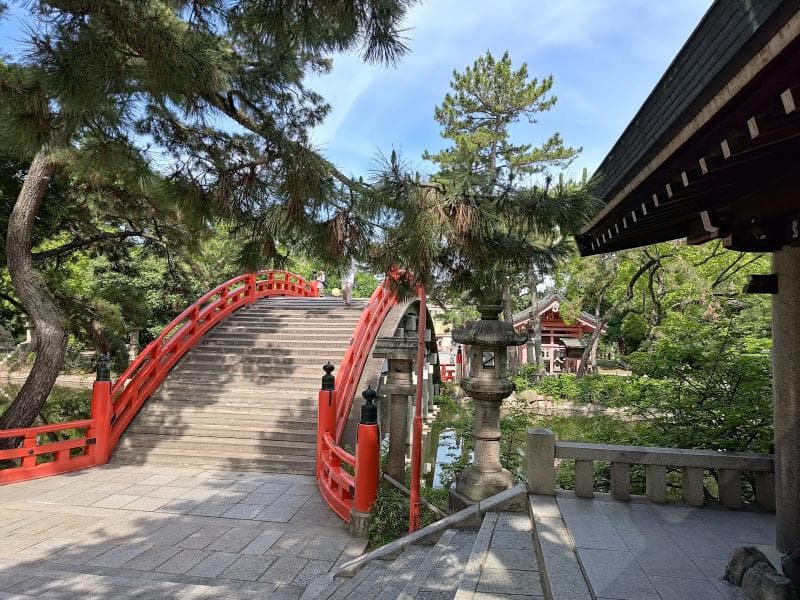
Discover Osaka's iconic Taiko-bashi Bridge at Sumiyoshi Taisha, a stunning vermilion arched bridge symbolizing purification and good fortune in Japan.
Overview
Nestled within the ancient Sumiyoshi Taisha shrine complex in Osaka, Japan, the Taiko-bashi Bridge, also known as Sorihashi Bridge, stands as a vibrant testament to Japan's rich cultural and spiritual heritage. This strikingly arched, vermilion-red bridge is far more than a mere crossing; it is a symbolic gateway between the everyday world and the sacred realm of the gods. As visitors approach Sumiyoshi Taisha, one of the nation's oldest and most significant Shinto shrines, the Taiko-bashi Bridge immediately captures attention with its graceful curve and traditional Japanese aesthetic. Its prominent position within the shrine grounds makes it an unforgettable landmark, deeply intertwined with the spiritual journey of those who pass over it.
History & Cultural Background
Sumiyoshi Taisha itself boasts a history spanning nearly 2,000 years, with its founding traditionally attributed to Empress Jingū in 211 AD. It serves as the head shrine for over 2,300 Sumiyoshi shrines across Japan, enshrining the Sumiyoshi Sanjin (three gods of the sea) and Empress Jingū, who are revered as protectors of seafarers and travelers. The shrine's unique Sumiyoshi-zukuri architectural style, characterized by straight thatched roofs and vivid vermilion and white colors, predates Buddhist influence in Japan, offering a rare glimpse into pure ancient Japanese design.
The Taiko-bashi Bridge, or Sorihashi, shares in this deep history. While the exact construction date of the bridge in its current form isn't precisely recorded, its current stone piers are said to have been dedicated during the Keichō era (1596-1615) by Yodogimi, the wife of Toyotomi Hideyoshi, as a prayer for their son Toyotomi Hideyori's healthy growth. Its name, 'Taiko-bashi,' meaning 'drum bridge,' comes from its semi-circular shape which resembles a traditional Japanese drum when reflected in the water below. The term 'Sorihashi' also means 'arched bridge.' Such bridges are often found in Japanese shrines and gardens, serving a crucial symbolic role in the journey toward the sacred.
What Makes It Special
The Taiko-bashi Bridge is renowned for its extraordinarily steep arch, creating a dramatic visual impact. It measures approximately 20 meters long, 3.6 meters high, and 5.5 meters wide, with a maximum slope reaching around 48 degrees. This steep incline, combined with its brilliant vermilion color, makes it a striking feature, especially when its reflection on the still pond below forms a nearly perfect circle. This 'moon bridge' effect is not only aesthetically pleasing but also carries symbolic weight, representing purity and perfection.
Beyond its visual charm, the bridge holds significant spiritual meaning. It acts as a sacred boundary, a form of purification for worshippers transitioning from the mundane world to the sacred precincts of the shrine. Many believe that simply crossing this bridge bestows good fortune, making it an integral part of the spiritual experience at Sumiyoshi Taisha. The presence of steps carved into its steep arch makes it navigable for visitors, distinguishing it from some extremely steep taiko-bashi bridges that are considered pathways solely for the gods.
Stories, Fun Facts & Local Details
The Taiko-bashi Bridge and Sumiyoshi Taisha have appeared in significant Japanese literature, including 'The Tale of Genji,' the world's first novel, and have been referenced in works by Nobel Prize-winning author Yasunari Kawabata. This literary presence underscores the shrine's deep integration into Japan's cultural identity. Local Osaka residents affectionately refer to Sumiyoshi Taisha as 'Sumiyossan,' highlighting the shrine's cherished place in their hearts.
During Hatsumōde, the traditional first shrine visit of the New Year, Sumiyoshi Taisha becomes one of the most visited shrines in Japan, attracting millions of people who come to offer prayers for health, success, and happiness. The shrine's enduring connection to the sea is reflected in the fact that its four main halls face west, towards Osaka Bay, a unique orientation compared to many other shrines. Originally, the shrine stood much closer to the coastline, visually reinforcing its role as a protector of maritime endeavors.
Visitor Perspective
Visiting the Taiko-bashi Bridge is often described as a tranquil escape from the urban energy of Osaka. The picturesque setting, with lush greenery and calm waters, makes it a popular spot for photography, particularly during sunrise or sunset when the light beautifully highlights its vermilion hues and reflection.
While crossing, visitors are encouraged to take their time due to the bridge's steep incline and the presence of steps. Handrails are provided for safety, especially as the surface can become slippery in wet weather. The walk across the bridge is an essential part of the Sumiyoshi Taisha experience, preparing the mind and spirit for the sacred grounds ahead. The bridge's beauty and symbolic role make it a memorable highlight for anyone exploring the rich history and spiritual traditions of Osaka.
Coordinates: 135.492296666667, 34.6129882870361
View on Google Maps💬 How Travelers Describe This Place
Based on community votes
Interesting
1.0kBeautiful
869Unique
309Photogenic
100Must See
33
Traveler Stories
Discover memorable experiences shared by travelers who have visited this place.
No traveler stories yet.
Be the first traveler to share what made this place memorable.

Tour
By
Spot
Discover amazing places around the world. Your journey starts here.
Explore
© 2026 TourBySpot. All rights reserved.