Swedish Gate
Riga, Latvia
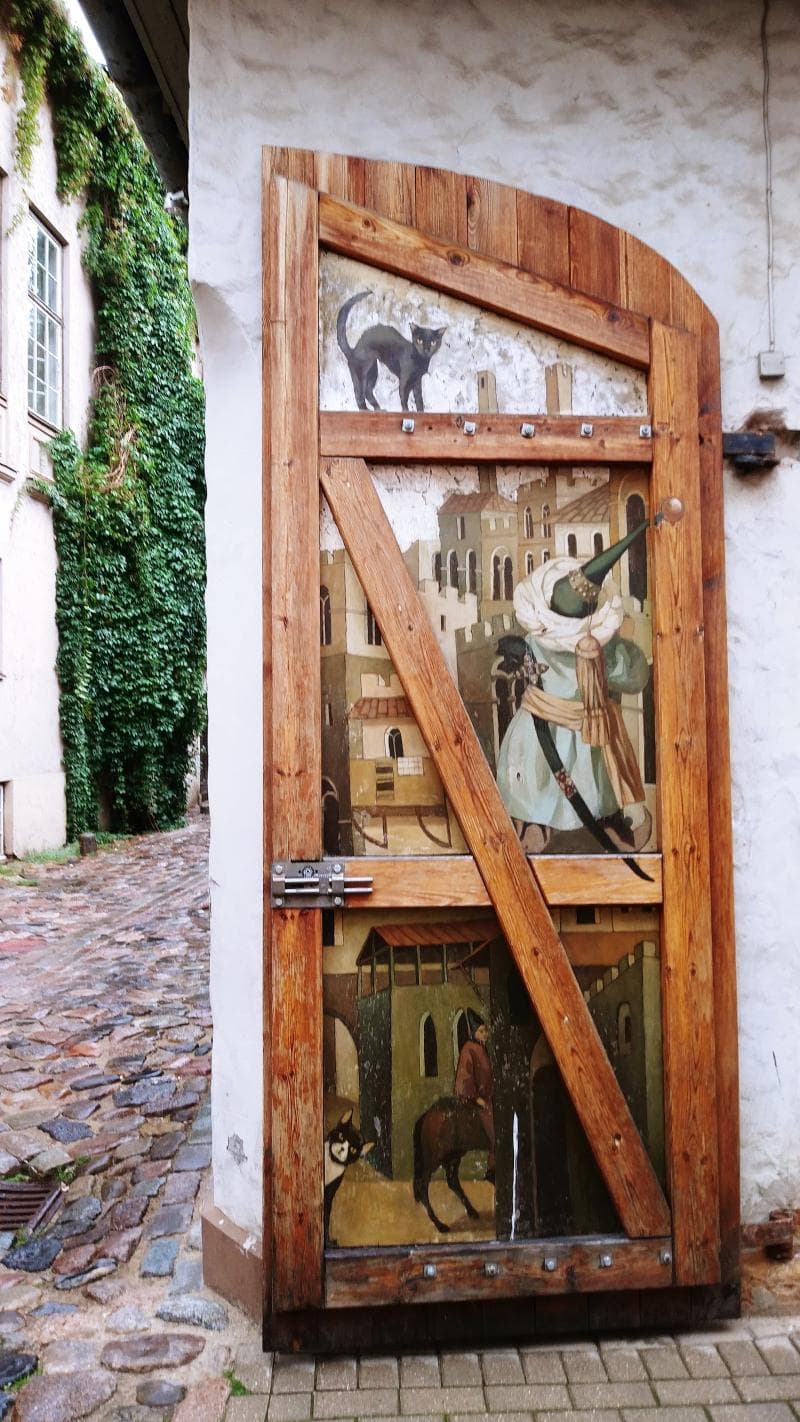
Explore the Swedish Gate, Riga's last surviving medieval city gate in Old Town. Discover its rich history, captivating legends, and unique architecture in Latvia.
Overview
Tucked away within the enchanting cobblestone labyrinth of Riga's Old Town, the Swedish Gate, or 'Zviedru vārti' in Latvian, stands as a modest yet profoundly significant historical landmark. This unassuming stone archway on Torņa iela is not merely a passage; it is the sole surviving gate of the original eight that once punctuated Riga's formidable medieval city walls. Built in 1698, it offers a tangible connection to centuries of urban life, defense, and cultural exchange. Today, it serves as a quiet testament to Riga's enduring past, inviting curious travelers to walk through a living piece of history.
History & Cultural Background
The Swedish Gate owes its name and existence to a pivotal period in Riga's history. Constructed in 1698, it was erected during the time when Riga was under Swedish rule, a dominion that lasted from 1621 to 1710. Its primary function was highly practical: to create a direct passageway between the densely fortified inner city and the military barracks situated just beyond the city walls. Prior to its construction, an earlier defensive tower occupied the spot, which the gate ultimately replaced. Unlike grand, freestanding archways, the Swedish Gate was ingeniously integrated directly into a row of surrounding buildings along Torņa Street, giving it a distinctive, almost hidden appearance. During its operational years, the gate maintained strict hours, opening punctually at sunrise and closing at sunset, underscoring its crucial role in controlling access and ensuring the city's security.
What Makes It Special
What truly sets the Swedish Gate apart is its unique survival. It is the only one of Riga's original medieval city gates that has withstood the test of time, remaining in its original form even as much of the ancient city wall was gradually dismantled over centuries. Its unassuming architecture – a simple, barrel-vaulted opening framed by worn red brick and topped by a residential building – speaks volumes about the city's adaptability and history. This subtle integration means many visitors might pass by without realizing its profound significance. Beyond its structural integrity, the gate is part of a larger architectural complex that also incorporates the medieval Jurgen's Tower, first mentioned in 1350, adding layers to its historical depth. A fascinating detail to observe are the stone lions carved into the keystones: one facing the city holds a ring in its mouth, while the one looking outwards towards the former barracks bears a fierce snarl, a subtle nod to its protective role and perhaps the Swedish symbol of a lion.
Stories, Fun Facts & Local Details
The Swedish Gate is steeped in local folklore and colorful tales that bring its stone facade to life. One of the most poignant legends tells of a young woman who fell deeply in love with a Swedish soldier. Their forbidden romance led to her tragic punishment: she was supposedly bricked into the gate's wall, and it is said that her spirit still lingers, with some claiming to hear her mournful cries or sense her presence when passing through in silence. Another intriguing story recounts a wealthy merchant who, to circumvent the taxes levied on goods entering the city through official gates, cleverly had a new gate cut directly through his own house, thereby creating the Swedish Gate. There's even a macabre detail involving the town's executioner, who reportedly lived in a residence above or very near the gate. The night before an execution, he would place a red rose on his window ledge as a somber announcement. Keep an eye out for the two upturned cannons embedded on either side of the gate entrance, silent witnesses to past conflicts. For those visiting during Jāņi, the Latvian Midsummer celebration, the area around the gate often becomes a vibrant hub where these very stories are retold, connecting visitors with Riga's rich oral traditions. Walking through, you'll also discover the charm of nearby narrow, medieval cobbled streets like Trokšnu Iela, among Riga's most atmospheric.
Visitor Perspective
Visiting the Swedish Gate offers a unique, intimate glimpse into Riga's past. Unlike more monumental structures, its subtle charm encourages thoughtful observation. It is freely accessible and open 24 hours a day, allowing for visits at any time that suits your exploration of Old Town. For the best experience and photography, an early morning visit, before the main tourist crowds arrive, can be particularly rewarding. While it may not demand a long visit, perhaps 10 to 20 minutes, the gate serves as an excellent anchor for a deeper dive into the surrounding historical fabric. It's conveniently located near several other significant landmarks, including the impressive Powder Tower, which now houses the Latvian War Museum, the venerable St. Jacob's Church, the iconic 'Three Brothers' houses, and the majestic Riga Castle. Exploring the area around the Swedish Gate is to truly immerse yourself in the architectural and historical narrative of Riga Old Town, offering a profound sense of continuity with centuries gone by.
Coordinates: 24.1063888889, 56.9513888889
View on Google Maps💬 How Travelers Describe This Place
Based on community votes
Photogenic
457Interesting
252Beautiful
147Must See
114Unique
19
Traveler Stories
Discover memorable experiences shared by travelers who have visited this place.
No traveler stories yet.
Be the first traveler to share what made this place memorable.

Tour
By
Spot
Discover amazing places around the world. Your journey starts here.
Explore
© 2026 TourBySpot. All rights reserved.