Surveillance Equipment Rooms
Tirana, Albania
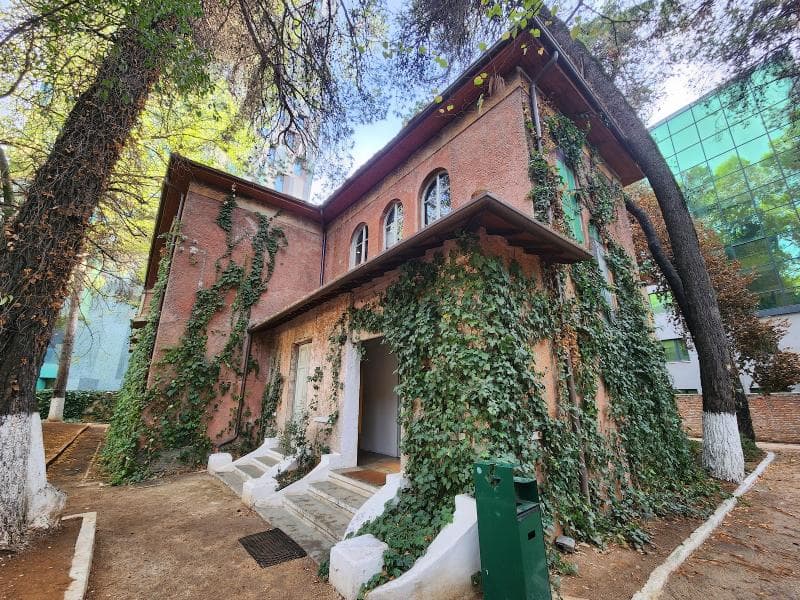
Explore the chilling Surveillance Equipment Rooms at the House of Leaves in Tirana, Albania, uncovering the dark history of communist-era secret surveillance.
Overview
Nestled in the heart of Tirana, Albania, the House of Leaves, officially known as the Museum of Secret Surveillance, stands as a poignant reminder of a dark chapter in the nation's history. Its informal name comes from the ivy-clad facade that once concealed its sinister purpose, though locals also say the 'leaves' refer to the countless files of personal information stored within its walls. This two-story villa, with its unassuming exterior, once served as the central hub for the Sigurimi, Albania's communist-era secret police, dedicated to pervasive surveillance and control. Transformed into a museum and opened in May 2017, it invites visitors to confront the chilling reality of a regime that sought total control over its citizens' lives, earning it the prestigious European Museum of the Year Award in 2020.
History & Cultural Background
The building's history is a microcosm of Albania's tumultuous 20th century. Constructed in 1931, it began its life as Albania's first private obstetrics clinic, a place of birth and new beginnings. However, its purpose dramatically shifted with the tides of war and political ideology. During the German occupation in 1943-1944, it was repurposed by the Gestapo as their operational headquarters. Following World War II and the establishment of the communist regime under Enver Hoxha, the House of Leaves became the central interception and surveillance facility for the Sigurimi, the Directorate of State Security, from 1944 until the collapse of communism in 1991. For nearly half a century, this building embodied the regime's efforts to suppress dissent through extensive spying, counter-intelligence, and the monitoring of its own population, leading to arrests, torture, and executions of countless innocent people. Its transformation into a museum in 2017 was a significant step in confronting and preserving the memory of these deeply unsettling times, likened to East Germany's Stasi headquarters in its historical significance.
What Makes It Special
The Surveillance Equipment Rooms within the House of Leaves are arguably its most chilling and illuminating feature. Here, visitors are plunged into the technological heart of the Sigurimi's operations. The museum meticulously displays an extensive collection of original surveillance equipment, ranging from sophisticated wiretapping devices to cleverly concealed microphones and cameras. You'll encounter archaic tape recorders, telephoto lenses, and various gadgets that were used to meticulously monitor conversations, actions, and movements across the country. A particularly striking detail is the revelation that many of these 'bugs' were not imported but were ingeniously crafted by Sigurimi members themselves, a testament to the regime's self-reliance and pervasive control. Dedicated rooms showcase specific functions, including the apparatus for wiretapping telephones, a darkroom for developing surveillance films, and a laboratory equipped for processing chemicals and fingerprints. These exhibits powerfully illustrate how deeply and intimately surveillance penetrated everyday life, extending even to ordinary household items like coats, shoes, and furniture, transforming trust into suspicion.
Stories, Fun Facts & Local Details
The informal name 'House of Leaves' evokes a dual meaning: the actual ivy covering its facade, and the 'leaves' of files that detailed the lives of thousands. The museum itself is a labyrinth of 31 rooms, each telling a piece of the story through documents, photographs, and preserved artifacts. Visitors can find art installations in the garden, including pre-war listening devices, setting a reflective tone before even entering the main building. Beneath the house lie concrete tunnels with heavy security doors, once connecting the headquarters to other clandestine sites, serving as a powerful physical metaphor for the sprawling, interconnected surveillance network. The narrative within the museum is often delivered through poignant testimonies, sometimes from the actual victims, making the historical accounts incredibly personal and impactful. One such story recounts a conversation overheard by the secret police, leading to an innocent man's imprisonment for a casual complaint about the regime's priorities. The atmosphere cultivated within the museum is intentionally unsettling, using dim lighting and narrow corridors to evoke the psychological discomfort and fear that permeated society during the communist era.
Visitor Perspective
A visit to the Surveillance Equipment Rooms, and indeed the entire House of Leaves, offers a deeply immersive and thought-provoking experience. As you navigate the preserved spaces, you gain a tangible understanding of what it felt like to live under constant scrutiny, where private lives were systematically dismantled and fear was a pervasive element of daily existence. The museum presents its information in a factual, almost clinical manner, allowing the sheer weight of the evidence and the stories to resonate without sensationalism, making it all the more impactful. Signage is provided in both Albanian and English, with audio guides available in French and Italian, ensuring accessibility for international visitors. Visitors should allocate at least 90 minutes to fully absorb the exhibits. It is important to note that photography is generally not permitted inside the exhibition spaces, encouraging visitors to be present and reflect on the solemn history. Located on Rruga Dëshmorët e 4 Shkurtit, opposite the Orthodox Cathedral, the museum is easily accessible in central Tirana.
Coordinates: 19.81647, 41.32667
View on Google Maps💬 How Travelers Describe This Place
Based on community votes
Photogenic
799Beautiful
639Unique
526Must See
366Interesting
181
Traveler Stories
Discover memorable experiences shared by travelers who have visited this place.
No traveler stories yet.
Be the first traveler to share what made this place memorable.

Tour
By
Spot
Discover amazing places around the world. Your journey starts here.
Explore
© 2026 TourBySpot. All rights reserved.