Surrounding Promenade
Sarajevo, Bosnia and Herzegovina
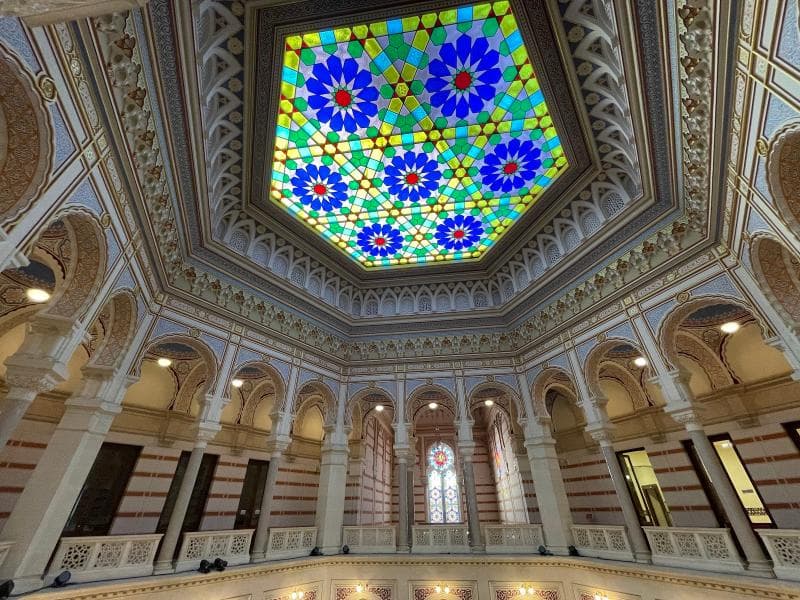
Discover the Surrounding Promenade of Sarajevo City Hall (Vijećnica), a stunning Neo-Moorish architectural gem in Sarajevo, Bosnia and Herzegovina. Explore its rich history, cultural significance, and beautiful riverfront views.
Overview
The Surrounding Promenade of Sarajevo City Hall, locally known as Vijećnica, offers a captivating introduction to one of Bosnia and Herzegovina's most iconic landmarks. Situated majestically on the banks of the Miljacka River and nestled at the gateway to the historic Baščaršija district, this public space serves as much more than just a walkway; it is a viewing platform for architectural splendor and a vibrant connector to the city's rich past. The promenade allows visitors to fully appreciate the building's striking Pseudo-Moorish design, with its bold geometric patterns, pointed arches, and dynamic interplay of warm colors, making it a focal point along the riverfront.
As you stroll along this promenade, you're not just observing a building; you're witnessing Sarajevo's enduring spirit and its unique blend of Eastern and Western influences, reflected vividly in the City Hall's exterior. The area buzzes with activity, connecting the Austro-Hungarian grandeur of the Vijećnica with the bustling, Ottoman-era charm of the nearby old town. It's a place where history feels alive, where every glance at the ornate facade tells a story of cultural fusion and resilience.
History & Cultural Background
The history of Sarajevo City Hall, and by extension its surrounding promenade, is deeply intertwined with the city's complex narrative. Constructed between 1892 and 1894 during the Austro-Hungarian administration, the building was officially opened in 1896, intended as a symbol of the empire's presence and a modern administrative center. Its distinctive Pseudo-Moorish style was a deliberate choice, reflecting a desire to honor the region's Islamic heritage while incorporating European administrative ambitions.
The promenade outside Vijećnica gained international historical significance on June 28, 1914, when Archduke Franz Ferdinand and his wife, Sophie, departed from a reception here just moments before their assassination nearby, an event that notoriously triggered the start of World War I. For decades, the building served various municipal purposes and, after World War II, became the National and University Library of Bosnia and Herzegovina, housing an immense collection of up to two million books, rare manuscripts, and important documents. Tragically, during the Siege of Sarajevo in 1992, the City Hall was heavily shelled and set ablaze, leading to the catastrophic loss of nearly two million volumes and making the burning building a poignant symbol of cultural devastation. The painstaking restoration, completed in 2014, meticulously rebuilt the structure to its former glory, transforming it once again into a beacon of Sarajevo's resilience.
What Makes It Special
The Surrounding Promenade of Sarajevo City Hall is special primarily for the unparalleled views it offers of the Vijećnica itself. The building's exterior, with its red and yellow striped facade, intricate geometric patterns, and horseshoe arches, is a testament to the Neo-Moorish architectural style, inspired by Mamluk-period buildings in Cairo. Walking along the promenade provides different angles and perspectives of this architectural masterpiece, highlighting the meticulous craftsmanship of its reconstruction. It sits gracefully on the Miljacka River, enhancing its fairy-tale-like appearance, especially as sunlight catches its vibrant hues.
Moreover, the promenade marks a symbolic point where the East truly meets the West. Standing here, you can observe the seamless transition from the Ottoman-influenced Baščaršija with its cobblestone streets and traditional crafts, to the more Austro-Hungarian architectural styles prevalent further west. This confluence of cultures, visibly manifested in the architecture and atmosphere of the surrounding area, is a unique characteristic that sets this promenade apart.
Stories, Fun Facts & Local Details
One of the most compelling aspects of the promenade are the stories embedded in its very location. Just a short walk from the City Hall along the river, you will find the Latin Bridge, the site of Archduke Franz Ferdinand's assassination in 1914. This proximity serves as a powerful, somber reminder of a moment that changed global history. Another local detail enriching the area is the nearby 'House of Spite' (Inat Kuća), a testament to Bosnian defiance. Legend has it that when the Austro-Hungarian authorities wanted to build the City Hall, they needed to move a man's house. He agreed only if his house was dismantled stone by stone and rebuilt on the opposite bank of the Miljacka, which it was.
Visitors often notice a subtle line marked on the pavement near the City Hall, symbolizing the 'Sarajevo Meeting of Cultures.' This line visually delineates the historical boundary between the Ottoman and Austro-Hungarian parts of the city, serving as a constant reminder of Sarajevo's layered identity. The promenade itself, with its backdrop of the river and the vibrant activity of the old town, often features street performers and local artisans, adding to its lively, cultural ambiance.
Visitor Perspective
For visitors, the Surrounding Promenade of Sarajevo City Hall is often the first, and most striking, encounter with this magnificent building. It offers excellent photography opportunities, especially from across the Miljacka River, allowing you to capture the entire facade reflected in the water, or framed by the historic bridges. Many recommend visiting in the late afternoon when the building's facade glows warmly in the setting sun. It's a peaceful place for a leisurely stroll, offering a chance to absorb the atmosphere and reflect on the profound history it has witnessed.
The promenade serves as an ideal starting point for exploring Sarajevo's old town, with the bustling Baščaršija just steps away. After admiring the City Hall's exterior, visitors often cross the street to delve into the narrow lanes of the bazaar, where the scents of Bosnian coffee and traditional crafts fill the air. The accessibility by local trams and buses makes it a convenient and essential stop for anyone wishing to understand Sarajevo's unique blend of cultural heritage and resilience.
Coordinates: 18.43323, 43.85912
View on Google Maps💬 How Travelers Describe This Place
Based on community votes
Beautiful
897Photogenic
657Must See
605Unique
498Interesting
481
Traveler Stories
Discover memorable experiences shared by travelers who have visited this place.
No traveler stories yet.
Be the first traveler to share what made this place memorable.

Tour
By
Spot
Discover amazing places around the world. Your journey starts here.
Explore
© 2026 TourBySpot. All rights reserved.