Surrounding Old-town Streets
Pristina, Kosovo
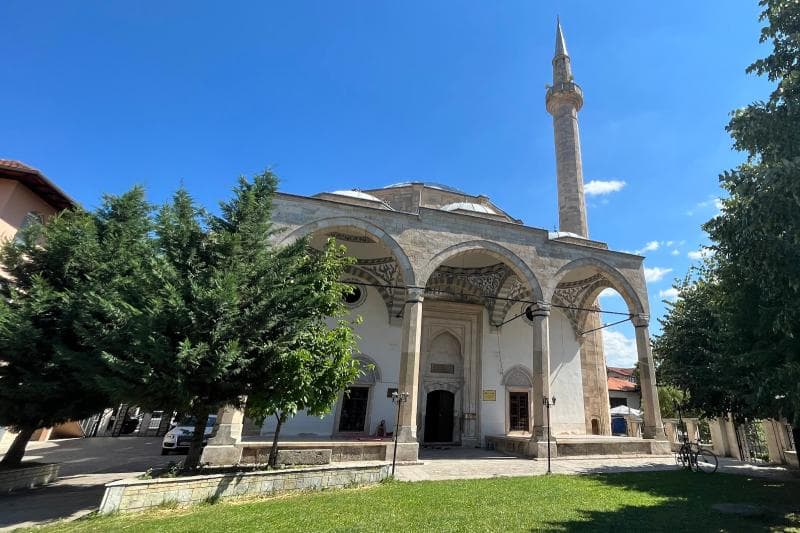
Explore the historic Surrounding Old-town Streets of Pristina, Kosovo, centered around the magnificent 15th-century Imperial Mosque.
Overview
Stepping into the streets surrounding Pristina's Imperial Mosque is like tracing the historical heart of Kosovo's capital. While modern developments have reshaped much of the city, this compact area offers a window into Pristina's rich Ottoman past, a period that profoundly influenced its urban fabric and cultural identity. The Imperial Mosque itself, known locally as Xhamia e Mbretit or King's Mosque, stands as a central monument, its majestic dome and minaret having dominated the cityscape since the 15th century. These old-town streets, though partially diminished by post-World War II urban planning, still whisper tales of bustling bazaars, ancient craft traditions, and a vibrant community life that once thrived at the crossroads of empires.
Visitors today can explore the remaining historical structures, absorbing the atmosphere of a bygone era. The narrow lanes, though fewer than before, connect significant landmarks like the Great Hammam, the Clock Tower, and the Ethnological Museum, all clustered around the Imperial Mosque. This area provides a tangible link to a time when Pristina was a vital administrative and trade center, characterized by its distinctive Ottoman architecture and lively social scenes.
History & Cultural Background
The history of the Imperial Mosque and its surrounding streets is deeply intertwined with the Ottoman Empire's nearly 500-year presence in the region. The mosque itself was commissioned by Sultan Mehmed II Fatih (the Conqueror) and completed in 1461, just eight years after the fall of Constantinople. Its strategic placement was deliberate, designed to be the anchor of Pristina's urban Muslim core, with streets, markets, and schools radiating from it. It quickly became not just a place of worship, but a central hub for legal affairs, charity, education, and social life.
The broader old town area flourished as a bustling commercial and cultural center. By the 15th century, Pristina was an important mining and trading hub, and its bazaar was a significant economic entity. The Çarshi Mosque, also known as the Bazaar Mosque, is even older, with its foundations laid in 1389, marking it as the oldest building in Pristina and signaling the entrance to the old town. However, much of this historical fabric faced significant challenges in the mid-20th century. During the Yugoslav era, under the slogan 'Destroy the old, build the new,' extensive modernization programs led to the demolition of a large portion of the old town, including much of the historic bazaar with its hundreds of shops. Despite this, the surviving elements offer a poignant glimpse into the city's layered past.
What Makes It Special
What makes the Surrounding Old-town Streets particularly special is their ability to evoke a sense of living history, despite the considerable changes Pristina has undergone. The Imperial Mosque itself is an architectural masterpiece of the 15th century, showcasing intricate Ottoman design with carved yellow sandstone, a monumental dome, and interiors adorned with delicate floral and geometric motifs. It was recognized as a Monument of Culture of Exceptional Importance in 1990, underscoring its profound historical value.
Beyond the mosque, the concentration of other Ottoman-era landmarks in close proximity—such as the Great Hammam, the Clock Tower, and the Ethnological Museum—creates a unique historical cluster. This collection of buildings, each with its own story, allows for a coherent exploration of Pristina's past, providing context to the city's evolution. The persistence of these structures, standing as tangible reminders amidst a rapidly modernizing capital, offers a powerful contrast and a testimony to their enduring significance.
Stories, Fun Facts & Local Details
The Imperial Mosque and its environs hold intriguing stories. During the Austro-Turkish wars in the late 17th century, the mosque was temporarily converted into a Catholic church. Notably, Pjetër Bogdani, a prominent Albanian writer and pro-Austrian rebel leader, was buried there. However, after the Ottomans regained control in 1690, his bones were exhumed and thrown into the street by Ottoman soldiers.
Another fascinating detail relates to the old bazaar. Before its destruction, it was an incredibly vibrant marketplace with around 300 craft shops, ranging from shoemakers and tailors to blacksmiths. The city's push for modernization largely erased this bustling heart, but efforts are underway to revive its memory digitally. For instance, an application called 'Be here then' aims to allow users to virtually walk through the Old Bazaar and encounter characters sharing their memories, illuminating the past through technology.
The area also hosts the Emin Gjiku Ethnological Museum, housed in a beautifully restored Ottoman-era home, offering a glimpse into traditional Kosovan life and customs. The survival of these pockets of history, despite concerted efforts to modernize, highlights the resilience of Pristina's cultural heritage.
Visitor Perspective
For the curious traveler, the streets surrounding the Imperial Mosque offer a compelling journey back in time. While Pristina might be known for its modern and at times eclectic architecture, this old town quarter provides a vital counterpoint, grounding the city in its historical roots. Visitors can begin their exploration at the Imperial Mosque, admiring its impressive architecture and experiencing its peaceful ambiance. Inside, the decorative paintings and the grand dome are particularly striking.
From there, a stroll through the remaining narrow streets reveals other treasures. The nearby Great Hammam, even in its partially preserved state, speaks of a communal past. The Clock Tower, standing guard over the area, once signaled prayer times and shop closures. The Ethnological Museum provides an immersive cultural experience. This compact area is easily walkable and serves as an ideal starting point for understanding Pristina's layered identity—a place where the echoes of a vibrant Ottoman past still resonate amidst the sounds of a modern, developing city. It's a journey not just through space, but through centuries of history and enduring cultural heritage.
Coordinates: 21.166944, 42.666944
View on Google Maps💬 How Travelers Describe This Place
Based on community votes
Unique
958Must See
743Photogenic
728Beautiful
719Interesting
382
Traveler Stories
Discover memorable experiences shared by travelers who have visited this place.
No traveler stories yet.
Be the first traveler to share what made this place memorable.

Tour
By
Spot
Discover amazing places around the world. Your journey starts here.
Explore
© 2026 TourBySpot. All rights reserved.