Sunset Viewing Spots
Athens, Greece
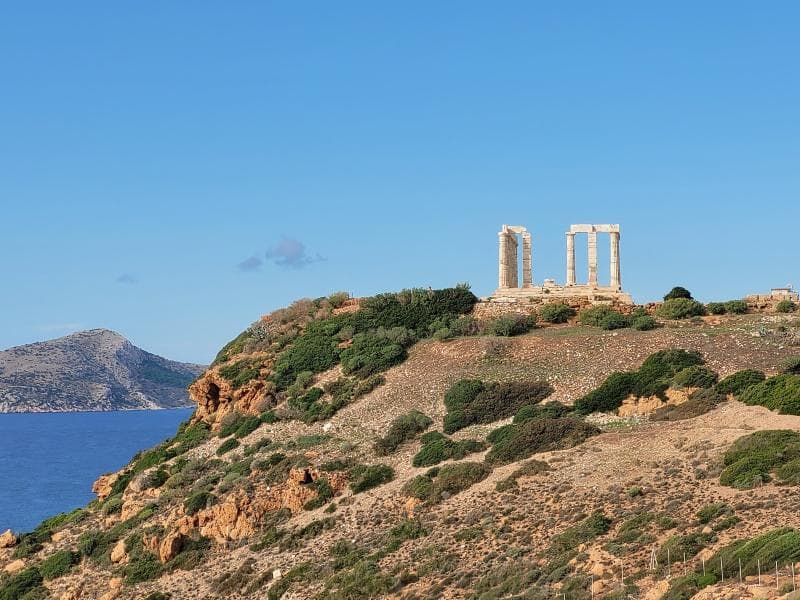
Witness breathtaking sunsets at the Temple of Poseidon in Athens, Greece. Explore ancient ruins, rich history, and stunning Aegean Sea views.
Overview
Perched majestically on the southernmost tip of the Attica peninsula, the Temple of Poseidon at Cape Sounion offers an unforgettable experience, particularly as a renowned sunset viewing spot. This ancient Greek temple, dedicated to Poseidon, the god of the sea, stands proudly atop a cliff 60 to 70 meters above the Aegean Sea, providing breathtaking panoramic views that stretch to the horizon. The dramatic interplay of the ancient marble ruins against the backdrop of a fiery sky as the sun dips into the sea creates a truly ethereal atmosphere. Located approximately 70 kilometers southeast of Athens, it is a popular day trip destination, drawing visitors from across the globe to witness this daily natural spectacle.
While the temple itself is a testament to ancient Greek architectural prowess, it is its harmonious blend with the natural beauty of the landscape and the sea that elevates the sunset experience here to something extraordinary. Visitors can explore the archaeological site, walk among the remaining Doric columns, and then find a vantage point to watch the sky transform into a canvas of vibrant hues. The site is open until sunset, making it perfectly accessible for those seeking this magical golden hour.
History & Cultural Background
The Temple of Poseidon was constructed between 444 and 440 BCE, during the Golden Age of Athens and the era of Pericles, similar to other grand projects like the Parthenon. It was built on the remains of an older temple, made of tufa, which was likely destroyed by Persian troops in 480 BCE during Xerxes I's invasion of Greece. After the Athenians' naval victory against the Persians at the Battle of Salamis, a captured Persian warship was even placed at Sounion as a trophy dedicated to Poseidon, highlighting the sea god's importance.
The strategic location of Cape Sounion, visible from afar, made it an invaluable landmark and beacon for ancient sailors returning to Athens, signifying they were almost home. For a maritime power like Athens, heavily reliant on sea trade and naval strength, Poseidon was a particularly revered deity. The temple served as a sacred site where seafarers would make offerings and seek the god's favor before embarking on their perilous voyages. According to Greek mythology, the cape is also linked to the tragic tale of King Aegeus, who, believing his son Theseus had perished, leapt into the sea from Sounion, giving the Aegean Sea its name.
What Makes It Special
What truly sets the Sunset Viewing Spot at the Temple of Poseidon apart is the profound sense of history interwoven with unparalleled natural beauty. Standing amidst the ancient columns, gazing out at the endless expanse of the Aegean, one can almost feel the presence of the past, connecting with generations of sailors, poets, and travelers who have marveled at this very sight.
The temple's Doric architecture, with its remaining fifteen marble columns, provides a striking foreground to the vibrant sunset. As the sun descends, it casts a golden glow upon the white marble, making the ruins appear to ignite with an ethereal light. This unique visual spectacle is enhanced by the temple's elevated position, offering an unobstructed, 360-degree view of the sea and surrounding islands, creating a truly immersive experience that few other locations can replicate.
Stories, Fun Facts & Local Details
A notable visitor to the Temple of Poseidon was the English Romantic poet Lord Byron, who, captivated by its allure, famously carved his name into one of the columns in 1810. This act underscores the temple's enduring appeal to artists and romantics throughout history. While graffiti is now understandably discouraged, Byron's inscription adds another layer to the site's rich narrative.
Locally, Cape Sounion was not only a place of worship but also a fortified outpost during the Peloponnesian War, highlighting its strategic importance beyond religious devotion. The marble used for the temple came from the Agrilesa Valley, just 4 kilometers north of Cape Sounion, connecting the structure deeply to its immediate environment.
Visitor Perspective
Visiting the Temple of Poseidon for sunset is a highly recommended experience, but a little planning goes a long way. It's advisable to arrive approximately 90 minutes before sunset to allow ample time for parking, ticket purchase, and exploring the ruins before finding your perfect viewing spot. Summer months (June-August) offer later sunsets (around 8:30-9:00 PM) but also mean larger crowds. The shoulder seasons (April-May and September-October) often provide a perfect balance of comfortable temperatures and fewer visitors. While many gather directly in front of the temple, consider exploring different angles, perhaps positioning yourself to see the sun's rays through the columns for a truly iconic photograph. The site's compact nature allows for exploration within an hour or two, but the magic of the sunset encourages a longer, more contemplative stay. Wear comfortable shoes, and be prepared for potential wind exposure on the cape.
Coordinates: 24.0148, 37.6592
View on Google Maps💬 How Travelers Describe This Place
Based on community votes
Must See
836Beautiful
797Photogenic
695Interesting
396Unique
286
Traveler Stories
Discover memorable experiences shared by travelers who have visited this place.
No traveler stories yet.
Be the first traveler to share what made this place memorable.

Tour
By
Spot
Discover amazing places around the world. Your journey starts here.
Explore
© 2026 TourBySpot. All rights reserved.