Sunset Viewing Spots
Florence, Italy
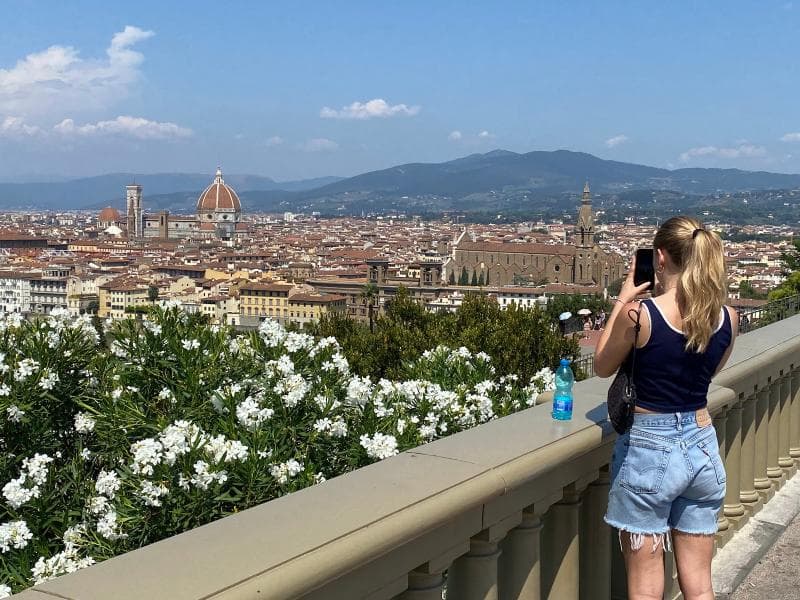
Experience breathtaking sunsets at Piazzale Michelangelo in Florence, Italy. Discover panoramic views of the Duomo, Arno River, and Ponte Vecchio from this iconic terrace.
Overview
Perched high on a hill overlooking the Arno River, Piazzale Michelangelo in Florence, Italy, stands as an iconic and beloved sunset viewing spot. This renowned terrace offers an unparalleled panoramic vista of the city’s historic skyline, a view frequently captured on postcards. From this vantage point, visitors can admire the magnificent Duomo, the winding Arno River, the ancient Ponte Vecchio, and the picturesque Tuscan hills beyond. It is a place where locals and travelers alike gather, especially in the late afternoon, to witness the breathtaking transformation of Florence as the setting sun paints the sky with vibrant hues and bathes the Renaissance city in a golden glow. The Piazzale itself is a spacious public square, featuring a bronze replica of Michelangelo’s David, which gazes protectively over the cityscape.
History & Cultural Background
Piazzale Michelangelo was conceived during a significant period of urban renewal in Florence. Designed by architect Giuseppe Poggi, its construction began in 1869, at a time when Florence served as the capital of Italy. This ambitious project was part of a larger plan to modernize the city and celebrate its rich artistic heritage. Poggi's design included the creation of scenic avenues, such as the Viale dei Colli, leading up to the square. The Piazzale was intended as a tribute to Michelangelo Buonarroti, one of Florence's most celebrated Renaissance masters. It was originally planned to house a museum dedicated to his works, a vision that ultimately did not materialize, with the neoclassical loggia designed for the museum now hosting a restaurant. The square was completed in 1873, and a bronze copy of Michelangelo's David, alongside the four allegories from the Medici Chapel of San Lorenzo, were triumphantly transported to their elevated positions, hauled by nine pairs of oxen.
What Makes It Special
The primary allure of Piazzale Michelangelo as a sunset viewing spot lies in its exceptional, unobstructed panoramic views. Situated 104 meters above sea level, it provides a sweeping 180-degree perspective of Florence's most famous landmarks. Unlike other viewpoints that might offer partial glimpses, Piazzale Michelangelo presents a comprehensive tableau, encompassing the Duomo's majestic dome, Giotto’s Campanile, Palazzo Vecchio, and the iconic Ponte Vecchio bridge, all framed by the distant Fiesole hills. The strategic placement on a southern hill ensures that as the sun descends, its light brilliantly illuminates the city's facades, creating a truly magical spectacle. Many describe the experience as seeing the city come alive with color, from the vibrant yellows and oranges of the afternoon to the deep reds and purples of twilight. Beyond the vista, the presence of the bronze David replica adds a layer of artistic significance, linking the natural beauty of the sunset with Florence's unparalleled artistic legacy.
Stories, Fun Facts & Local Details
During the urban renewal period, Florence was not only the capital of Italy but also undergoing intense redevelopment, with new riverside walkways (Lungarni) and tree-lined avenues being built. Architect Giuseppe Poggi was central to this transformation, and his dedication to Michelangelo is evident in the square's design and statuary. A unique detail about the bronze David and the allegories is that they were brought to the square in 1873 using nine pairs of oxen, a testament to the logistical challenges of the time. While the square itself is a major draw, visitors often extend their experience by exploring nearby attractions. Just below the Piazzale lies the tranquil Rose Garden (Giardino delle Rose), also designed by Poggi in 1865, boasting hundreds of varieties of roses and offering a more intimate setting for sunset viewing. Slightly higher up is the Basilica of San Miniato al Monte, one of Tuscany's finest Romanesque structures, which provides another fantastic, and often less crowded, spot to watch the sun go down. The monastery adjoining San Miniato still produces liqueurs, honey, and herbal teas, echoing centuries-old traditions.
Visitor Perspective
Visiting Piazzale Michelangelo for sunset is often described as a quintessential Florentine experience. While it can be crowded, especially during peak season, the sheer scale of the panorama ensures that everyone can find a spot to absorb the beauty. Street artists and musicians frequently add to the lively atmosphere, contributing to the cultural richness of the experience. Many travelers recommend walking up to the Piazzale from the Oltrarno district, ascending the famous 'Poggi ramps' or winding paths, which offers its own scenic journey. Alternatively, local buses provide a convenient direct route. Though the neoclassical loggia initially intended for a museum now houses a restaurant, it still serves as a historic backdrop to the contemporary appreciation of Florence's enduring charm. The view from Piazzale Michelangelo is not merely a sight; it is an emotional encounter, a moment of connection with a city that has inspired countless artists and continues to captivate visitors with its timeless beauty, especially as day turns to night.
Coordinates: 11.26497, 43.76279
View on Google Maps💬 How Travelers Describe This Place
Based on community votes
Unique
995Beautiful
964Photogenic
929Interesting
730Must See
482
Traveler Stories
Discover memorable experiences shared by travelers who have visited this place.
No traveler stories yet.
Be the first traveler to share what made this place memorable.

Tour
By
Spot
Discover amazing places around the world. Your journey starts here.
Explore
© 2026 TourBySpot. All rights reserved.