Summit Peak
Edinburgh, United Kingdom
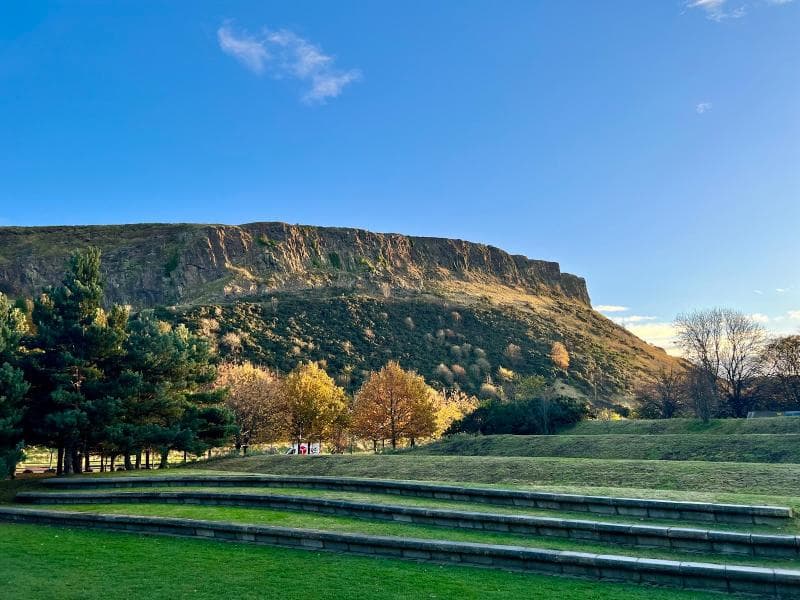
Discover Summit Peak, Arthur’s Seat in Edinburgh, United Kingdom. Explore an ancient volcano with panoramic views, rich history, and captivating legends.
Overview
Perched majestically above Scotland's vibrant capital, Summit Peak, the highest point of Arthur’s Seat, stands as an iconic natural landmark within Holyrood Park in Edinburgh, United Kingdom. This ancient, extinct volcano offers a rugged, wild landscape just a stone's throw from the city center, providing a breathtaking escape and unparalleled panoramic views. Rising to 251 meters (823 feet) above sea level, it presents a distinctive silhouette that has captured the imagination of residents and visitors for centuries. Easily accessible and popular for hillwalking, climbing to its summit is a quintessential Edinburgh experience, rewarding adventurers with sweeping vistas across the city, the Firth of Forth, and even to the distant Highlands.
Arthur's Seat and its Summit Peak are not merely geographical features; they are a cherished part of Edinburgh's identity, a place where deep time geology, ancient history, and captivating folklore converge. Its formation tells a dramatic story of volcanic eruptions and glacial erosion, while its slopes whisper tales of kings, myths, and unsolved mysteries. This unique combination makes Summit Peak an extraordinary destination for those seeking both an invigorating outdoor adventure and a profound connection to Scotland's rich heritage.
History & Cultural Background
The history of Summit Peak stretches back millions of years, long before human footprints ever graced its slopes. It is the weathered remnant of a large volcanic system that erupted approximately 341 to 350 million years ago, during the early Carboniferous period. Over eons, colossal glaciers carved and shaped its distinctive form, leaving behind rocky crags and a 'lion couchant' appearance from certain angles.
Human history on Arthur's Seat is equally compelling. Archaeological evidence points to prehistoric occupation, including the remains of an Iron Age hill fort near the summit, dating back around 2,000 years. Culturally, the peak is steeped in legend, most notably its association with the mythical King Arthur. Some traditions suggest it could be a site linked to Camelot, King Arthur's legendary castle and court. Furthermore, Arthur's Seat holds spiritual significance for The Church of Jesus Christ of Latter-day Saints, as it was here in 1840 that Elder Orson Pratt dedicated Scotland for the preaching of the gospel.
What Makes It Special
What truly sets Summit Peak apart is its extraordinary blend of accessibility, geological significance, and natural beauty within an urban setting. It is a rare phenomenon: an ancient extinct volcano nestled in the heart of a modern capital city. This geological marvel drew the attention of James Hutton, the 'Father of Modern Geology', whose observations of the rock formations here in the 18th century profoundly influenced our understanding of Earth's age and processes.
The hike to Summit Peak offers a unique 'wilderness experience' without ever leaving the city limits, a testament to Holyrood Park's role as Edinburgh's largest and wildest green space. From its heights, visitors are treated to an expansive 360-degree panorama that encapsulates Edinburgh's historic skyline, stretching out to the distant sea and surrounding landscapes. The stark, rugged terrain, dotted with gorse and heather, provides a dramatic contrast to the bustling city below, making it a sanctuary for both nature lovers and those seeking moments of quiet reflection.
Stories, Fun Facts & Local Details
Summit Peak and its surrounding area are fertile ground for intriguing stories and local customs. One enduring myth suggests that the hill resembles a 'lion couchant' or a sleeping lion, a majestic beast guarding the city. Another charming tradition, particularly observed on May Day, involves young women washing their faces in the morning dew from the hillside, believing it will preserve their youth and beauty.
Perhaps the most enigmatic tale connected to Arthur's Seat dates back to 1836, when a group of boys hunting for rabbits discovered 17 miniature coffins, each containing a tiny wooden figure, hidden in a cave on the crags. The purpose of these mysterious objects remains an unsolved riddle, with theories ranging from witchcraft to a symbolic memorial for the victims of the infamous Burke and Hare murders. Eight of these eerie coffins are now on display at the National Museum of Scotland, continuing to fascinate visitors. The renowned Scottish author Robert Louis Stevenson famously described Arthur's Seat as 'a hill for magnitude, a mountain in virtue of its bold design,' perfectly capturing its unique character and imposing presence.
Visitor Perspective
Climbing to Summit Peak is an achievable and rewarding experience for most travelers with a reasonable level of fitness. Various paths lead to the top, ranging in difficulty, but generally considered easy to moderate. The easiest ascent is often recommended from the east, particularly starting near Dunsapie Loch, offering a more gradual slope. The average round trip to the summit takes approximately one to two hours, though many choose to linger longer, soaking in the views.
Holyrood Park, encompassing Arthur's Seat, is open 24 hours a day, year-round, and entry is free, making it one of Edinburgh's most accessible attractions. However, visitors should come prepared: wear sturdy walking shoes or hiking boots, as paths can be uneven, rocky, and muddy, especially after rain. Bringing water and dressing in layers is advisable, as the weather at the summit can be significantly colder and windier than at street level, even during summer. While the park offers an untamed natural experience, facilities like toilets and cafes are located only near Holyrood Palace, at the base of the park. For a quieter experience and optimal photography conditions, consider an early morning visit to avoid crowds or a late afternoon climb to catch the 'golden hour' light.
Coordinates: -3.16194, 55.94417
View on Google Maps💬 How Travelers Describe This Place
Based on community votes
Photogenic
703Unique
521Must See
477Beautiful
157Interesting
28
Traveler Stories
Discover memorable experiences shared by travelers who have visited this place.
No traveler stories yet.
Be the first traveler to share what made this place memorable.

Tour
By
Spot
Discover amazing places around the world. Your journey starts here.
Explore
© 2026 TourBySpot. All rights reserved.