Studiolo Of Francesco I
Florence, Italy
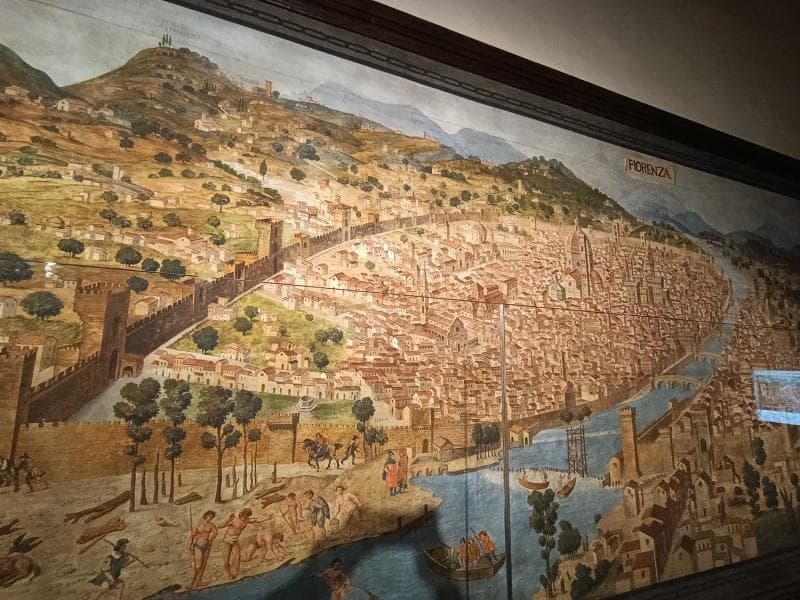
Discover the Studiolo of Francesco I, a secret Mannerist marvel and cabinet of curiosities inside Palazzo Vecchio, Florence, Italy.
Overview
Tucked away within the grand Palazzo Vecchio in Florence, Italy, lies a small, enigmatic chamber known as the Studiolo of Francesco I. This barrel-vaulted room, completed between 1570 and 1572, was conceived for Francesco I de' Medici, Grand Duke of Tuscany, as a deeply personal retreat. More than just a study, it functioned as a private laboratory, an office, and a 'cabinet of curiosities' – a place where the Duke could indulge his passion for alchemy, science, and collecting rare and precious objects.
The Studiolo is a masterpiece of Late Mannerist art and design, an immersive artistic environment where every surface, from walls to ceiling, is covered in intricate paintings, sculptures, and gilded panels. It stands as a unique testament to the intellectual and reclusive nature of its patron, offering a profound glimpse into the Renaissance mind and the era's fascination with the natural world, art, and the esoteric.
History & Cultural Background
The creation of the Studiolo was a collaborative effort, guided by the vision of Francesco I de' Medici, with design and artistic direction primarily overseen by the renowned artist and architect Giorgio Vasari, alongside the scholars Vincenzo Borghini and Giovanni Batista Adriani. Francesco I, who succeeded his father Cosimo I, harbored a profound interest in scientific knowledge, particularly chemistry and alchemy, often preferring these pursuits over courtly politics.
This private space was intentionally designed for seclusion, originally accessible only from Francesco's bedroom, emphasizing its personal and secret nature. It embodied the Renaissance concept of a 'studiolo,' a small room found in princely courts where precious heirlooms and intellectual collections were housed and shown only to select visitors. After Francesco I's death, the Studiolo fell into neglect and was largely dismantled by 1590, its treasures dispersed. It wasn't until the early 20th century that it was painstakingly reconstructed and restored to its dazzling, albeit somewhat speculative, original glory, revealing a Renaissance oddity within the medieval palace.
What Makes It Special
What truly sets the Studiolo apart is its integrated and highly symbolic decorative program. The entire room functions as a coherent allegorical scheme, marrying art and science. Its walls are adorned with 34 paintings and various sculptures, all executed by a team of prominent Florentine Mannerist artists, many of whom were members of Florence's Accademia del Disegno.
The arrangement of these artworks is not arbitrary; the room's iconography is centered around the four natural elements: earth, air, fire, and water. Each wall is dedicated to one element, and the paintings allegorically represent subjects related to it, often depicting trades, mythological scenes, or the processing of materials. Crucially, many of these paintings serve a dual purpose, acting as doors to hidden cabinets. These cabinets, built into the thickness of the masonry, once housed Francesco's extraordinary collection of 'items rare and precious,' such as minerals, jewels, engraved stones, alchemical instruments, and other natural and man-made curiosities, each categorized according to the elemental theme of its respective wall.
In the center of the barrel-vaulted ceiling, a fresco depicting Prometheus receiving jewels from nature encapsulates the room's theme, symbolizing the interplay of divine inspiration, nature's bounty, and human ingenuity, particularly in the realm of art and science.
Stories, Fun Facts & Local Details
Francesco I was known to be an introverted and somewhat eccentric monarch, and his Studiolo offered him a sanctuary from the demands of court and even his own family. It was a place where he could indulge his intellectual curiosity without interruption, tinkering with experiments and contemplating the mysteries of the universe.
Imagine the Duke, by candlelight (as the room was mostly windowless and he preferred to work in dim light), revealing to a select few visitors the wonders hidden behind the painted panels. The artistic depictions above these secret compartments hinted at the treasures within – for instance, a painting showing a wool factory might have been on the 'fire' wall, relating to processes involving heat. A portrait of Francesco himself, engaged in alchemical experiments in Giovanni Stradano's 'The Alchemist's Studio,' further cements his personal connection to this secret world.
One intriguing detail is that a secret door, hidden behind a painting, provided direct access from the Studiolo to Francesco's private chambers, allowing him to enter and exit unseen, adding to the room's aura of mystery and exclusivity. While the original objects collected by Francesco are no longer present, the decorative scheme remains, inviting visitors to imagine the 'cabinet of wonders' that once filled this extraordinary space.
Visitor Perspective
Stepping into the Studiolo of Francesco I today offers a captivating, almost otherworldly experience. The small, windowless space, saturated with complex imagery, creates a sense of enclosure and intimacy, allowing you to momentarily enter the private world of a Renaissance prince. It is a striking contrast to the grand public halls of the Palazzo Vecchio.
The sheer detail and allegorical depth of the Mannerist paintings demand close attention, inviting contemplation of the connections between art, science, and philosophy that so captivated Francesco I. When you visit, take your time to observe the intricate narratives woven into each painting and sculpture. If you're on a guided tour, listen for insights into the symbolism and the historical context, which truly bring the room to life. Experiencing the Studiolo is not just seeing a collection of artworks; it's an immersion into a unique intellectual universe, a testament to the inquisitive spirit of the Renaissance, preserved within the heart of Florence.
Coordinates: 11.2562, 43.7693
View on Google Maps💬 How Travelers Describe This Place
Based on community votes
Must See
950Beautiful
287Photogenic
255Unique
231Interesting
86
Traveler Stories
Discover memorable experiences shared by travelers who have visited this place.
No traveler stories yet.
Be the first traveler to share what made this place memorable.

Tour
By
Spot
Discover amazing places around the world. Your journey starts here.
Explore
© 2026 TourBySpot. All rights reserved.