Stone Ramparts
Skopje, North Macedonia
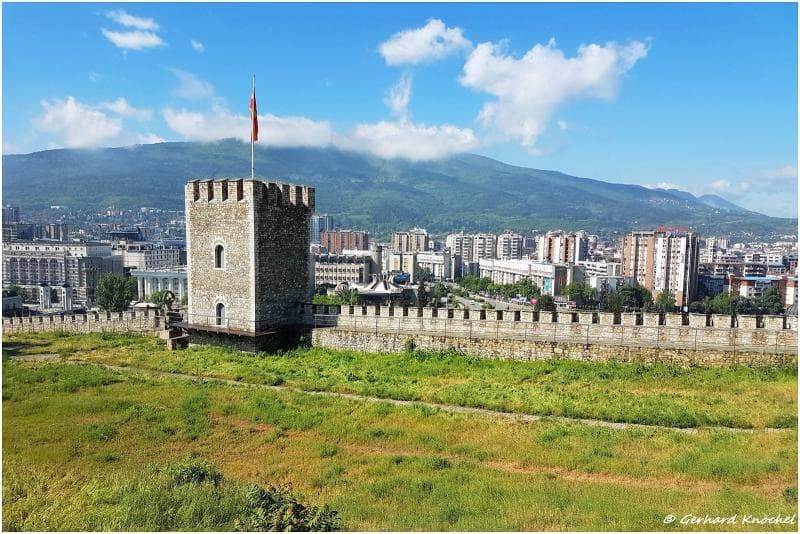
Explore Skopje Fortress's ancient Stone Ramparts in North Macedonia, a historic site offering panoramic views and rich history.
Overview
Perched majestically on the highest point in Skopje, North Macedonia, the Stone Ramparts of Skopje Fortress, also known as Kale Fortress, stand as a enduring symbol of the city's rich and tumultuous past. Overlooking the winding Vardar River and the historic Old Bazaar, these formidable stone walls offer more than just a historical monument; they provide a profound connection to centuries of civilization. The fortress is so deeply ingrained in the city's identity that it is depicted on the coat of arms and flag of Skopje.
While often referred to as Skopje Fortress, the term 'Stone Ramparts' specifically highlights the impressive defensive walls that define its presence. These robust stone structures, with their imposing height and strategic placement, have witnessed the ebb and flow of empires, making them a silent guardian of Skopje's narrative. Today, the ramparts invite curious travelers to explore their ancient pathways and soak in the panoramic vistas they command, offering a unique perspective on the vibrant capital of North Macedonia.
History & Cultural Background
The history of the Stone Ramparts of Skopje Fortress stretches back to antiquity, with evidence suggesting the site has been inhabited since the Neolithic and Bronze Ages, roughly 4000 BC onwards. The earliest significant fortification, believed to be the foundation of the current ramparts, was constructed in the 6th century AD during the reign of the Byzantine Emperor Justinian I. What makes this initial construction particularly fascinating is the origin of its materials: yellow limestone and travertine, often inscribed with Latin fragments, were salvaged from the nearby Roman city of Skupi, which had been devastated by a catastrophic earthquake in 518 AD. This act of repurposing speaks volumes about the resilience and pragmatism of the era.
Throughout the centuries, these stone ramparts have seen numerous transformations and changed hands many times. They were further developed during the 10th and 11th centuries over Justinian's Byzantine remains. The fortress became a strategic stronghold, playing pivotal roles under Bulgarian, Serbian, and Ottoman rule. It was within these very walls that Stefan Dušan, in 1346, crowned himself emperor, making Skopje the capital of the Serbian Empire—a testament to its immense geopolitical importance.
During the Ottoman period, the fortress was extensively reconstructed and reinforced. The 17th-century Ottoman chronicler Evliya Çelebi described it as a 'very strong and sturdy fortress with double walls', noting that the gates and walls were built from 'chipped stone that shines as if it were polished,' highlighting the impressive craftsmanship. Despite enduring several wars and subsequent earthquakes, notably one in 1963 that caused significant damage, the Stone Ramparts have consistently been rebuilt and restored, preserving their enduring legacy.
What Makes It Special
The Stone Ramparts of Skopje Fortress are special for several compelling reasons, primarily their deep historical layers and strategic architectural design. Classified as a bastioned fortress, its design incorporates projecting bastions that allowed defenders to cover adjacent walls effectively, a critical innovation with the advent of gunpowder weaponry. The visible stonework itself is a mosaic of history, containing remnants of ancient Skupi, showcasing the recycling of Roman-era materials and inscriptions. This reuse of materials tells a captivating story of continuity and adaptation across millennia.
Beyond its robust construction, the ramparts offer unparalleled panoramic views of Skopje. From atop these ancient walls, visitors can survey the entire city, the meandering Vardar River, the sprawling Old Bazaar with its terracotta rooftops, and the distant mountains. It's a viewpoint that truly helps to contextualize the city's geography and urban development. The sheer age and resilience of these structures, having stood guard for over 1500 years against natural disasters and conflicts, underscore their unique character as a testament to human endurance and architectural ingenuity.
Stories, Fun Facts & Local Details
Many stories and fascinating details are woven into the fabric of the Stone Ramparts. One notable anecdote comes from Evliya Çelebi's account, where he marvels at the fortress, stating, 'One can not see so much refinement and art in the construction of any other city.' His detailed description paints a vivid picture of a once bustling military and administrative center. The very name 'Kale' is derived from the Turkish word for 'fortress,' a lasting linguistic legacy of the Ottoman period.
The ramparts are not just a historical site; they are also a place where local traditions are still observed. For instance, on St. George's Day, May 6, the area around the fortress can come alive with local celebrations, with people gathering to sing and dance in festive costumes, celebrating the arrival of spring. Archaeological excavations within the fortress complex have continuously unearthed significant findings, including the foundations of a 13th-century church and residential quarters, offering glimpses into the daily lives of past inhabitants and revealing the fortress as more than just a military outpost but a living, breathing community.
Visitor Perspective
For the curious traveler, visiting the Stone Ramparts of Skopje Fortress is an enriching and contemplative experience. The site is freely accessible, with no entrance fee, making it an inviting destination for all. A walk along the well-preserved walls provides not only breathtaking views but also a tangible connection to the past. The eastern rampart is particularly recommended for classic views of the Old Bazaar rooftops and landmarks like the Stone Bridge and Millennium Cross.
While exploring, visitors should be mindful that paths can be uneven and potentially slippery after rain, so comfortable, grippy shoes are advisable. The fortress is best combined with a visit to the adjacent Old Bazaar, allowing for a comprehensive cultural immersion. Many suggest timing your visit for late afternoon or sunset to witness the city lights begin to twinkle, adding an emotional layer to the historical grandeur. Spending an hour or two here allows ample time to appreciate the views, explore the remaining structures, and reflect on the myriad stories held within its ancient stones.
Coordinates: 21.43306, 42.00055
View on Google Maps💬 How Travelers Describe This Place
Based on community votes
Photogenic
547Interesting
336Unique
219Beautiful
186Must See
80
Traveler Stories
Discover memorable experiences shared by travelers who have visited this place.
No traveler stories yet.
Be the first traveler to share what made this place memorable.

Tour
By
Spot
Discover amazing places around the world. Your journey starts here.
Explore
© 2026 TourBySpot. All rights reserved.