Stone Inscriptions
Split, Croatia
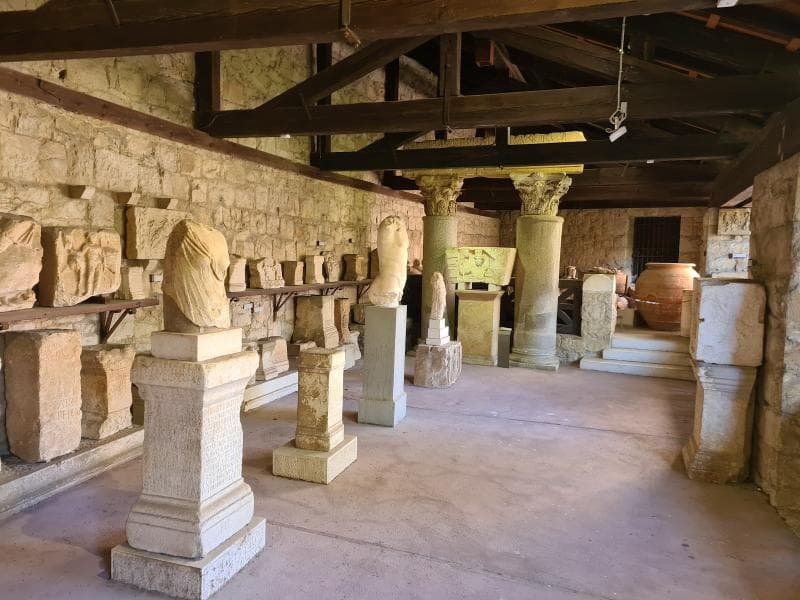
Explore the Stone Inscriptions at the Split Archaeological Museum, Croatia's oldest museum. Discover ancient Roman and early Christian history through thousands of epigraphic artifacts from Salona.
Overview
Stepping into the Archaeological Museum in Split, Croatia, offers a unique journey through Dalmatia's profound past, with its 'Stone Inscriptions' collection standing as a testament to centuries of human history. As Croatia's oldest museum, established in 1820, it houses an extraordinary collection of approximately 150,000 artifacts spanning from prehistoric times to the early Middle Ages. The heart of this historical narrative often resides in its extensive epigraphic collection – the stone inscriptions themselves. Displayed prominently, particularly in the inviting arcaded garden, known as the lapidarium, these inscribed stones offer direct windows into the lives, beliefs, and governance of ancient inhabitants.
The museum's setting, with its Neo-Romantic architecture completed in 1914, provides a contemplative atmosphere, encouraging visitors to immerse themselves in the stories etched in stone. The collection is particularly rich with finds from the ancient Roman city of Salona, located just outside Split, which was once a thriving administrative and religious center. These stone monuments, including sarcophagi, funerary steles, and architectural fragments, form an invaluable archive that illuminates the daily existence, social structures, and cultural exchanges that shaped the region.
History & Cultural Background
The origins of the museum's stone inscription collection predate the institution itself, tracing back to the early 16th century when Split nobleman Dominik Papalić, alongside the renowned Croatian poet Marko Marulić, began gathering ancient writing and picture tablets from the ruins of Salona. These initial findings were preserved in Papalić's palace, forming a foundational 'Papalić Collection' that Marulić himself cataloged. This early act of preservation laid the groundwork for what would become a significant archaeological endeavor.
The formal establishment of the Archaeological Museum in 1820 came by decree of the Dalmatian government in Zadar, following a visit by Emperor Francis I in 1818, who recognized the urgent need to protect the region's rich archaeological heritage from dispersion. Throughout the 19th and early 20th centuries, the collection grew substantially, heavily influenced by systematic excavations in Salona. A pivotal figure in the museum's development was archaeologist Frane Bulić, who served as director from 1884 and was instrumental in both the design of the current museum building and the systematic expansion of its holdings, particularly the epigraphic material.
What Makes It Special
The 'Stone Inscriptions' at the Split Archaeological Museum are particularly special due to their immense volume and the depth of information they convey. The Epigraphic Collection alone houses over six thousand inscriptions, making it one of the largest of its kind in Europe. Predominantly in Latin, with a smaller number in Greek, these inscriptions offer unparalleled insights into Roman provincial life, early Christianity, and the broader social fabric of ancient Dalmatia.
Visitors can marvel at intricate Roman funerary steles that depict family portraits, often weathered yet still conveying the likenesses of people from two millennia ago. Elaborate sarcophagi, such as the 'Good Shepherd Sarcophagus' from the early 4th century, beautifully illustrate the transition to Christian iconography, featuring allegorical depictions of Jesus Christ. Another significant piece is the sarcophagus depicting the 'Israelites crossing the Red Sea,' which once held the relics of St. Felix. These aren't merely decorative objects; they are primary historical documents, offering names, dates, official titles, religious dedications, and even personal sentiments, all carved into enduring stone.
Stories, Fun Facts & Local Details
Beyond their historical weight, the stone inscriptions hold fascinating stories. Imagine Dominik Papalić and Marko Marulić, two intellectual giants, wandering through the ancient ruins of Salona, meticulously documenting and preserving these fragments of history that would otherwise have been lost. This early, passionate amateur archaeology formed the very nucleus of the museum's collection.
Among the treasures, you might encounter inscriptions detailing the construction of Roman roads leading from Salona, offering a glimpse into the sophisticated infrastructure of the Roman Empire in Dalmatia. Another intriguing detail is a relief depicting the 'Tyche of Salona,' the personification of the city, whose crown is shaped like city walls. This pagan motif persisted even as Christianity took root, transforming into a symbol of urban prosperity. Furthermore, a visit might reveal a unique local habit: some visitors quietly press the cool tesserae of a battered 3rd-century ship mosaic to wish good luck to fishermen, leaving faint fingerprints on history.
Visitor Perspective
For any curious traveler, a visit to the 'Stone Inscriptions' at the Split Archaeological Museum is an enriching experience. Many suggest starting your exploration in the arcaded garden, or lapidarium, which is home to the larger stone monuments. Here, surrounded by Roman sarcophagi, altars, and inscribed steles in the open air, one can truly grasp the scale and tactile nature of these ancient artifacts before heading indoors.
The museum is conveniently located within walking distance of Split's old town, making it an accessible and often quieter alternative to the bustling city center. Allocate a generous 1.5 to 2.5 hours for a thorough visit to fully appreciate the inscriptions and other collections. The cool interior of the museum also offers a welcome respite during the warmer summer months. It's advisable to wear comfortable shoes, as the historic building's floors and staircases can be uneven. Engaging with these stone narratives provides a profound connection to the past, allowing one to literally read the stories of a civilization etched in time.
Coordinates: 16.43444, 43.51556
View on Google Maps💬 How Travelers Describe This Place
Based on community votes
Must See
717Photogenic
618Interesting
449Beautiful
335Unique
22
Traveler Stories
Discover memorable experiences shared by travelers who have visited this place.
No traveler stories yet.
Be the first traveler to share what made this place memorable.

Tour
By
Spot
Discover amazing places around the world. Your journey starts here.
Explore
© 2026 TourBySpot. All rights reserved.