Stoa Of Attalos
Athens, Greece
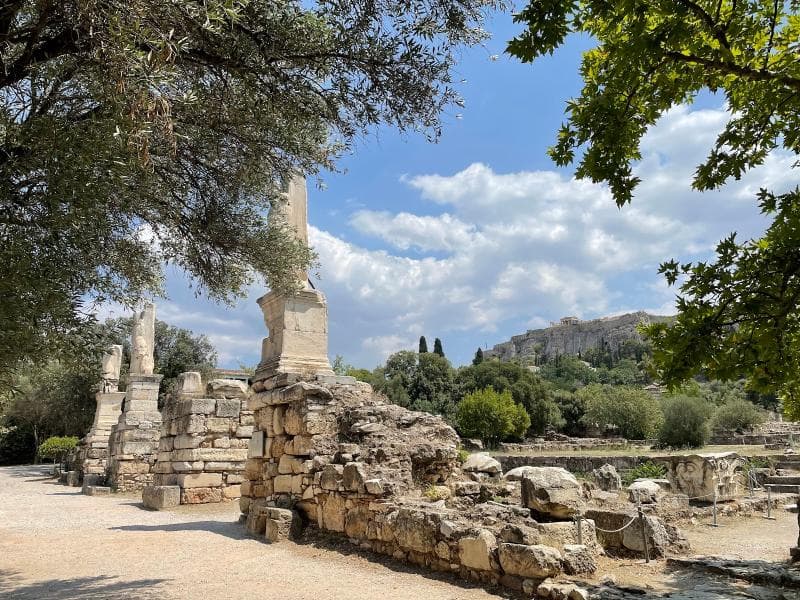
Explore the Stoa of Attalos in the Ancient Agora of Athens, Greece. Discover its rich history as a marketplace, social hub, and modern-day museum.
Overview
Nestled within the historical embrace of the Ancient Agora of Athens, Greece, stands the impressive Stoa of Attalos. This magnificent structure, originally built in the Hellenistic period, serves as a vivid reminder of ancient Athenian life and commerce. Today, it has been meticulously reconstructed to house the Museum of the Ancient Agora, offering visitors a tangible connection to the past.
A 'stoa' in ancient Greek architecture refers to a covered walkway or portico, typically lined with columns. The Stoa of Attalos, with its grand scale and elegant design, was a prominent feature of the Agora, the heart of public life in ancient Athens.
History & Cultural Background
The original Stoa of Attalos was constructed between 159 and 138 BC, a generous gift to the city of Athens from King Attalos II of Pergamon. This gesture was a testament to his appreciation for the education he received in Athens under the philosopher Carneades. For centuries, the stoa functioned as a bustling commercial and social hub, essentially an 'ancient shopping mall' where merchants sold their goods from 42 shops, 21 on each of its two floors.
Beyond commerce, it was a vital gathering place for Athenians from all walks of life to meet, socialize, discuss politics, and engage in philosophical debates. Sadly, the original structure met its demise in 267 AD when it was destroyed during the Herulian invasion of Athens. The ruins lay for centuries, with some parts even incorporated into later fortification walls. However, its story did not end there. Between 1952 and 1956, the Stoa of Attalos was fully reconstructed by the American School of Classical Studies at Athens, using original materials found on-site and funded by the Rockefeller family, faithfully replicating its ancient form.
What Makes It Special
The Stoa of Attalos stands out as a remarkable example of Hellenistic architecture, combining practicality with aesthetic grandeur. It is notably larger and more elaborate than earlier Athenian buildings of its kind, measuring approximately 115 to 120 meters long and 20 meters wide, and standing 25 meters high. Unusually for its time, it featured two stories.
Its architectural design skillfully blends different orders: the ground floor features a Doric exterior colonnade and an Ionic interior colonnade, while the upper floor showcases an Ionic exterior colonnade and an inner Pergamene style with distinct capitals. Constructed from locally available Pentelic marble for the facade and columns, and limestone for the walls, it reflected the sophistication of its era. This meticulous reconstruction allows visitors today to experience the building almost exactly as ancient Athenians would have.
Stories, Fun Facts & Local Details
Imagine the vibrant scene within the Stoa of Attalos in its prime: the chatter of merchants haggling over prices, the laughter of children, and serious discussions among philosophers pondering life's great questions. It was a sheltered space, providing respite from Athens' summer heat and winter rains, making it an ideal venue for public gatherings throughout the year.
A fascinating modern detail is that the ceremony for the signing of the 2003 Treaty of Accession for ten countries to the European Union was conducted within the reconstructed Stoa of Attalos, connecting this ancient symbol of Athenian democracy with contemporary European history. Inside the museum today, you can find 'ostraka,' pottery shards used for voting in ostracism, a practice where citizens could banish individuals by popular vote, providing a direct link to the democratic processes of ancient Athens.
Visitor Perspective
Today, the Stoa of Attalos serves as the Museum of the Ancient Agora, a treasure trove of artifacts that offers deep insights into Athenian democracy, daily life, and commerce. The museum's collection includes a diverse array of objects, such as clay, bronze, and glass items, sculptures, coins, and inscriptions dating from the 7th to the 5th centuries BC, extending even to Byzantine and Turkish periods. Key exhibits like the 'klepsydra' (water clock), used to time speakers in legal proceedings, and ancient ballot boxes, vividly illustrate the functioning of the world's first democracy.
Walking through the reconstructed colonnades provides an immersive experience, allowing you to envision the bustling life that once filled these halls. Both levels of the museum are wheelchair accessible, and tactile site plans are available for visually impaired visitors, ensuring a welcoming experience for all.
Coordinates: 23.72422, 37.97517
View on Google Maps💬 How Travelers Describe This Place
Based on community votes
Photogenic
872Interesting
846Must See
201Beautiful
121Unique
87
Traveler Stories
Discover memorable experiences shared by travelers who have visited this place.
No traveler stories yet.
Be the first traveler to share what made this place memorable.

Tour
By
Spot
Discover amazing places around the world. Your journey starts here.
Explore
© 2026 TourBySpot. All rights reserved.