Statues
Stockholm, Sweden
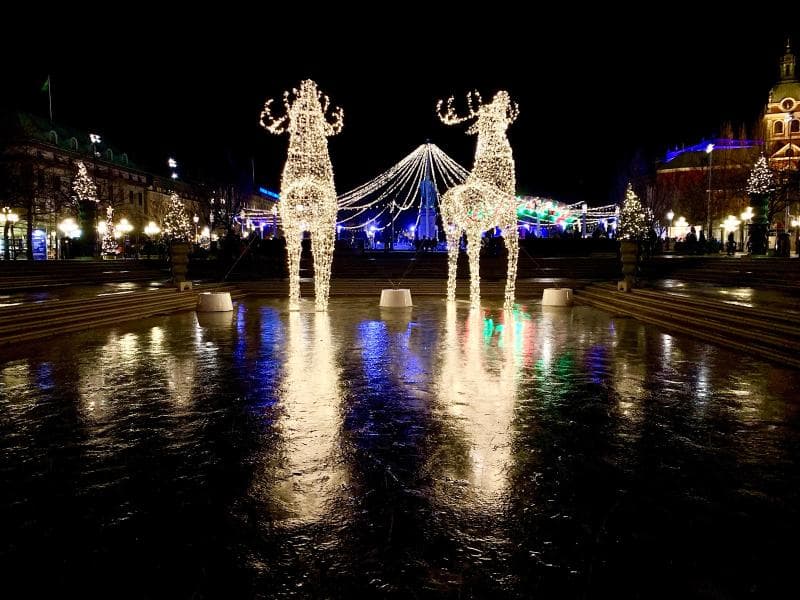
Discover the historic statues of Kungsträdgården in Stockholm, Sweden, from royal monuments to mythological fountains and unique metro art.
Overview
Nestled in the bustling heart of Stockholm, Sweden, Kungsträdgården, or 'The King's Garden', is not merely a public park but an open-air gallery adorned with significant statues and compelling art installations. This vibrant urban oasis, a central meeting place for locals and visitors alike, beautifully blends historical grandeur with contemporary city life. The statues within Kungsträdgården serve as silent storytellers, each monument offering a glimpse into Sweden's rich past, its monarchy, and its artistic heritage.
From regal equestrian figures to intricate fountains, these sculptures are integral to the park's character, inviting curious travelers to pause and reflect amidst the lively atmosphere. The artistic journey extends beneath the surface, with the Kungsträdgården metro station itself recognized as a profound extension of the park's sculptural narrative.
History & Cultural Background
Kungsträdgården's history dates back to the 15th century, originally serving as a royal kitchen garden, known as 'konungens kålgård' or 'the king's cabbage garden'. Over centuries, it transformed from a utilitarian plot into an enclosed royal Baroque pleasure garden in the 17th and 18th centuries.
A pivotal moment in the park's evolution came in the early 19th century when its enclosing walls were removed, opening it to the public. This transformation coincided with the inauguration of the statue of Charles XIII in 1821, marking the park's shift towards becoming a public space. Later, the equestrian statue of Charles XII was unveiled in 1868. The park also once housed the magnificent Makalös Palace, which stood from 1643 until its destruction by fire in 1825. This palace's legacy is preserved in the unique art installations found in the underground metro station, connecting the past to the present.
What Makes It Special
The statues of Kungsträdgården stand out due to their historical significance and artistic merit, each contributing to the park's unique identity. The equestrian statue of Charles XII, positioned in the southern part of the park, commemorates the Swedish king known for his military campaigns. Further north, the statue of Charles XIII, created by Gustaf Göthe, is flanked by four lions, symbolizing his reign and naval victories during the Russo-Swedish War.
In the park's center lies Molin's Fountain, a bronze masterpiece by Johan Peter Molin. This elaborate fountain features mythological figures, including the ocean god Ægir, his wife Rán, and their nine daughters, all listening to the river spirit Nix playing a harp. This evocative sculpture beautifully symbolizes Stockholm's unique geographical position between Lake Mälaren and the Baltic Sea, making it a focal point of artistic and natural harmony.
Beyond the park's surface, the Kungsträdgården metro station offers an extraordinary artistic experience. Designed by Ulrik Samuelson, the station is a subterranean garden, with its design reflecting the park above. It features sculptures and masks that are replicas of exterior art from the demolished Makalös Palace, effectively turning the underground into an archaeological and historical exhibition space. The station's color scheme of red, white, and green references the Baroque garden that Kungsträdgården once was, with green plants, red gravel paths, and white marble sculptures.
Stories, Fun Facts & Local Details
The statue of King Charles XII is famously depicted pointing eastward, a gesture often interpreted by locals as directing towards his 'arch enemy Russia', reflecting his historical military engagements. The statue of King Charles XIII, despite its regal presence, has been the subject of affectionate, humorous local nicknames, showcasing Stockholmers' playful spirit towards historical figures.
The mythological narrative of Molin's Fountain, with Ægir, Rán, and their nine daughters, serves as a whimsical representation of Stockholm's watery landscape, inspiring tales of ancient gods and river spirits within a modern urban setting.
An intriguing detail can be found in the Kungsträdgården metro station: a concrete elm trunk commemorates the 'Elm Conflict' of 1971. This protest saw citizens successfully fight against the felling of elm trees for the station's construction, leading to the relocation of an entrance and marking a significant victory for urban environmental activism. The station is also home to the cave-dwelling Lessertia dentichelis spider, the only known place in Northern Europe where this species thrives, believed to have arrived during construction from Southern Europe.
Visitor Perspective
Exploring the statues of Kungsträdgården offers a multifaceted experience for any curious traveler. Above ground, the statues provide visual landmarks and photographic opportunities, seamlessly integrated into the park's dynamic events, cherry blossom season, or winter ice skating. Visitors can leisurely stroll through the park, admiring the regal figures and the grand Molin's Fountain, feeling the pulse of Stockholm's history and contemporary life converge.
Descending into the Kungsträdgården metro station transforms the experience into an archaeological adventure. The unique underground art, with its Makalös Palace replicas and symbolic elements, allows travelers to connect with the site's deeper historical layers. It's a reminder that art and history in Stockholm are not confined to traditional museums but are woven into the very fabric of the city's public and subterranean spaces, providing both aesthetic pleasure and intellectual stimulation. The statues, both in the open air and beneath the city, encourage a reflective journey through Sweden's past and present.
Coordinates: 18.0695, 59.3254
View on Google Maps💬 How Travelers Describe This Place
Based on community votes
Beautiful
839Photogenic
445Must See
388Unique
289Interesting
141
Traveler Stories
Discover memorable experiences shared by travelers who have visited this place.
No traveler stories yet.
Be the first traveler to share what made this place memorable.

Tour
By
Spot
Discover amazing places around the world. Your journey starts here.
Explore
© 2026 TourBySpot. All rights reserved.