Statue Of King Karl Johan
Oslo, Norway
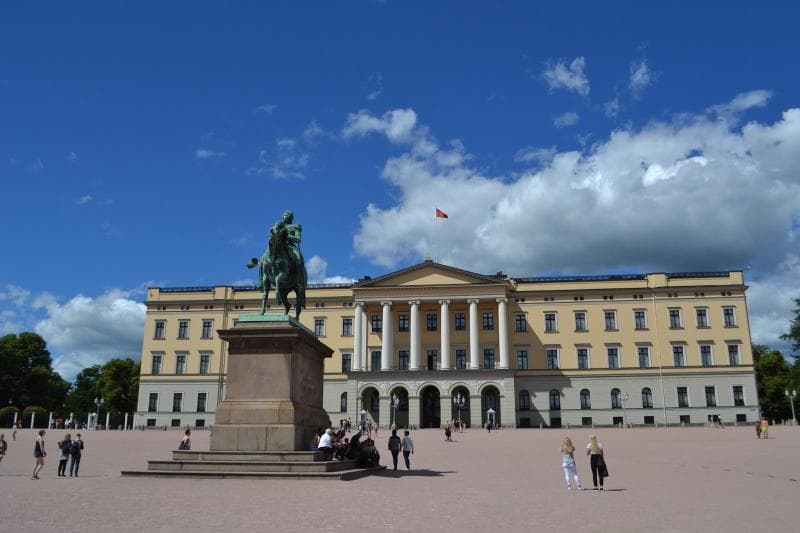
Discover the majestic Statue of King Karl Johan at The Royal Palace in Oslo, Norway. Explore its history, significance, and cultural impact.
Overview
At the heart of Oslo, standing majestically before the Royal Palace, is the equestrian Statue of King Karl Johan. This imposing bronze monument serves as a powerful focal point, not only for the grandeur of the palace it guards but also for the city's main thoroughfare, Karl Johans gate, which bears his name. More than just a statue, it embodies a significant period in Norwegian history, reflecting the nation's journey and its connection to a unique royal lineage. It’s a landmark that beckons curious travelers to delve into the past of this vibrant Scandinavian capital.
History & Cultural Background
The man commemorated by this impressive statue is King Karl III Johan of Norway, known internationally as Charles XIV John of Sweden. Born Jean-Baptiste Jules Bernadotte in Pau, France, he was a distinguished Marshal under Napoleon Bonaparte before an unexpected turn of events led to his adoption as heir to the Swedish throne in 1810. He ascended to the thrones of both Sweden and Norway in 1818, reigning until his death in 1844, and became the first monarch of the Bernadotte dynasty.
King Karl Johan was the primary architect of the union between Norway and Sweden, a personal union established in 1814 that lasted for nearly a century until its peaceful dissolution in 1905. His reign was pivotal for Norway, laying foundations for its modern identity. He personally laid the foundation stone for the Royal Palace in Oslo on October 1, 1825, a residence that would eventually be completed in 1849.
The equestrian statue itself was unveiled on September 7, 1875, by King Oscar II, decades after Karl Johan's passing. The commission for this grand artwork was awarded to Norwegian sculptor Brynjulf Bergslien, reflecting a strong national sentiment against selecting a foreign artist. Cast in Copenhagen, it holds the distinction of being the largest single bronze sculpture ever erected in Norway, a testament to its historical significance and artistic ambition.
What Makes It Special
The Statue of King Karl Johan is special not only for its impressive scale and intricate details but also for its symbolic placement. Positioned directly in front of the Royal Palace, it creates a powerful visual axis with Karl Johans gate, Oslo's bustling main street, leading directly up to it. This strategic location makes it an undeniable symbol of royal authority and historical continuity in Norway's capital. The statue's enduring presence on the Palace Square (Slottsplassen) provides a constant reminder of the monarch who initiated the construction of the palace and oversaw a transformative period for the nation. It serves as a majestic tribute, encapsulating a significant chapter of Norwegian heritage and contributing to the vibrant tapestry of city life in Oslo.
Stories, Fun Facts & Local Details
It's fascinating to consider that the man depicted in this statue, King Karl Johan, was originally a French general named Jean-Baptiste Bernadotte. His journey from a Napoleonic Marshal to the King of Norway and Sweden is a remarkable tale of political maneuvering and personal ambition. A local detail worth noting is the public's insistence that a Norwegian sculptor, Brynjulf Bergslien, create the statue, demonstrating a burgeoning national pride in the arts.
King Karl Johan's coronation in Nidaros Cathedral in Trondheim in 1818 was the first royal coronation in Norway in 300 years, marking a momentous occasion for the re-emerging nation. Furthermore, his solemn oath to the Norwegian Constitution underscored the unique constitutional monarchy that was taking shape. The statue stands within the expansive Palace Park, which has been openly accessible to the public since 1867, a rather progressive move for a royal estate at the time. This makes the area around the statue not just a historical site, but a beloved public space where history and daily life intersect.
Visitor Perspective
For any traveler to Oslo, encountering the Statue of King Karl Johan is an essential experience. Approaching the Royal Palace from Karl Johans gate, the equestrian figure immediately draws the eye, inviting a moment of reflection on the history that unfolded on these grounds. Visitors can admire the bronze artistry of Brynjulf Bergslien, observing the king on horseback, poised and regal. The statue's setting in the open Palace Square provides an excellent vantage point for photography, capturing the grandeur of the palace behind it. This area is also where one can witness the daily changing of the guard ceremony, adding a ceremonial flair to the historical setting. Taking a stroll through the surrounding Palace Park offers a tranquil counterpoint, allowing one to absorb the historical atmosphere of this pivotal location in Norwegian history. It's a place where the past feels tangible, offering a direct connection to the royal heritage of Oslo.
Coordinates: 10.7275667, 59.9169111
View on Google Maps💬 How Travelers Describe This Place
Based on community votes
Interesting
748Unique
499Photogenic
427Must See
337Beautiful
94
Traveler Stories
Discover memorable experiences shared by travelers who have visited this place.
No traveler stories yet.
Be the first traveler to share what made this place memorable.

Tour
By
Spot
Discover amazing places around the world. Your journey starts here.
Explore
© 2026 TourBySpot. All rights reserved.