State Reception Rooms
Ho Chi Minh City, Vietnam
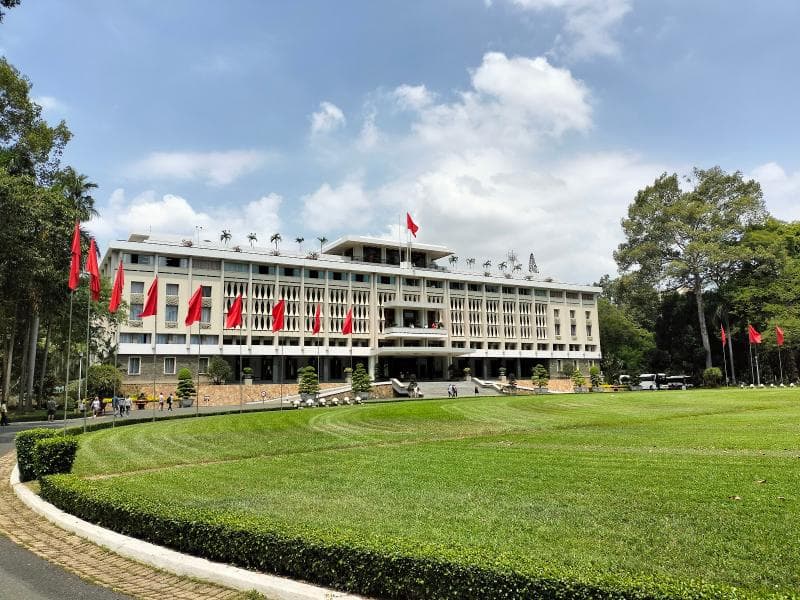
Explore the historic State Reception Rooms inside Independence Palace in Ho Chi Minh City, Vietnam, and uncover the nation's past.
Overview
Within the historic Independence Palace, also known as Reunification Palace, in Ho Chi Minh City, Vietnam, lie the meticulously preserved State Reception Rooms. These grand chambers served as the nerve center for official government functions, diplomatic engagements, and ceremonial events during the era of the Republic of Vietnam. Stepping into these rooms offers a poignant glimpse into a significant period of the nation's past, revealing where pivotal political and social interactions unfolded. They stand today as silent witnesses to Vietnam's complex journey towards peace and reunification, inviting visitors to reflect on the events that shaped the country.
History & Cultural Background
The Independence Palace, and by extension its State Reception Rooms, holds a deep historical significance. The current structure was built on the site of the former Norodom Palace, a colonial-era building that was severely damaged by a bombing in 1962. President Ngo Dinh Diem ordered the construction of a new palace, which was completed in 1966, designed by the acclaimed Vietnamese architect Ngo Viet Thu. The palace became the official home and workplace of the President of the Republic of Vietnam, serving as the base for the South Vietnamese president throughout the civil war. These rooms hosted the leadership of South Vietnam and their international counterparts, including US military and political figures, making critical decisions concerning governance and national security. The building's architecture was envisioned to blend modern refinement with Eastern philosophy and traditional Vietnamese aesthetics, reflecting the national identity during a tumultuous time.
What Makes It Special
The State Reception Rooms are distinguished by their unique architectural design and preserved period decor. Architect Ngo Viet Thu conceived a modernist structure that harmoniously incorporates symbolic geometry and traditional Vietnamese cultural elements, featuring clean lines, spacious corridors, and formal symmetry. Each of the palace's approximately 100 rooms, including the reception areas, was designed for a specific function with corresponding architecture and decoration. Visitors can observe the opulent Grand Banquet Hall, which once hosted over 100 guests for state banquets and important events. The Cabinet Room, another historically significant meeting space, is noted for its calming green decor, from curtains to upholstery, where President Thieu and his ministers convened. The interiors often feature massive carpets, impressive chandeliers, and well-crafted furniture, offering an immersive taste of the political atmosphere of South Vietnam at the time.
Stories, Fun Facts & Local Details
Beyond their official grandeur, the State Reception Rooms are imbued with fascinating stories. These were the settings for numerous high-stakes diplomatic meetings and critical political discussions. For instance, the offices and reception rooms on the second floor once welcomed figures like US Secretary of State Henry Kissinger in 1972. The layout of the palace thoughtfully welcomes natural lighting and adheres to the principles of feng shui, a traditional Eastern philosophical design concept. Throughout the various reception rooms, particularly on the first and second floors, visitors can find culturally significant items. Notable examples include a pair of early 20th-century Chinese porcelain urns in the Banquet Hall, adorned with the 'Van Vuong cau Khuong Thuong' motif, surrounded by stylized bamboo leaves, lotus petals, and cloud scrolls. These details add layers of cultural richness to the historical narrative.
Visitor Perspective
For the curious traveler, visiting the State Reception Rooms provides a unique journey through time. The rooms remain largely preserved as they were during the Vietnam War, offering a vivid, walk-through account of the era. As you explore, you can almost sense the echoes of past conversations and decisions that shaped a nation. It's an opportunity to step inside beautifully preserved mid-century interiors and experience the cultural soul of Ho Chi Minh City. The meticulous preservation allows for a genuine understanding of the political framework and operations of South Vietnam's government. The experience is not just about observing historical artifacts, but about feeling the spirit of a place that witnessed the dramatic conclusion of the Vietnam War and the subsequent reunification of the country.
Coordinates: 106.6905, 10.7728
View on Google Maps💬 How Travelers Describe This Place
Based on community votes
Beautiful
980Must See
288Interesting
247Photogenic
171Unique
130
Traveler Stories
Discover memorable experiences shared by travelers who have visited this place.
No traveler stories yet.
Be the first traveler to share what made this place memorable.

Tour
By
Spot
Discover amazing places around the world. Your journey starts here.
Explore
© 2026 TourBySpot. All rights reserved.