State History Museum
Bishkek, Kyrgyzstan
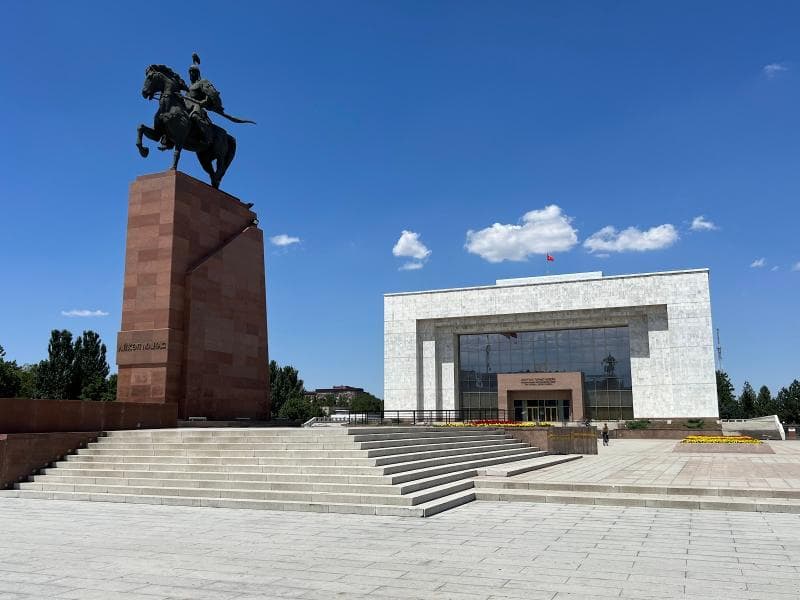
Explore the State History Museum in Bishkek, Kyrgyzstan, located in Ala-Too Square, charting the nation's history from ancient nomads to modern times.
Overview
Nestled in the vibrant heart of Bishkek, the capital of Kyrgyzstan, the State History Museum stands as a grand repository of the nation's rich past. Situated prominently on the iconic Ala-Too Square, this impressive architectural landmark is far more than just a building; it is a narrative in concrete and glass, chronicling the journey of the Kyrgyz people from ancient nomadic traditions to their modern identity. As one of Central Asia's largest and most significant museums, it offers a profound insight into the region's diverse cultural heritage, making it an essential stop for any curious traveler seeking to understand the soul of Kyrgyzstan.
History & Cultural Background
The State History Museum's story began on December 9, 1925, when it was founded as Kyrgyzstan's first scientific institution, opening its doors to the public in 1927. Over the decades, its name evolved, reflecting the changing political and cultural landscape – from the Central Museum to the Museum of Local Customs, and later the State Historical Museum of the Kyrgyz SSR. The current, distinctive building, an example of Soviet modernist architecture, was erected in 1984 on Ala-Too Square, originally serving as the Lenin Museum. Its construction was not without its controversies, as local architects reportedly opposed placing a museum dedicated to the Russian revolutionary in such a central location. However, after Kyrgyzstan gained independence in 1991, the museum underwent a significant transformation. From 2016 to 2021, extensive renovations, partly funded by the Turkish Cooperation and Coordination Agency and the Kyrgyz State Treasury, dramatically reshaped its focus. The Soviet-era displays were largely re-envisioned, shifting the narrative to emphasize the traditional Kyrgyz culture and history, bringing the ancient past firmly into the spotlight.
What Makes It Special
What truly sets the State History Museum apart is the breadth and depth of its collection, which spans millennia of Kyrgyz history. The museum proudly houses tens of thousands of exhibits, showcasing the cultural heritage of the Kyrgyz people from antiquity to the late 20th century. Visitors can journey through time, encountering invaluable archaeological finds such as Bronze Age household items, ancient rock paintings, and exquisite Saka jewelry from the 1st to 5th centuries CE, crafted in a distinctive animalistic style. Beyond the ancient, the museum features a rich ethnographic collection from the late 19th and early 20th centuries, including traditional felt, leather, and wool handicrafts, intricate Kyrgyz embroidery, national costumes, and even artistic horse harnesses. A particular highlight is often the 'Gold Room,' where visitors can marvel at precious artifacts, alongside displays like a recreated ancient man's cave, offering a tangible connection to early human habitation in the region. The museum also dedicates space to the Soviet period, preserving documents, photographs, and personal belongings that chart the Kyrgyz Soviet Socialist Republic's formation and development, providing a balanced historical perspective.
Stories, Fun Facts & Local Details
The museum's location within Ala-Too Square itself tells a story. The square, built in 1984 as 'Lenin Square,' has been a central stage for Kyrgyzstan's history, witnessing political transformations and the installation of the iconic Manas statue. Inside the museum, while the grandeur of the exhibits is undeniable, it's the smaller details that often capture the imagination. Imagine the skill required to create the ancient Saka jewelry, which reflects a profound connection to the animal world and nomadic spirituality. The traditional textiles, such as those made from 'chiy' (specially processed straw), offer a glimpse into the ingenuity and artistry of Kyrgyz craftsmen, whose daily lives were intertwined with their creations. The museum's extensive renovation, completed in 2021, not only modernized its facilities but also sparked a renewed national conversation about identity and how history is presented, symbolizing Kyrgyzstan's evolving self-perception on the world stage.
Visitor Perspective
A visit to the State History Museum is an immersive experience designed to be both educational and emotionally resonant. Travelers are encouraged to allocate at least two to three hours to explore its three floors, though history enthusiasts might easily spend half a day delving deeper into its vast collections. While comprehensive English signage is generally available to explain the artifacts, a guided tour can unlock even richer narratives and nuanced historical context. The museum is typically open from Tuesday to Sunday, generally from 9:00 or 10:00 to 18:00, though it's always wise to check current hours, especially during different seasons. Stepping out of the museum, you find yourself back in Ala-Too Square, with the monument to Manas, the legendary hero of the Kyrgyz epic, nearby. This connection between the museum's interior narratives and the external symbols of national pride creates a cohesive and memorable experience, offering a comprehensive understanding of Kyrgyzstan's enduring spirit.
Coordinates: 74.6038, 42.8777
View on Google Maps💬 How Travelers Describe This Place
Based on community votes
Beautiful
551Must See
547Photogenic
421Unique
298Interesting
212
Traveler Stories
Discover memorable experiences shared by travelers who have visited this place.
No traveler stories yet.
Be the first traveler to share what made this place memorable.

Tour
By
Spot
Discover amazing places around the world. Your journey starts here.
Explore
© 2026 TourBySpot. All rights reserved.