Staircases
Graz, Austria
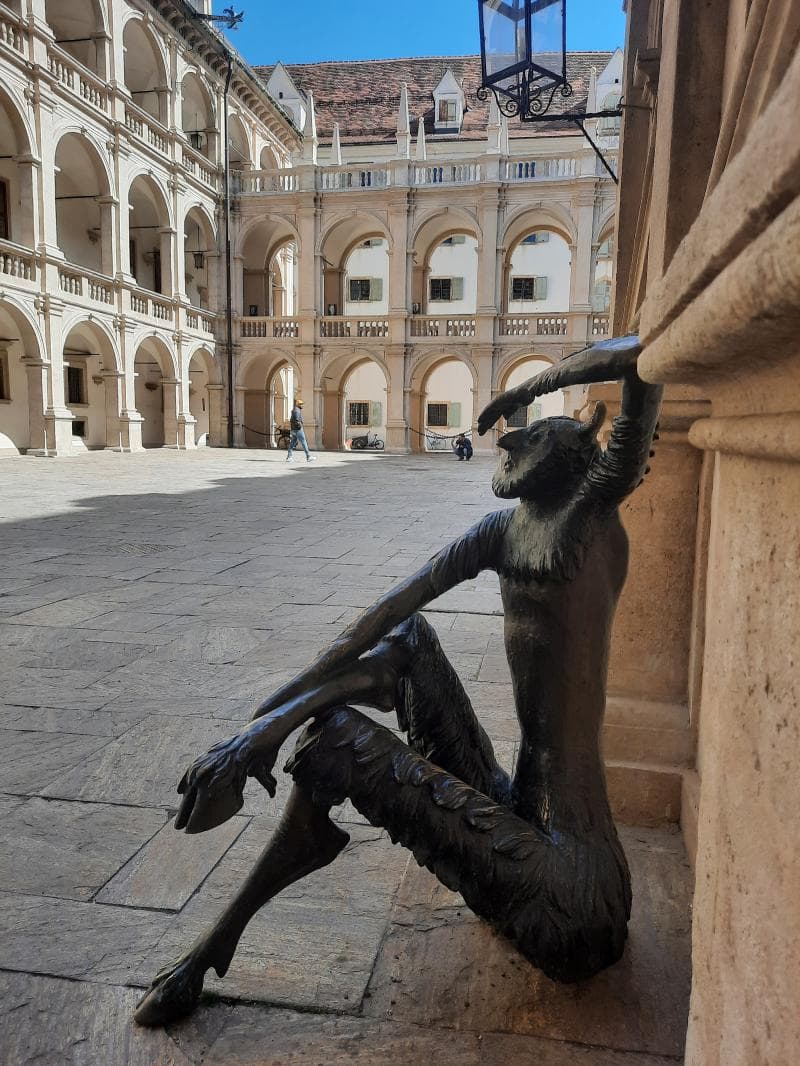
Explore the Landhaus Graz in Austria, a Renaissance masterpiece. Discover its arcaded courtyard and elegant staircases.
Overview
Nestled in the heart of Graz, Austria, the Landhaus Graz stands as a magnificent testament to the Italian Renaissance, and its 'staircases' are an integral part of its iconic arcaded courtyard. While not a singular, detached monumental staircase, these architectural elements are woven into the very fabric of the building's stunning three-story arcades, designed by the celebrated Italian master Domenico dell'Allio. They invite visitors to ascend, offering evolving perspectives of the courtyard's harmonious proportions and intricate details. Imagine stepping into a Venetian palazzo, yet finding yourself in the Styrian capital – that's the essence of the Landhaus's charm. The staircases facilitate a journey through a living piece of history, connecting different levels of this significant governmental building and enriching the visitor's experience of its grandeur.
History & Cultural Background
The history of the Landhaus Graz begins in 1557, when Italian architect Domenico dell'Allio commenced its construction, imbuing it with the spirit of the Northern Italian Renaissance. This grand structure was commissioned by the Styrian estates, serving as a powerful symbol of their authority and becoming one of Central Europe's most prominent Renaissance buildings. The 'staircases' within the Landhaus are thus inherently tied to this period of architectural flourishing, acting as functional, yet aesthetically pleasing, components of dell'Allio's masterful design. They echo the fluidity and elegance characteristic of the Renaissance, providing access to the various floors of the arcaded courtyard. One specific mention points to an ornate staircase attributed to Bartolomeo di Bosio within this courtyard, adding another layer of artistic detail to the building's rich history. This building has long served as the seat of the Styrian provincial parliament, making its stairs a silent witness to centuries of political discourse and regional governance.
What Makes It Special
What truly sets the Landhaus Graz apart, and by extension its staircases, is the spectacular three-story arcaded courtyard. This architectural marvel transforms what might have been mere functional access points into visually captivating journeys. The staircases, integrated into these arcaded walkways, provide not just passage but also a dynamic vantage point from which to admire the courtyard's perfect symmetry, the delicate Tuscan columns, and the sixteenth-century copper gargoyles that adorn the roof. The interplay of light and shadow on the arches and steps creates a constantly changing spectacle, evocative of the grand courtyards found in Venetian palazzos. This integration makes each ascent or descent a discovery, allowing travelers to appreciate the meticulous craftsmanship and the enduring beauty of Renaissance design. It's a blend of form and function where the 'staircases' are inseparable from the overall artistic statement of the Landhaus.
Stories, Fun Facts & Local Details
The Landhaus, and its central courtyard featuring the famous arcaded staircases, is steeped in fascinating local lore. One such detail is the 'Rumortafeln' or 'noise boards,' dating back to 1588. These plaques, still present, strictly forbade shouting, quarrels, or drawing of weapons within the Landhaus, demanding modest behavior in words and deeds, under penalty of punishment. This speaks to the dignified atmosphere intended for the building, even around its public spaces and staircases. During Advent, the courtyard, framed by these very arcades and the paths they create, transforms into a magical setting for Graz's famous ice nativity scene, where masters carve intricate figures from solid blocks of ice. These seasonal transformations lend a whimsical, almost fairytale quality to the historic staircases, inviting a different kind of appreciation. The Landhaus's staircases are not just paths, but stages for daily life and seasonal wonders, silently observing centuries of change and celebration.
Visitor Perspective
For the curious traveler, encountering the staircases within the Landhaus Graz is an experience of quiet discovery. The inner courtyard itself is openly accessible 24/7, inviting leisurely exploration of its architectural splendor at any time. As you wander through the arcades and ascend the integrated staircases, you're not merely climbing steps; you're tracing the lines of history, feeling the cool stone that has witnessed centuries of activity. The views from different levels of the arcades, afforded by these staircases, offer unique perspectives of the central bronze fountain and the surrounding Renaissance architecture. It's a chance to immerse yourself in the 'Italian' breath of Austrian architecture, to pause, admire, and capture atmospheric photos. Allow yourself an hour or two to truly appreciate the details of the courtyard and its elegant staircases.
Coordinates: 15.439502, 47.070678
View on Google Maps💬 How Travelers Describe This Place
Based on community votes
Unique
639Interesting
526Must See
421Beautiful
366Photogenic
181
Traveler Stories
Discover memorable experiences shared by travelers who have visited this place.
No traveler stories yet.
Be the first traveler to share what made this place memorable.

Tour
By
Spot
Discover amazing places around the world. Your journey starts here.
Explore
© 2026 TourBySpot. All rights reserved.