Stadium Tour
Madrid, Spain
Explore the Santiago Bernabéu Stadium Tour in Madrid, Spain. Discover Real Madrid's history, trophies, and iconic stadium.
Overview
The Santiago Bernabéu Stadium Tour offers a remarkable journey into the heart of Real Madrid, one of the world's most storied football clubs, located in Madrid, Spain. More than just a stadium visit, it is an immersive experience that celebrates the club's rich history and unparalleled success. Visitors can explore various iconic areas, typically including the expansive trophy room, the Real Madrid Museum, and breathtaking panoramic views of the pitch. The tour provides a behind-the-scenes glimpse, sometimes offering access to the players' tunnel, dugouts, and even the dressing rooms, depending on the specific tour and ongoing stadium events.
The self-guided tour usually takes between 90 minutes and two hours, allowing guests to delve into interactive exhibits and marvel at memorabilia at their own pace. The Santiago Bernabéu has undergone significant modern renovations, introducing features like a retractable roof and a new facade, transforming it into a state-of-the-art architectural marvel. It stands as a must-visit attraction for both ardent football fans and curious travelers exploring Madrid's cultural landscape.
History & Cultural Background
The Santiago Bernabéu Stadium, inaugurated on December 14, 1947, was initially known as 'Nuevo Chamartín'. It was named in honor of Santiago Bernabéu Yeste, a legendary figure who served Real Madrid as a player, coach, and most notably, as president from 1943 until his death in 1978. Bernabéu was instrumental in the club's transformation into a global footballing powerhouse and oversaw the stadium's construction and early expansions.
Throughout its history, the stadium has been a stage for countless historic moments in football. It has hosted four European Cup/UEFA Champions League finals, including the inaugural final in 1957, as well as the final matches of the 1982 FIFA World Cup and the 1964 European Nations' Cup. These events solidify its status as a hallowed ground in the annals of football, embodying the era in which Real Madrid rose to international prominence.
What Makes It Special
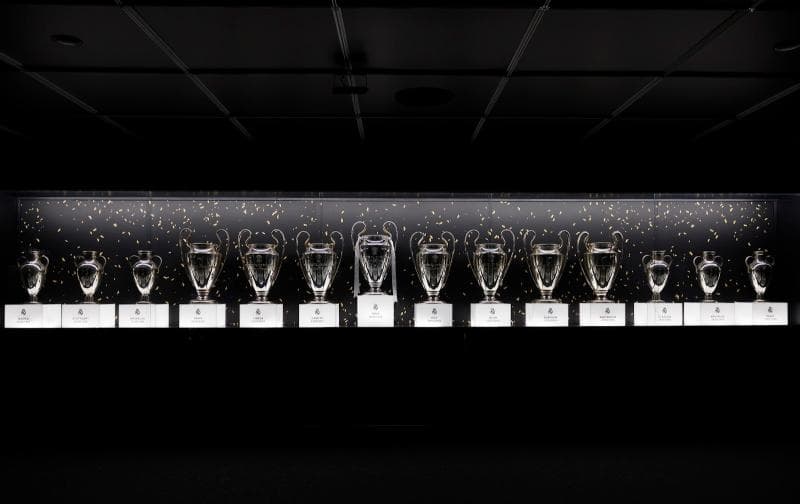
What truly sets the Santiago Bernabéu Tour apart is its unparalleled collection of trophies, prominently featuring the Real Madrid Museum. This museum houses an astonishing array of silverware, most notably the club's 15 UEFA Champions League trophies, which are often displayed on illuminated pedestals. This makes it the only place in the world where one can witness such a concentration of European football's most coveted prize.
Beyond the trophies, recent renovations have introduced immersive and interactive experiences, including high-definition video displays and holograms that bring the club's legendary moments to life. The architectural transformation, with its sleek steel facade, retractable roof, and even a retractable pitch, positions the Bernabéu as a symbol of modern stadium design and a world-class facility that extends beyond match days to host various events.
Stories, Fun Facts & Local Details
Santiago Bernabéu Yeste's vision and dedication were pivotal in shaping both the stadium and Real Madrid's global legacy. It was under his presidency that the stadium received its current name in 1955. The stadium's capacity has fluctuated significantly over the decades, once holding over 125,000 spectators after an expansion in 1955, making it one of the largest in Europe at the time.
A notable fun fact is that the Santiago Bernabéu was the first stadium in Spain to install a giant screen, in 1992, measuring 96 square meters. The stadium is not solely for football; it has also hosted major music concerts and other events, showcasing its versatility as a prominent venue in Madrid. Furthermore, it holds the unique distinction of being the first stadium in Europe to host both a UEFA Euro final and a FIFA World Cup final, and the only stadium to host both the UEFA Champions League and Copa Libertadores finals.
Visitor Perspective
Visitors to the Santiago Bernabéu Stadium Tour can expect a memorable, largely self-guided journey. While the average tour duration is around 1.5 to 2 hours, guests are welcome to take their time, particularly in the trophy displays and interactive areas. Tickets are often timed, and it is advisable to book in advance, especially during peak season or around home fixtures.
For a quieter experience, mornings before 11:00 am or afternoons after 3:00 pm are generally recommended to avoid larger crowds. It is important to note that on match days, the tour ends several hours before kickoff, and certain areas like the players' tunnel and locker rooms may be restricted or closed. The entrance for the tour is typically located on Avenida de Concha Espina, at Gate 84. The tour is family-friendly and fully accessible, ensuring that everyone can enjoy this dive into football history.
Coordinates: -3.68835, 40.45306
View on Google Maps💬 How Travelers Describe This Place
Based on community votes
Must See
540Photogenic
252Unique
147Beautiful
114Interesting
19
Traveler Stories
Discover memorable experiences shared by travelers who have visited this place.
No traveler stories yet.
Be the first traveler to share what made this place memorable.

Tour
By
Spot
Discover amazing places around the world. Your journey starts here.
Explore
© 2026 TourBySpot. All rights reserved.