St. Vitus Cathedral
Prague, Czech Republic
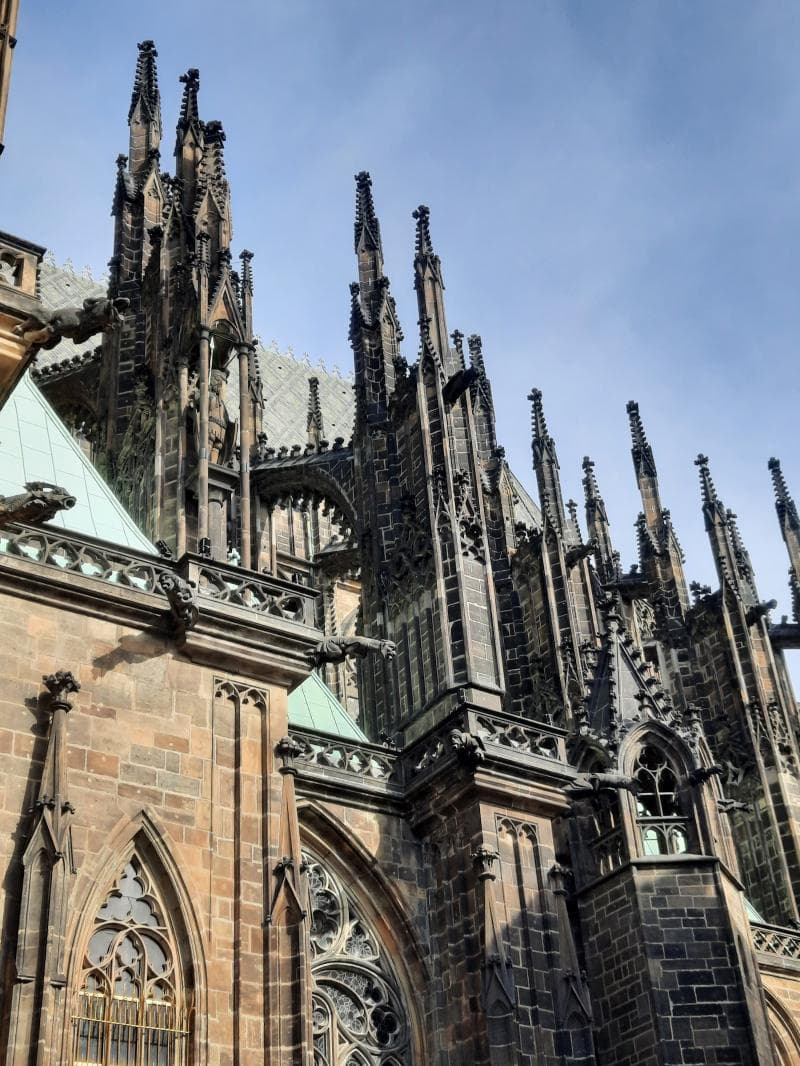
Discover St. Vitus Cathedral, a Gothic masterpiece within Prague Castle, Czech Republic. Explore its history, stunning architecture, and royal tombs.
Overview
Dominating the skyline from within the venerable Prague Castle complex, St. Vitus Cathedral stands as the largest and most significant church in the Czech Republic. This monumental Gothic masterpiece is not merely a place of worship; it is a spiritual symbol of the Czech state, an architectural marvel, and a repository of history that has witnessed coronations, funerals, and the resting places of Bohemian kings, Holy Roman Emperors, and patron saints. Its towering spires and intricate details invite visitors to delve into centuries of Bohemian heritage.
History & Cultural Background
The story of St. Vitus Cathedral begins long before its current Gothic form. The site's religious significance dates back to the 10th century when Prince Wenceslas I founded a Romanesque rotunda around 925 to house the relic of St. Vitus' arm. This rotunda was later expanded into a basilica. The construction of the present-day Gothic cathedral commenced on November 21, 1344, an endeavor initiated by King John of Bohemia and significantly advanced by his son, Charles IV, King of Bohemia and soon-to-be Holy Roman Emperor. Charles IV envisioned the new cathedral as a coronation church, a family crypt, a treasury for the kingdom's most precious relics, and a pilgrimage site for St. Wenceslas.
The initial design was laid out by Matthias of Arras, followed by Peter Parler, a renowned architect responsible for many significant buildings in Prague, including parts of Charles Bridge. However, the cathedral's construction faced prolonged interruptions, notably by the Hussite Wars in the 15th century, leaving it unfinished for centuries. It wasn't until the latter half of the 19th century that a concerted effort began to complete the cathedral in a Neo-Gothic style, finally consecrating it in 1929, almost 600 years after its foundation stone was laid.
What Makes It Special
St. Vitus Cathedral is a quintessential example of Gothic architecture, characterized by its soaring pointed arches, intricate ribbed vaults, and elegant flying buttresses. Its sheer scale is awe-inspiring, with a main tower reaching over 100 meters. Inside, visitors are greeted by a wealth of artistic and historical treasures.
- St. Wenceslas Chapel: This chapel is undoubtedly one of the most stunning and revered areas within the cathedral. Its walls are encrusted with thousands of semi-precious stones and feature impressive medieval frescoes. It houses the tomb of St. Wenceslas, the patron saint of the Czech state, and a hidden door leads to the Crown Chamber, where the Bohemian Crown Jewels are safeguarded.
- The Royal Mausoleum and Royal Crypt: Situated in the chancel, these areas serve as the final resting places for numerous Bohemian kings and queens, including Charles IV, and other nobility, solidifying the cathedral's role as a national pantheon.
- Stained-Glass Windows: The cathedral boasts magnificent stained-glass windows, some of which are notable works by the famous Art Nouveau artist Alfons Mucha, adding vibrant splashes of color and storytelling to the interior.
- The Golden Gate: On the southern side, this ceremonial entrance features a breathtaking 14th-century mosaic depicting the Last Judgment, a testament to medieval craftsmanship.
Stories, Fun Facts & Local Details
Beyond its grand history, St. Vitus Cathedral holds many fascinating tales and local curiosities. The gargoyles adorning the facade, besides their practical function as rainwater drains, are said to represent the various faces of the devil, though local jest suggests sculptors might have found inspiration closer to home.
The cathedral's ownership itself was a subject of dispute between the church and the state following its completion in the 1950s, eventually leading to a unique compromise where the most important church in Prague 'belongs to itself'. Another remarkable feature is the Sigismund bell, housed in the Great South Tower, which is considered the largest bell in the Czech Republic.
Visitor Perspective
Visiting St. Vitus Cathedral is a cornerstone of any trip to Prague Castle. The cathedral is accessible as part of the main visitor route within the Prague Castle complex, requiring a circuit ticket that often includes other notable attractions like the Old Royal Palace and St. George's Basilica. While a small area was previously free, visitors now need a valid circuit ticket to explore the interior.
For those seeking panoramic vistas, climbing the 287 narrow steps of the Great South Tower offers unparalleled views across Prague. The cathedral's opening hours generally run from 9:00 a.m. to 5:00 p.m. on weekdays and Saturdays, opening later at 12:00 p.m. on Sundays, with slight variations during winter months. It's advisable to check the official Prague Castle website for the most current information regarding access and hours, as services and events can occasionally impact visitor entry.
Coordinates: 14.420692, 50.087437
View on Google Maps💬 How Travelers Describe This Place
Based on community votes
Photogenic
547Interesting
336Unique
219Beautiful
186Must See
80
Traveler Stories
Discover memorable experiences shared by travelers who have visited this place.
No traveler stories yet.
Be the first traveler to share what made this place memorable.

Tour
By
Spot
Discover amazing places around the world. Your journey starts here.
Explore
© 2026 TourBySpot. All rights reserved.