St. Stephen’s Green Entrance
Dublin, Ireland
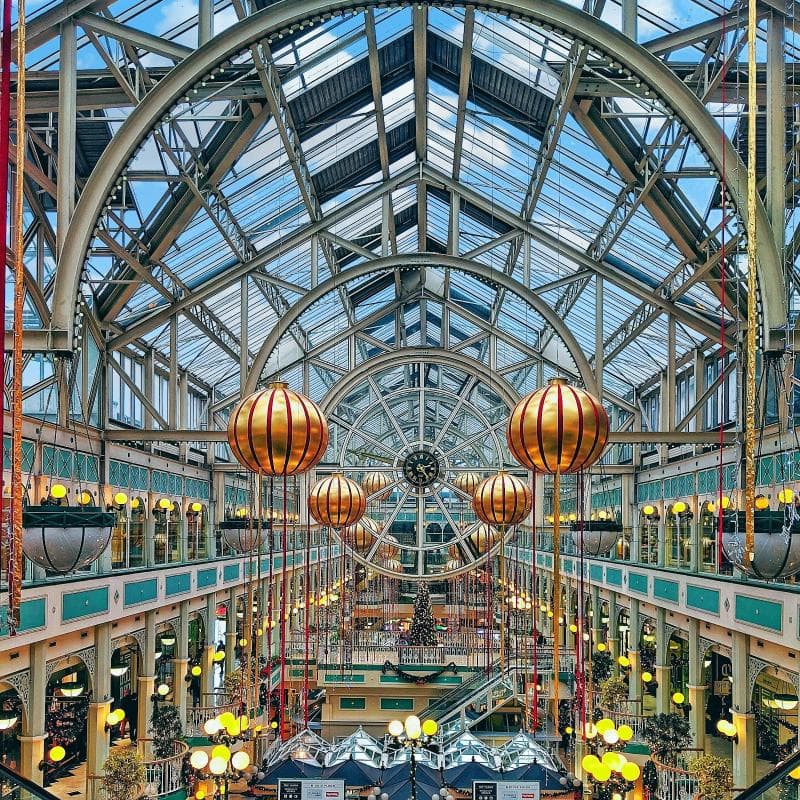
Discover the St. Stephen's Green entrance from Grafton Street, Dublin, Ireland – a historic gateway to a Victorian park rich in culture and stories.
Overview
The entrance to St. Stephen’s Green from Grafton Street serves as a gateway to one of Dublin, Ireland's, most cherished public parks. Situated at the north-west corner of this 22-acre Victorian garden square, it offers a serene transition from the bustling commercial artery of Grafton Street into a verdant oasis. The prominent Fusiliers' Arch marks this entry, standing as a historical monument and a familiar meeting point for Dubliners and visitors alike. The park itself is a rectangular expanse, meticulously maintained with lush landscaping, an ornamental lake, and a collection of sculptures and memorials that tell tales of Ireland's past.
As you step through this particular entrance, you leave behind the sounds of street performers and shoppers to immerse yourself in a landscape designed for contemplation and leisure. St. Stephen’s Green is the largest of Dublin's main Georgian garden squares, inviting exploration along its 3.5 kilometres of pathways, past vibrant flowerbeds, and under the shade of mature trees.
History & Cultural Background
St. Stephen's Green possesses a rich and varied history, reflecting the evolution of Dublin itself. Originally a marshy common on the city's outskirts, it was used for grazing livestock and even public executions until 1663. In 1664, Dublin Corporation took steps to enclose the common, selling off surrounding plots to generate revenue and marking the beginning of the park's formal existence.
The 18th century saw the area flourish as a fashionable locale, partly due to the development of Grafton Street in 1708. However, by 1814, the park transitioned into a private enclosure, accessible only to local householders, a decision that caused considerable public resentment. The park's return to public hands came about in 1877 through the tireless efforts and financial backing of Sir Arthur Guinness, later Lord Ardilaun. He funded its redesign into the magnificent Victorian layout we see today, which was officially reopened on July 27, 1880.
The entrance from Grafton Street, specifically the Fusiliers' Arch, was erected in 1907. It commemorates the Royal Dublin Fusiliers who perished in the Second Boer War, with the names of 222 fallen soldiers inscribed on its underside. This monument, however, earned the moniker 'Traitor's Gate' among Irish nationalists due to the context of the Boer War. The arch bears visible bullet holes, a stark reminder of the park's role as a battleground during the 1916 Easter Rising, when rebels established positions within the Green.
What Makes It Special
Beyond its aesthetic appeal, St. Stephen's Green stands out for its blend of natural beauty and profound historical resonance. The carefully preserved Victorian design, with its meandering paths, picturesque lake, and ornate landscaping, offers a tranquil escape. It is a place where every turn reveals a piece of history, from commemorative sculptures of Irish literary figures like James Joyce and W.B. Yeats to memorials dedicated to significant national events and heroes such as Theobald Wolfe Tone and the Great Famine.
The park's dedication to inclusivity is evident in its unique garden for the visually impaired, where visitors can engage with scented plants labeled in Braille. The Fusiliers' Arch itself, at the Grafton Street end, is more than just an entrance; it is a tangible link to a complex past, marked by both imperial loyalty and revolutionary struggle, making each passage beneath it a journey through time.
Stories, Fun Facts & Local Details
One of the most poignant tales from the 1916 Easter Rising recounts a temporary ceasefire within St. Stephen's Green. Despite intense fighting between rebels and British forces, both sides agreed to a daily truce to allow the park's groundsman to feed the resident ducks, a curious testament to humanity amidst conflict.
Locals affectionately refer to the park simply as 'Stephen's Green.' It is a favourite spot for office workers seeking a lunchtime reprieve, students from nearby universities finding a quiet corner, and families enjoying the children's playground or feeding the waterfowl on the lake. During the summer, the Victorian bandstand often hosts free concerts, adding a vibrant cultural note to the park's peaceful ambiance.
Visitor Perspective
Approaching St. Stephen's Green from Grafton Street, visitors are immediately greeted by the imposing yet inviting Fusiliers' Arch. This entrance sets the tone for a visit that is both refreshing and enriching. It offers a seamless transition from the high-energy shopping district to a place of calm reflection and natural beauty. The park provides numerous benches for resting tired feet, especially welcome after a long day of exploring Grafton Street.
Whether you seek a quiet stroll, a moment to ponder Ireland's tumultuous past, or simply a spot to enjoy nature in the heart of the city, the Grafton Street entrance to St. Stephen's Green promises a memorable experience. It's a place where history whispers through the trees, and the beauty of nature offers a timeless embrace. The accessibility of the pathways and the varied attractions within ensure that every visitor, from the casual wanderer to the history enthusiast, finds something to captivate their senses.
Coordinates: -6.26052, 53.33965
View on Google Maps💬 How Travelers Describe This Place
Based on community votes
Photogenic
950Beautiful
929Interesting
858Must See
730Unique
275
Traveler Stories
Discover memorable experiences shared by travelers who have visited this place.
No traveler stories yet.
Be the first traveler to share what made this place memorable.

Tour
By
Spot
Discover amazing places around the world. Your journey starts here.
Explore
© 2026 TourBySpot. All rights reserved.