St. Sava Square
Belgrade, Serbia
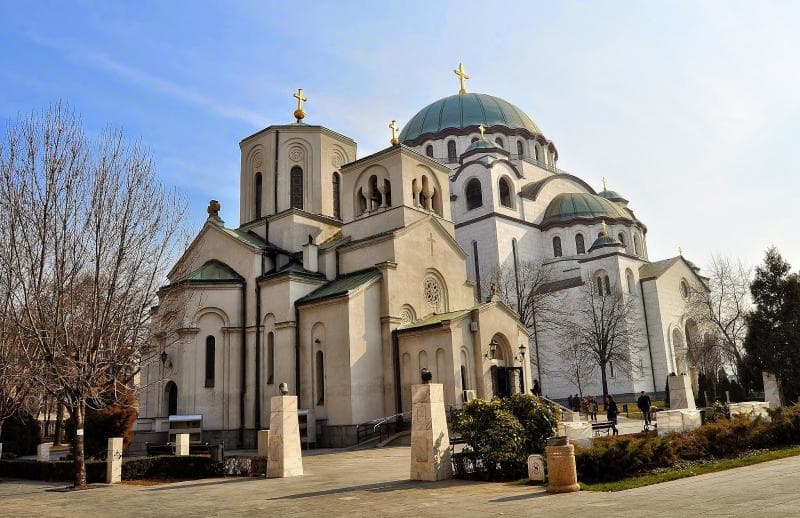
Explore St. Sava Square (Saint Sava Plateau) in Belgrade, Serbia, home to the magnificent Church of Saint Sava, a symbol of Serbian heritage. Discover its history, stunning mosaics, and cultural significance.
Overview
Nestled in the heart of Belgrade, Serbia, on the historic Vračar plateau, lies St. Sava Square, more formally known as the Saint Sava Plateau. This expansive public space is the majestic setting for the Church of Saint Sava, one of the largest Orthodox churches in the world and an undeniable symbol of Serbian identity and resilience. The square and the colossal temple together form a central spiritual and cultural landmark, dominating the city's skyline with its imposing Neo-Byzantine architecture. It's a place where history, spirituality, and daily life converge, offering visitors a profound insight into Serbia's rich heritage.
The plateau itself is a vibrant area, home not only to the magnificent church but also to significant national institutions and green spaces, making it a popular gathering spot for both locals and tourists. From its elevated position, the area provides impressive views of Belgrade, emphasizing the monumental scale of the Church of Saint Sava.
History & Cultural Background
The history of St. Sava Square and the Church it embraces is deeply interwoven with Serbian national and spiritual consciousness. The site holds immense significance as it is believed to be the precise location where the relics of Saint Sava—the revered founder of the Serbian Orthodox Church and its first archbishop—were publicly burned by Ottoman Grand Vizier Sinan Pasha in 1595. This act of desecration was an attempt to quell a Serbian uprising, but ironically, it cemented Saint Sava's legacy and intensified the Serbian people's devotion.
The vision to build a grand church in his honor emerged centuries later, with construction beginning in 1935. However, the tumultuous 20th century, marked by World War II, political changes, and conflicts, repeatedly halted progress. It was a testament to enduring faith that construction resumed, with the exterior completed by 2004 and the breathtaking interior mosaics finally finished in 2020. In recognition of its profound significance, the Vračar plateau, encompassing St. Sava Square, was officially declared a protected heritage site in 2021, acknowledging its 'symbolic, memorial, cultural-historical, architectural-urbanistic, and artistic values.'
What Makes It Special
What truly sets St. Sava Square apart is its seamless integration of a monumental religious edifice with a vibrant public space. The sheer scale and architectural grandeur of the Church of Saint Sava, inspired by Istanbul's Hagia Sophia, are captivating. Its exterior, clad in pristine white marble and granite, shimmers under the sun, while its magnificent dome and four bell towers are visible from nearly every point in Belgrade.
Beyond the church, the square features the prominent monument to Karađorđe, the leader of the First Serbian Uprising, serving as a powerful reminder of Serbia's fight for independence. The National Library of Serbia also stands nearby, contributing to the area's intellectual and cultural aura. The square's design itself is undergoing continuous enhancements, with plans for new green spaces, modern fountains, and recreational areas further elevating its appeal as a central urban oasis.
Stories, Fun Facts & Local Details
The story of the Church of Saint Sava's construction is one of perseverance. Over the decades, the unfinished structure was even used as a parking space by German and later Yugoslav armies during wartime. The church's central dome, weighing an astounding 4,000 tons, was built on the ground and then impressively lifted into place in 1989—a remarkable engineering feat. The interior of the church boasts an astonishing 15,000 square meters of mosaics, making it the largest mosaic surface in Christendom, a project that cost tens of millions of euros, with significant contributions from both the Serbian and Russian governments.
Locally, the square, or 'plato,' is not just a tourist attraction but a beloved part of Belgrade life. It serves as a focal point for major religious festivals, national celebrations, and public gatherings, where thousands of believers congregate. Recent and ongoing renovation projects aim to enrich the square further, introducing a chamber stage for cultural programs, an upgraded fountain, and new children's playgrounds, emphasizing its role as a communal heart for the city.
Visitor Perspective
Visiting St. Sava Square and the Church of Saint Sava offers an experience that is both awe-inspiring and deeply reflective. As you approach, the sheer size and architectural beauty of the church create an immediate sense of wonder. Walking across the spacious plateau, with its manicured green areas and the monumental statues, provides a sense of peace and historical grandeur. It's a perfect place for a leisurely stroll, to sit and absorb the atmosphere, or to simply admire the panoramic views over Belgrade.
Entering the Church of Saint Sava is a journey into an opulent world of intricate mosaics and spiritual tranquility. While admission is free, visitors are encouraged to dress modestly, covering shoulders and knees, as a sign of respect for this active place of worship. The entire complex is easily accessible by public transport and is a pleasant walk from central Belgrade, making it an essential stop for anyone wishing to understand the soul of the Serbian capital.
Coordinates: 20.4685389, 44.79806
View on Google Maps💬 How Travelers Describe This Place
Based on community votes
Photogenic
915Beautiful
211Interesting
123Unique
74Must See
20
Traveler Stories
Discover memorable experiences shared by travelers who have visited this place.
No traveler stories yet.
Be the first traveler to share what made this place memorable.

Tour
By
Spot
Discover amazing places around the world. Your journey starts here.
Explore
© 2026 TourBySpot. All rights reserved.