St. Peter’s Tomb
Rome, Italy
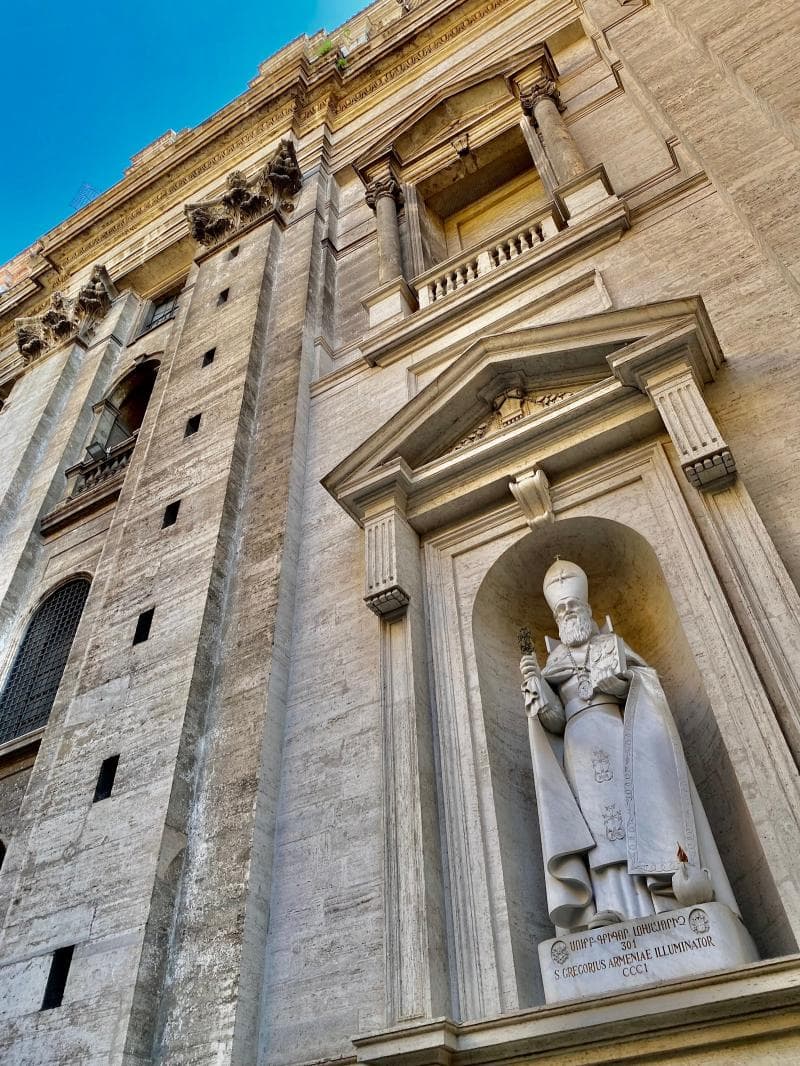
Explore St. Peter's Tomb in Rome, Italy, believed to be the resting place of Saint Peter beneath St. Peter's Basilica. Discover its rich history, archaeological finds, and cultural significance in this unique Vatican experience.
Overview
Beneath the grand splendor of St. Peter's Basilica in Vatican City, Rome, lies one of Christianity's most sacred and historically significant sites: St. Peter's Tomb. This revered spot is believed to be the final resting place of Saint Peter, one of Jesus Christ's twelve apostles and considered the first Pope of the Catholic Church. The tomb is nestled deep within the Vatican Necropolis, an ancient Roman burial ground that dates back to the 1st century AD.
Visiting St. Peter's Tomb offers a unique journey into the foundational layers of Christian history, blending profound spiritual significance with remarkable archaeological discoveries. It's a place where the ancient past directly underpins the monumental present, creating an experience unlike any other in Rome.
History & Cultural Background
The story of St. Peter's Tomb begins with the martyrdom of Saint Peter himself. Tradition holds that Peter was crucified upside down in Rome around 64 AD during Emperor Nero's reign. Following his execution, he was buried on Vatican Hill, a site that was then outside the city walls and adjacent to Nero's Circus, where many Christians were martyred.
Early Christians honored Peter's burial spot with a simple monument. By the 2nd century, a small funerary aedicule, known as the 'Trophy of Gaius', was built over the grave, indicating its early importance as a pilgrimage site. The true monumental recognition came in the 4th century when Emperor Constantine I, after embracing Christianity, ordered the construction of the first St. Peter's Basilica directly over this venerated site. This act solidified the location's significance and ensured its preservation.
Centuries later, when the original Constantinian basilica was in disrepair, the current St. Peter's Basilica was constructed, beginning in the 16th century. Remarkable efforts were made to ensure that the new basilica's main altar and Michelangelo's majestic dome were precisely aligned above the believed resting place of St. Peter, maintaining a continuous sacred link.
The existence of the tomb and the extensive Roman Necropolis beneath the basilica was largely confirmed through archaeological excavations initiated by Pope Pius XII between 1939 and 1949. These 'scavi' (excavations) brought to light a network of mausoleums, including pagan and Christian burials, and crucially, the 'Trophy of Gaius' and the believed burial site of Peter. In 1968, Pope Paul VI announced that relics, believed to be those of Saint Peter, had been identified following further analysis of bones found during these excavations.
What Makes It Special
St. Peter's Tomb is uniquely special due to its unparalleled blend of historical authenticity, profound spiritual significance, and archaeological wonder. It is the purported burial site of the 'Fisher of Men,' the rock upon which Jesus declared his Church would be built. This makes it a foundational pilgrimage destination for Catholics and Christians worldwide, symbolizing the unbroken line of papal succession from Peter to the present day.
Beyond its religious importance, the site offers a rare glimpse into ancient Roman life and burial practices. The Vatican Necropolis itself is an extraordinary archaeological marvel, featuring a mix of pagan and early Christian tombs, frescoes, and mosaics, illustrating the cultural and religious transitions of ancient Rome. The meticulously preserved street of mausoleums allows visitors to literally walk through history, observing how different communities honored their dead thousands of years ago. The fact that this ancient 'city of the dead' lies directly beneath one of the world's most iconic Christian basilicas adds an almost surreal layer to its appeal.
Stories, Fun Facts & Local Details
- The 'Red Wall' and Graffiti: During the excavations, archaeologists discovered a red-plastered wall (the 'Red Wall') near the supposed tomb. On this wall, deciphered graffiti, including phrases like 'Peter is here' (PETROS ENI in Greek), provided compelling textual evidence supporting the belief that Peter was indeed buried there. This discovery was largely attributed to archaeologist Margherita Guarducci.
- Nero's Circus: St. Peter's original burial place on Vatican Hill was deliberately chosen due to its proximity to Nero's Circus, the very location where he was martyred. This connection underscores the profound historical weight of the site.
- Popes Buried Nearby: Many popes, throughout history, have chosen to be interred in the Vatican Grottoes, which are located just one level above the Necropolis and near St. Peter's Tomb. This reflects a desire to remain close to the Apostle Peter even in death.
- The 'Scavi' Tour: The official name for the guided tour of the Vatican Necropolis and St. Peter's Tomb is the 'Scavi Tour', which means 'excavations' in Italian, highlighting its archaeological nature.
Visitor Perspective
Accessing St. Peter's Tomb is an exclusive and carefully managed experience. Visits are only possible through special guided tours known as the 'Scavi Tour', arranged by the Ufficio Scavi (Excavations Office) of Vatican City. Due to the fragile nature of the ancient site and to preserve its sanctity, only a limited number of visitors, typically around 250 in small groups of about 12 people, are allowed each day.
Booking well in advance is essential, often several months ahead of your planned visit, as demand is high and availability is extremely limited. The tours last approximately 90 minutes and are led by official Vatican guides who provide detailed historical and archaeological context. Visitors must adhere to a strict dress code, requiring shoulders and knees to be covered, similar to entering St. Peter's Basilica.
Important considerations for prospective visitors include: no photography or video recording is permitted inside the Necropolis, and children under 15 years old are generally not allowed. The underground environment can be warm, humid, and features uneven ancient pavement, making it challenging for individuals with mobility issues or claustrophobia. However, for those who can undertake the journey, it offers an incredibly immersive and reflective experience, providing a profound connection to early Christian history and the heart of the Vatican.
Coordinates: 12.45333, 41.90222
View on Google Maps💬 How Travelers Describe This Place
Based on community votes
Interesting
836Photogenic
797Unique
255Must See
231Beautiful
86
Traveler Stories
Discover memorable experiences shared by travelers who have visited this place.
No traveler stories yet.
Be the first traveler to share what made this place memorable.

Tour
By
Spot
Discover amazing places around the world. Your journey starts here.
Explore
© 2026 TourBySpot. All rights reserved.