St. Peter’s Square
Rome, Italy
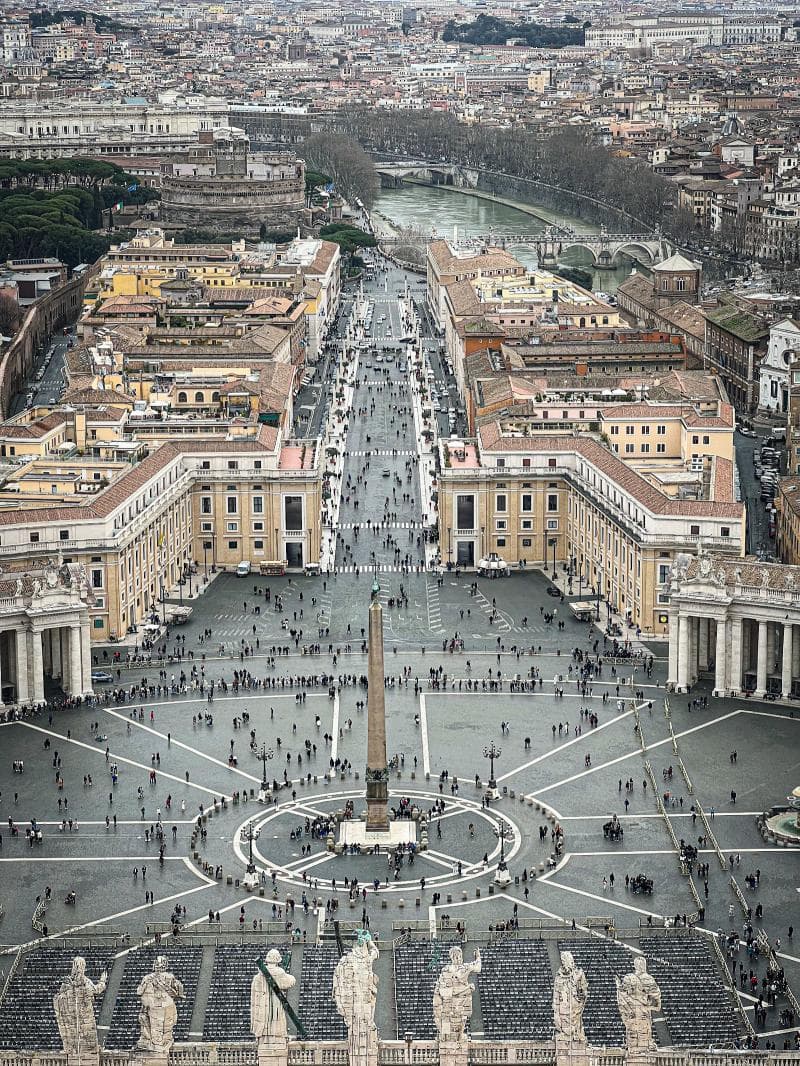
Explore St. Peter's Square in Rome, Italy – a Baroque masterpiece designed by Bernini. Discover its history, iconic colonnades, Egyptian obelisk, and cultural significance in Vatican City.
Overview
St. Peter's Square, or Piazza San Pietro, serves as the majestic entrance to St. Peter's Basilica in Vatican City, an independent microstate entirely enclaved within Rome, Italy. This iconic Baroque masterpiece, designed by Gian Lorenzo Bernini in the 17th century, is one of the world's most recognizable public spaces. It is renowned for its vast elliptical shape, embraced by grand colonnades, and serves as a primary gathering point for faithful pilgrims and visitors from across the globe.
At its heart stands an ancient Egyptian obelisk, flanked by two harmonious fountains. The square's expansive design allows it to accommodate hundreds of thousands of people, making it a central venue for significant papal ceremonies and celebrations. Its architectural brilliance lies in its ability to simultaneously impress with its scale and welcome with its symbolic 'maternal arms' embrace.
History & Cultural Background
The history of St. Peter's Square is deeply intertwined with that of St. Peter's Basilica itself and the broader narrative of the Catholic Church. The area where the square now stands was once the site of Nero's Circus, where Saint Peter is traditionally believed to have been martyred. The obelisk at the center of the square originally stood in this ancient circus, brought to Rome by Emperor Caligula in 37 AD.
In the mid-17th century, Pope Alexander VII commissioned Gian Lorenzo Bernini to redesign the open space in front of the basilica. Bernini's ambitious project, undertaken between 1656 and 1667, aimed to create a forecourt that would not only enhance the grandeur of the basilica but also provide a welcoming embrace to the world. The resulting elliptical piazza, framed by monumental colonnades, was a masterstroke of Baroque urban planning, designed to allow large crowds to witness papal blessings.
While Bernini's vision largely defined the square, the approach to it saw significant changes much later. The Via della Conciliazione, the wide avenue leading to the square from the Tiber, was constructed between 1936 and 1950 under Benito Mussolini, involving the demolition of a dense medieval neighborhood. This created a dramatic, processional vista towards the basilica, though it altered the original, more intimate approach Bernini might have envisioned.
What Makes It Special
What truly sets St. Peter's Square apart is Bernini's ingenious design, which blends architectural majesty with profound symbolism. The most striking feature is the pair of colossal semicircular colonnades, composed of 284 Doric columns arranged in four rows, topped by 140 statues of saints. Bernini famously described these colonnades as 'the maternal arms of Mother Church,' reaching out to embrace pilgrims and visitors.
The elliptical shape of the square, combined with the trapezoidal section closer to the basilica, creates a dynamic interplay of perspective. From specific points marked on the pavement, the rows of columns in the colonnade align perfectly, creating an optical illusion where only a single row appears visible.
The central obelisk, a silent witness to centuries of history, acts as a focal point. Flanking it are two magnificent fountains, one by Carlo Maderno (1613) and the other by Bernini himself (1675), adding symmetry and the soothing sound of water to the grand expanse. This meticulous arrangement creates an urban space that is both ceremonial and deeply spiritual, guiding visitors towards the heart of Catholicism.
Stories, Fun Facts & Local Details
- The Obelisk's Journey: The 25-meter tall Vatican Obelisk stood for centuries in Nero's Circus before being moved to its current position in 1586 by Domenico Fontana under Pope Sixtus V. This incredible engineering feat involved hundreds of men and horses, and a legend says a sailor famously defied the Pope's order of silence during the relocation to shout for water to be poured on the ropes to prevent them from snapping.
- A Giant Sundial: The obelisk in the center of the square also functions as the gnomon of a massive sundial. Granite meridian lines and white discs embedded in the pavement mark where the obelisk's shadow falls at noon throughout the year, illustrating the celestial order.
- Statues of Saints: Above the colonnades, 140 statues of saints, created by Bernini's disciples in 1670, gaze down upon the square. These three-meter-high figures represent a diverse array of Catholic holy figures, including popes, martyrs, and even women.
- The 'Embrace' Concept: Bernini's design for the colonnades was specifically intended to symbolize the 'maternal arms' of the Church, welcoming everyone—believers and non-believers alike—into its fold, reflecting a message of universal welcome.
Visitor Perspective
Visiting St. Peter's Square is an experience that evokes both awe and a sense of belonging. As a public space, access to the square is free and open at all times, allowing visitors to wander its vast expanse.
For many, the highlight is attending a papal audience, typically held on Wednesday mornings, or witnessing major religious celebrations, where the square comes alive with immense crowds. While the square itself has no dress code, visitors planning to enter St. Peter's Basilica must adhere to a modest dress code, covering shoulders and knees.
The sheer scale of the square, 320 meters long and 240 meters wide at its broadest point, can be overwhelming, yet the architectural design expertly guides visitors towards the basilica. To experience it with fewer crowds, arriving early in the morning (between 7 am and 9 am) or in the evening (around 6 pm to 7 pm) is recommended. The square offers breathtaking views of St. Peter's Basilica, particularly as the light changes throughout the day, creating unforgettable photographic opportunities and moments of reflection.
Coordinates: 12.4572, 41.9022
View on Google Maps💬 How Travelers Describe This Place
Based on community votes
Photogenic
846Must See
564Beautiful
201Unique
121Interesting
87
Traveler Stories
Discover memorable experiences shared by travelers who have visited this place.
No traveler stories yet.
Be the first traveler to share what made this place memorable.

Tour
By
Spot
Discover amazing places around the world. Your journey starts here.
Explore
© 2026 TourBySpot. All rights reserved.